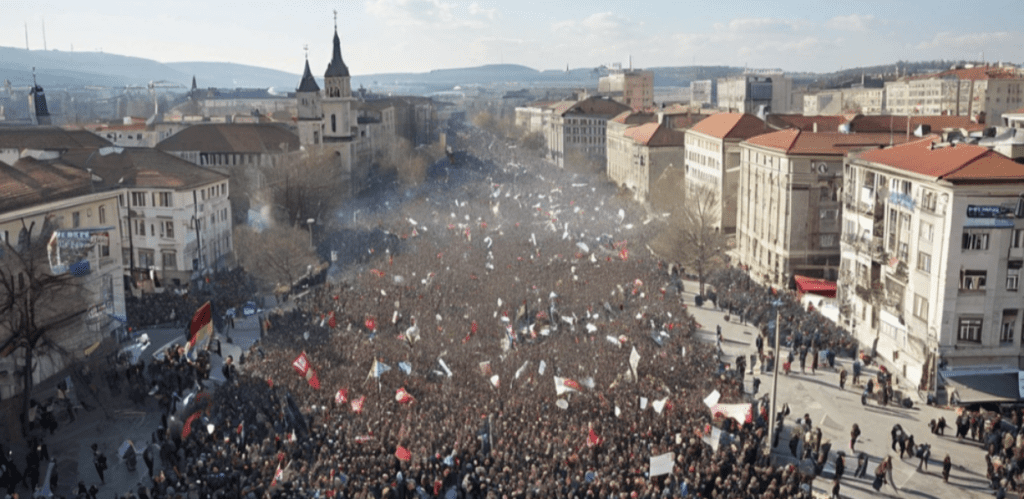
Thousands of Serbian citizens took to the streets on Monday to protest against Rio Tinto’s proposed lithium mining project in the western region of Jadar. The largest demonstration occurred in the city of Sabac, located about 50 kilometers northeast of the planned mine site, with simultaneous rallies held in Kraljevo, Arandjelovac, Ljig, and Barajevo.

Protesters expressed grave concerns over the potential environmental impact of the mining operation, which aims to tap into one of Europe’s largest lithium deposits. “We cannot live without clean air and water, but we can live without lithium batteries and electric cars,” said Biljana Stepanovic, a representative from the Proglas rights organization, addressing the crowd in Sabac.
related news
- Canadian Miners Navigate Uncertain Terrain Amid Anti-China M&A Rules
- Unstable Ground: How Building on Chilean Sand Dunes Threatens Communities
- AME Urges Swift Government Action on Mineral Tenure Act Modernization
- Potential Impact of South Africa’s Minerals Export Tax on Mining Sector
The controversy surrounding the project has intensified since Serbia recently reinstated Rio Tinto’s license to develop what would be Europe’s biggest lithium mine. This decision came more than two years after the initial permit was revoked due to widespread protests.
On July 19, Serbian President Aleksandar Vucic, German Chancellor Olaf Scholz, and EU energy chief Maros Sefcovic signed an agreement regarding access to raw materials mined in Serbia. This move has further fueled opposition from environmental groups and local residents.
Despite assurances from Chancellor Scholz that the Jadar project would only proceed if it complies with EU environmental standards, protesters remain skeptical. Sinisa Todorovic, a 52-year-old salesman attending the Sabac rally, stated, “With this project there will be no future. … This means death for the people”.
The Jadar project has the potential to meet 90% of Europe’s lithium demand, positioning Rio Tinto as a leading producer of this critical material used in electric vehicle batteries and mobile devices. However, local activists argue that the environmental costs outweigh the economic benefits.

President Vucic has announced that a referendum on the project will be organized by the end of 2025. Meanwhile, various green groups have threatened to block main railroads and junctions in August if the government does not halt the project.
As Serbia aims to attract foreign investments and potentially join the European Union, the government faces a delicate balancing act between economic development and environmental protection. The country, already one of Europe’s most polluted, will need significant investments to meet EU environmental standards.
More Read
The ongoing protests highlight the growing tension between the push for critical raw materials needed for green technologies and the local environmental concerns in resource-rich regions. As the debate continues, the fate of the Rio Tinto lithium project remains a contentious issue in Serbian politics and society.