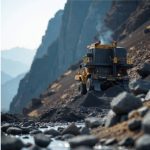
Rio Tinto has released its production results for the second quarter of 2024, which show a mix of performance across different areas.

Rio Tinto, the mining giant, has recently published its production results for the second quarter of 2024, showcasing a combination of successes and challenges across its diverse operations. The company’s Chief Executive, Jakob Stausholm, emphasized the advancements in operational performance, while recognizing the need for further enhancements.
Related News
- Cleveland Port’s Iron Ore Conveyor System to Undergo $5M Modernization
- Zimbabwe Court Rules to Continue Henrietta Rushwaya’s Gold Smuggling Trial
- Global Copper Demand Drives BHP’s Potential Acquisition of Filo Corp
- Declining Chinese Demand and Rising Competition: The Future of Australian Iron Ore
In the Pilbara region, iron ore production for the quarter reached 79.5 million tonnes (67.5 million tonnes Rio Tinto share), showing a 2% decrease compared to the same period last year. Despite a minor decrease, the company is still on course to reach its goal of a 5 million tonne production increase at Pilbara Iron Ore by 2024. This is largely due to the continued implementation of its Safe Production System (SPS).
The company’s bauxite production experienced a significant boost, and it is now projected to meet or even exceed its 2024 guidance range of 53 to 56 million tonnes. This improvement is partially credited to the implementation of the SPS in the Queensland bauxite industry.
The Oyu Tolgoi copper mine in Mongolia demonstrated impressive performance, as mined copper production saw a significant 23% increase compared to the second quarter of 2023. The company has provided updates on the progress of the underground operations at Oyu Tolgoi, stating that everything is on track as expected.
More Read
There has been a noteworthy announcement from Rio Tinto regarding its investment in the Simandou high-grade iron ore project in Guinea. According to the company, all conditions for the investment have been met. The transaction for co-development of the infrastructure is now finalized, with the first payments from partner Chalco Iron Ore Holdings Ltd (CIOH) already received.

In the first half of 2024, the company experienced a cash outflow of around $0.7 billion, primarily caused by a rise in working capital. The decrease in royalties and taxes payable can be attributed to the decline in prices starting from late 2023. Additionally, there have been fluctuations in the amounts owed to joint venture partners and employees due to seasonal factors.
Rio Tinto remains committed to reducing carbon emissions and has recently made significant advancements in this area. The company has installed carbon-free aluminium smelting cells at its Arvida smelter in Quebec, utilizing ELYSIS technology. Additionally, Rio Tinto has invested in a research facility in Western Australia to further develop and test its low-carbon ironmaking process, known as BioIron.
More Read

With the company making strides towards its strategic goals, Stausholm exudes optimism about Rio Tinto’s ability to achieve long-term profitability and deliver attractive returns to shareholders.