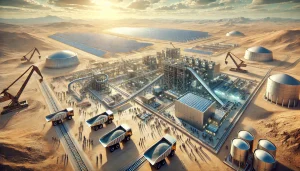
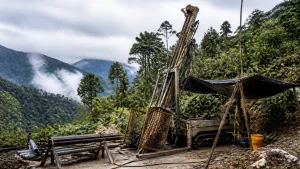
As the world shifts toward renewable energy, demand for critical materials like copper is set to skyrocket. In response, global mining giant Rio Tinto has partnered with Imperial College London to launch the Rio Tinto Centre for Future Materials, a $150 million initiative aimed at developing sustainable methods for sourcing, processing, and recycling materials essential to the energy transition and addressing the copper supply crunch.
The centre, funded over a decade, will bring together leading academic institutions from four continents to address the growing need for innovative approaches to mining and material sciences. The collaboration highlights the urgency of finding solutions to bottlenecks in material availability, with copper identified as a key focus area.
A Bold Mission: Addressing the Copper Challenge
Copper, a cornerstone of modern electrification, is critical for technologies such as wind turbines, electric vehicles, and power grids. However, the International Energy Agency estimates that the next decade will require more copper than was mined over the entire last century, intensifying the copper supply challenge.
To meet this unprecedented demand sustainably, the centre’s first “grand challenge” will focus on rethinking how copper is extracted and processed. Research will explore cutting-edge techniques such as:
- Extracting copper from fluids deep within the Earth’s crust.
- Biomining, or using microorganisms to extract metals from low-concentration ores.
- Repurposing mining waste, aiming to recover residual metals while reducing environmental impact.
This work will also prioritize environmental, social, and governance (ESG) considerations, particularly with respect to Indigenous communities, whose lands and resources are often central to mining operations.

Related News
- IMARC 2024: A Global Platform for Innovation and Collaboration in Mining
- Paladin Energy Warns of Looming Uranium Supply Gap Amid Rising Global Demand
- Blue Moon Metals Secures Norwegian Copper Assets, Strengthens Energy Transition Focus
- Tharisa to rerate when it solves funding for Zimbabwe project
Global Collaboration for a Greener Future
The centre’s multidisciplinary approach is designed to foster innovation through collaboration. Its academic partners include:
- The University of British Columbia in Vancouver, a leader in mining engineering.
- The University of California, Berkeley, known for its expertise in sustainable technologies.
- The University of the Witwatersrand in Johannesburg, focusing on mineral extraction in resource-rich Africa.
- The Australian National University in Canberra, contributing expertise in energy systems.
Imperial College London’s president, Professor Hugh Brady, emphasized that the initiative would empower diverse teams to pioneer transformative solutions with sustainability at their core. “This work will transform the ways we extract, process, and reuse critical resources,” he said.
More Read
UK Leadership in Clean Energy Innovation
The centre’s launch also serves as a testament to the UK’s ambitions to lead the global energy transition. UK Business and Trade Secretary Jonathan Reynolds called the $150 million investment a “major vote of confidence” in the nation’s research ecosystem. “This partnership will help us find sustainable ways to deliver our renewable energy transition, supporting our ambition to become a clean energy superpower,” he said.
Rio Tinto CEO Jakob Stausholm highlighted the importance of innovation in meeting the world’s material needs. “Innovation has been fundamental to Rio Tinto’s DNA for over 150 years. This partnership reflects our commitment to providing materials the world needs in a sustainable way,” Stausholm noted.
Paving the Way for the Future of Mining
The Rio Tinto Centre for Future Materials represents a crucial step in addressing the dual challenges of rising material demand and sustainability. By investing in research on advanced extraction technologies and recycling methods, Rio Tinto is positioning itself as a leader in the industry’s transition to greener practices.
As copper and other critical materials remain central to the energy transition, the work of this centre could have far-reaching implications—not just for mining, but for how the world powers its future. The centre’s efforts could play a key role in overcoming the copper supply bottleneck and ensuring sustainable resource availability.