By Charles Pitts

TOOELE, Utah : REalloys (Nasdaq: ALOY) has finalized a $100 million private placement and reached a landmark agreement with the U.S. Army to develop a first-of-its-kind rare earth processing facility within a domestic military installation. The deal, announced late Wednesday, marks a significant shift in U.S. defense strategy as the Pentagon moves to integrate critical mineral supply chains directly onto secure government property.
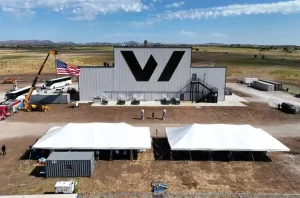
The U.S. Army selected REalloys to enter exclusive negotiations for a long-term Enhanced Use Lease (EUL) at the Tooele Army Depot in Utah. Under the proposed terms, REalloys will design, finance, and operate a dedicated heavy rare earth processing plant. While the Army will retain ownership of the land, the facility will serve as a commercial hub for separating and refining minerals essential for high-performance permanent magnets used in precision-guided munitions, electric vehicle motors, and wind turbines.
This dual-track development: combining a substantial capital injection with a strategic military partnership: positions REalloys as a primary architect of a “mine-to-magnet” value chain intended to bypass global supply vulnerabilities, specifically those tied to Chinese market dominance.
Capital Injection Targets Vertical Integration
The $100 million financing was structured as a private placement with accredited institutional investors. REalloys issued approximately 7.0 million common shares at a price of $14.25 per share. The company stated the proceeds would be used primarily for working capital and to accelerate the construction of its integrated domestic supply chain.
More Read

For investors monitoring the critical minerals sector, the raise provides the necessary runway for REalloys to execute on its complex upstream and midstream commitments. The company’s strategy relies on a multi-pronged approach to feedstock, anchored by its Hoidas Lake project in Saskatchewan and a significant 15-year offtake agreement with Critical Metals (Nasdaq: CRML) for concentrate from the Tanbreez project in Greenland.

The financing also supports REalloys’ partnership with the Saskatchewan Research Council (SRC). The company is currently funding the scale-up of heavy rare earth separation and metallization at SRC’s facilities, securing exclusive rights to the commercial output for its downstream manufacturing operations in Ohio.

More Read

The Tooele Depot: A National Security Pivot
The selection of the Tooele Army Depot for a commercial processing site represents a departure from traditional defense procurement. The Army’s Strategic Capital Initiatives program aims to leverage private sector investment to build resilient infrastructure on military land.
“This is the first time commercial mineral-processing facilities have been slated for installation on U.S. military ground,” noted a senior defense analyst familiar with the program. “By placing the processing step inside the wire, the Department of Defense is effectively creating a secure sanctuary for the production of materials that are currently subject to geopolitical leverage.”
The Tooele facility will focus specifically on heavy rare earth elements (HREEs) such as dysprosium and terbium. These elements are critical for the production of magnets that can operate at the high temperatures required by military hardware. Currently, the vast majority of HREE separation occurs in China, creating a potential single point of failure for U.S. defense manufacturing.
The Enhanced Use Lease could extend for up to 50 years, providing REalloys with a stable, secure operating environment while allowing the Army to utilize under-tapped land assets to bolster national security. Development at the Utah site is expected to commence as early as 2027.
Mine-to-Magnet: Addressing the Supply Gap
The REalloys strategy is built on the reality that mining alone does not equate to supply chain security. Without domestic separation, refining, and metallization, raw ore must still be shipped overseas for processing.
The company is currently developing what it describes as the largest heavy rare earth metallization facility in North America. By integrating the Hoidas Lake and Tanbreez feedstocks with the separation capabilities at Tooele and the metallization expertise developed with the SRC, REalloys aims to deliver finished magnet alloys directly to its Ohio manufacturing plant.

This vertical integration is designed to satisfy the strict “no-China-nexus” requirements increasingly demanded by defense contractors and government agencies. As geopolitical tensions continue to influence commodity markets, the ability to trace a mineral from a Canadian or Greenlandic mine through a U.S. Army-hosted processing plant to a final defense component is becoming a significant competitive advantage.
Market Implications and Sector Outlook
The news comes at a time of increased volatility in the rare earth markets. While prices for light rare earths like neodymium and praseodymium (NdPr) have faced headwinds, the demand for heavy rare earths remains robust due to their scarcity and specialized applications.
Analysts suggest that the REalloys model could serve as a blueprint for other critical mineral players. Similar moves have been seen in other jurisdictions, such as Australia’s recent milestones with Arafura Rare Earths, where government backing has been instrumental in de-risking capital-intensive processing projects.
For REalloys shareholders, the primary risk remains the execution of a multi-jurisdictional construction schedule and the technical challenges inherent in heavy rare earth separation. However, the $100 million raise and the Army’s “on-base” endorsement provide a degree of institutional validation that is rare in the junior-to-mid-tier mining space.
Operational Timeline and Infrastructure
Construction and operational phases for the Tooele site will follow a rigorous environmental and security review process. The plant is expected to integrate advanced automation and control systems to optimize recovery rates of dysprosium and terbium.
Data from the latest Skillings Mining Intelligence reports indicates that domestic magnet demand is expected to grow by 12% annually through 2030, driven largely by the electrification of the U.S. military’s tactical vehicle fleet and the expansion of domestic EV manufacturing.

“The goal is a closed-loop system,” a REalloys spokesperson said in a statement. “We aren’t just building a mine or a factory; we are building a strategic reserve that operates in real-time to support the warfighter and the industrial base.”
As the company moves into exclusive negotiations with the Army, the focus will shift to the final engineering designs and the integration of recycled magnet scrap into the processing flow: a move that could further reduce reliance on primary mining and improve the overall ESG profile of the project.