Key Takeaways
- India halts rare earth exports to Japan, reshaping Asia’s magnet supply.
- China uses Myanmar militias to control heavy rare earth flow.
- U.S. faces a shortfall in EV and defense-critical metals.
- Trump strikes rare earth-for-student visa deal with Beijing.
- World Bank nuclear pivot boosts uranium and zirconium outlook.
- Copper inflows surge ahead of U.S. tariff threat.
A Fragile Rare Earth Supply Chain Pushes U.S. Industry to the Edge
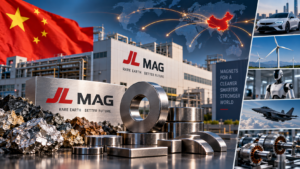
The rare earth supply chain—the industrial backbone behind everything from fighter jets to electric vehicles—was thrust into crisis this week after India abruptly halted neodymium oxide exports to Japan. The move severs a 13-year trade pact and comes as China, which controls nearly 98% of rare earth processing, leverages its influence through proxy mining operations in neighboring Myanmar.

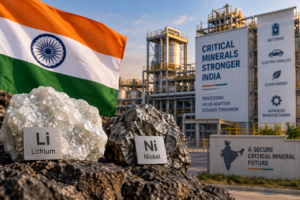
India’s government directed Indian Rare Earths Limited (IREL), the state-owned producer, to reserve supply for domestic use. Though India produced only 2,900 tonnes of neodymium oxide in 2024, the country holds an estimated 6.9 million tonnes in reserves. Commerce Minister Piyush Goyal framed the decision as a strategic pivot to build a homegrown magnet industry. However, the consequences of the policy shift were immediate and global.
“India’s move was a wake-up call,” said Jack Lifton, co-chair of the Critical Minerals Institute (CMI). “It’s not about quantity. It’s about signaling that no supplier—apart from China—can be considered reliable anymore.”
| Metal | China Share (%) | India (%) | US (%) | Others (%) |
|---|---|---|---|---|
| Neodymium | 91 | 4 | 3 | 2 |
| Praseodymium | 89 | 5 | 4 | 2 |
| Terbium | 98 | 0 | 0 | 2 |
| Dysprosium | 97 | 0 | 1 | 2 |
China’s Quiet Expansion in Myanmar Deepens Strategic Control
Even as India clamps down on exports, China is expanding its reach in the rare earth market through indirect means. Satellite imagery and intelligence reports show the United Wa State Army (UWSA)—a Chinese-backed militia in Myanmar—has cordoned off new mining zones in Shan State. These areas are rich in heavy rare earth elements like dysprosium and terbium, both critical to high-heat applications in electric vehicle motors, drones, and missiles.
Since early 2023, dozens of trucks have been observed moving concentrate across the border into China. These shipments are believed to compensate for production losses in northern Myanmar, where civil conflict has disrupted mining.
“China’s grip on heavy rare earths is now tighter than ever,” said a Southeast Asia analyst at a defense think tank. “The West doesn’t fully grasp how effectively China uses regional proxies to extend its resource control.”

Auto and Defense Industries Face Imminent Disruption
The ripple effects of the rare earth supply squeeze have reached U.S. industrial floors. Ford Motor Company (NYSE: F) confirmed that it temporarily shut down one of its assembly plants due to material shortages. The company cited delays in acquiring rare earth magnets as the cause—components crucial not just for motors, but also windshield wipers and power seats.
General Motors (NYSE: GM), Toyota (TYO: 7203), and BMW (ETR: BMW) have issued similar warnings. Suppliers indicate that unless export approvals from China resume promptly, more production lines could go dark by July.
More Read

“We’re down to weeks of inventory,” said one auto executive, requesting anonymity. “There’s no real alternative supply, and the timelines on new processing capacity are brutal.”
Trump Floats Rare Earth Deal While Undermining Domestic Mining
In a bid to stabilize flows, former President Donald Trump announced a provisional deal under which China would resume rare earth exports in exchange for restored access to U.S. universities for Chinese students. The accord would ease short-term supply constraints but sits uneasily with Trump’s plan to impose a sweeping 55% tariff on Chinese imports.
At the same time, a House-backed tax package supported by the Trump administration would repeal Section 45X—a production tax credit introduced under the Inflation Reduction Act. This credit currently subsidizes the domestic extraction and processing of rare earths, lithium, and nickel.
Miners argue the repeal would give China a decisive cost advantage. “You can’t lure capital to American projects if you strip away the core incentive,” said an executive at a U.S. mining startup.
The bill reallocates $3 billion toward strategic mineral programs but slashes Department of Energy loan support, raising further questions about Washington’s commitment to reshoring supply chains.
Magnet Metals and the “Core Four” Bottleneck
The most vulnerable links in the rare earth supply chain are the four metals critical to magnet production: neodymium, praseodymium, dysprosium, and terbium. These “Core Four” elements underpin the permanent magnets found in smartphones, EVs, satellites, and missiles. While light rare earths like neodymium and praseodymium enhance magnet strength, heavy elements like terbium and dysprosium are key to temperature stability.
China currently processes over 90% of global neodymium and praseodymium, and nearly all of the world’s terbium and dysprosium. Western alternatives exist—MP Materials’ (NYSE: MP) Mountain Pass project in California and American Rare Earths’ Halleck Creek site in Wyoming—but both face capital hurdles and multi-year timelines.
“The raw ore is useless unless you can process it,” said Lifton. “And processing remains China’s ace.”
Outlook: Strategic Minerals, Structural Risk
While the West debates tariffs and tax credits, Beijing continues executing a long-term strategy built on control, cost, and consolidation. India’s decision to prioritize domestic magnet manufacturing signals a broader shift: rare earths are no longer simply trade goods—they are strategic assets.
Unless the U.S. and its allies build end-to-end supply chains—from mine to magnet—they risk ceding control of future industrial policy to rivals. The current rare earth supply chain, fragmented and fragile, is one geopolitical flare-up away from systemic failure.
FAQ: Rare Earth Supply Chain Crisis
Q1: What triggered the current rare earth supply chain crisis in 2025?
India’s neodymium export ban to Japan and China’s proxy mining expansion in Myanmar disrupted global access to critical rare earths, sparking immediate shortages in the EV and defense sectors.
Q2: Why is the rare earth supply chain so vulnerable?
The rare earth supply chain is highly concentrated, with China processing over 90% of global supply. Western countries lack domestic refining and magnet-making capacity, making them reliant on foreign-controlled routes.
Q3: How is China using Myanmar to maintain rare earth dominance?
Chinese-backed militias in Myanmar’s Shan State have taken control of new heavy rare earth deposits. These mines feed dysprosium and terbium to China’s supply chain, bypassing global oversight.
Q4: What are the “Core Four” rare earth metals and why do they matter?
Neodymium, praseodymium, terbium, and dysprosium—known as the “Core Four”—are essential for high-performance magnets used in EVs, military systems, and wind turbines.
Q5: How are U.S. industries being affected by the rare earth crisis?
Automakers like Ford, GM, and Toyota face production halts due to delayed Chinese export licenses. Without alternative supplies or domestic production, industries risk shutdowns by mid-2025.
Q6: What’s the impact of repealing the Section 45X tax credit?
Repealing Section 45X removes a key incentive for domestic rare earth production in the U.S., making it harder for American projects to compete with Chinese firms on cost and scale.