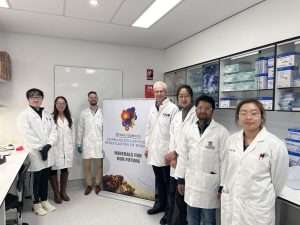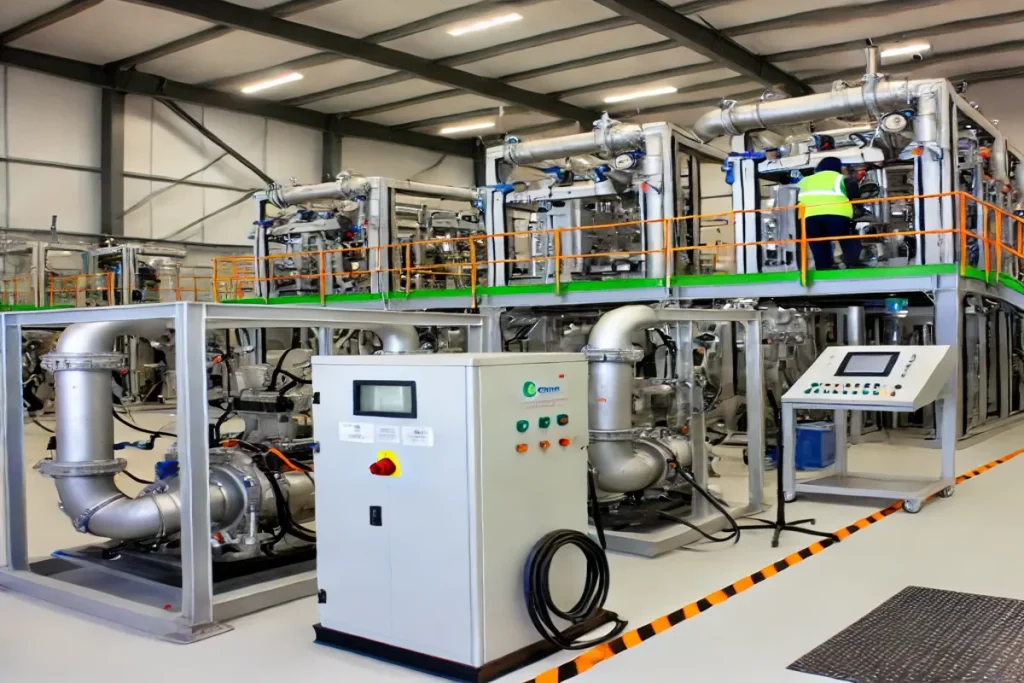
Giyani Metals Corporation, listed on the Toronto Stock Exchange (TSX), has made significant progress on its Manganese Demo plant for the K.Hill manganese project. Located in Johannesburg, South Africa, the plant has entered the detailed fit-out phase, with all modular process units now installed. The company is currently working on cabling and piping to connect the modules in preparation for commissioning, which is scheduled for the fourth quarter of 2024.

Key Role of Minopex in Plant Operations
The Manganese Demo plant is being operated by Minopex, a subsidiary of the consultancy DRA Global, while Giyani’s flagship K.Hill project is based in Botswana. The plant will initially produce 600 kilograms per day of battery-grade manganese, which will be sent to offtakers for testing and qualification purposes. This production capacity marks a crucial step in Giyani’s journey toward becoming a key supplier of high-grade manganese for the electric vehicle (EV) battery market.
Related News
- Ghana Chamber of Mines CEO Calls for Tighter Regulation to Boost Small-Scale Mining Success
- South Africa’s Ferroalloys Industry Adapts to Green Energy Pressures Amid Global Challenges
- Canada’s The Metals Company Breaks Ground in Deep-Sea Nodule Processing
- Canada’s The Metals Company Breaks Ground in Deep-Sea Nodule Processing
Optimizing the Process Flow with Advanced Technologies
To ensure optimal operations, Giyani is working closely with Johannesburg-based consultancy CM Solutions on metallurgical testwork to refine the processing flowsheet. The company is also employing Yokogawa Distributed Control System (DCS) software to manage the demonstration plant, enabling a continuous process flow rather than batch-based processing. This approach allows Giyani to maintain steady-state operations, ensuring consistent production of battery-grade manganese that meets offtaker specifications.
Safety and Environmental Considerations: Removal of Hydrofluoric Acid
A key development in Giyani’s process optimization is the removal of hydrofluoric acid from the production flowsheet. This change not only improves the safety profile of the demo plant but also reduces the need for handling hazardous materials at both the demonstration site and the future commercial plant in Botswana. The continuous process flow further supports operational safety and efficiency by eliminating interruptions and maintaining consistent output.
Strategic Value of the Demonstration Plant
According to Charles FitzRoy, CEO and president of Giyani Metals, the demo plant serves as a scaled-down version of the planned commercial plant in Botswana, offering a real-time preview of its performance. “The value of this facility as a tool to optimize our proprietary flowsheet and reduce operating costs is immeasurable,” said FitzRoy. He added that the successful operation of the demo plant will provide a strong foundation for the company’s commercial efforts, which are expected to be outlined in a definitive feasibility study in 2025.
Paving the Way for High-Grade Manganese Production
The commissioning of Giyani’s Manganese Demo plant n the fourth quarter of 2024 marks a pivotal moment for the company’s K.Hill project. By showcasing the plant’s ability to consistently produce battery-grade manganese, Giyani is positioning itself as a future leader in the EV battery supply chain. The demonstration plant’s success will help solidify investor confidence and contribute to the ongoing development of Giyani’s commercial plant in Botswana, expected to play a key role in meeting global demand for high-purity manganese.

4o
ChatGPT can make mistakes