By Charles Pitts

The Panamanian government has confirmed it is evaluating the creation of a state-owned mining company as the primary vehicle to restart operations at the Cobre Panama copper mine. The move, announced by the administration of President José Raúl Mulino, represents a significant shift in Panama’s resource management strategy following the forced closure of the site in late 2023.
By establishing a state entity, Panama aims to resolve the legal and political gridlock that has kept one of the world’s largest copper mines idle for over two years. The proposed framework includes a public-private partnership (PPP) where the state would hold a 35% to 40% stake, or a potential leasing model that would grant the government greater oversight and a larger share of direct revenues.
A final decision on the corporate structure and the formal reopening timeline is expected by the end of 2026, marking a critical milestone for global copper news and the regional Panama mining sector.
The State-Owned Model: A New Path for Cobre Panama
The push for a state-owned mining firm follows the Panamanian Supreme Court’s 2023 ruling, which declared the existing contract with First Quantum Minerals (FQM) unconstitutional. That ruling triggered a total suspension of activities at the $10 billion asset, which previously accounted for approximately 5% of Panama’s Gross Domestic Product (GDP).
More Read

Under the new proposal, the state-owned company would hold the mining rights to the concession, effectively nationalizing the resource while partnering with an experienced operator to manage technical and environmental logistics.

“The goal is a ‘Panamanian operation’: a project that reflects the country’s sovereignty over its natural resources while maintaining the efficiency of private sector expertise,” a ministerial commission spokesperson noted in a recent briefing.
Industry analysts view this as a strategic pivot to appease domestic opposition. By taking a 35-40% equity stake, the government ensures that the fiscal benefits of the mine are more directly tied to the national treasury, rather than relying solely on royalty payments. This shift is consistent with broader trends in mining M&A 2026, where resource nationalism is increasingly being balanced with pragmatic operational partnerships.
More Read


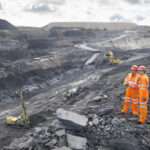
The processing of 38 million tonnes of stockpiled ore is the first step toward full operational recovery.
Economic Impact: The 2% GDP Catalyst
The economic stakes for Panama are massive. According to recent estimates from Fitch Ratings, a successful reopening of Cobre Panama could add at least 2 percentage points to Panama’s annual GDP growth. This recovery is vital for a nation that saw its investment-grade credit rating come under pressure following the mine’s shuttering.
The International Monetary Fund (IMF) previously reported that the shutdown wiped out roughly 4.5% of Panama’s GDP in the immediate aftermath of the closure. The loss of nearly $1.7 billion in annual economic activity created a fiscal gap that the Mulino administration is now desperate to bridge.
Comparative Economic Outlook: Panama GDP Growth Scenarios
| Scenario | Projected 2027 GDP Growth | Key Drivers |
|---|---|---|
| Mine Reopened | 6.0% | Copper exports, state revenue, logistics recovery |
| Status Quo (Closed) | 3.7% | Canal activity, tourism, infrastructure |
| Partial Operation | 4.8% | Stockpile exports, limited site maintenance |
For investors tracking copper news, the return of Cobre Panama’s 350,000+ tonnes of annual copper production would provide a much-needed relief valve for a market facing structural shortages. Skillings has recently reported on the copper supply deficit 2026, noting that converging factors like AI demand and grid expansion are stressing global inventories.
2026 Timeline: From Stockpiles to Full Extraction
While the creation of a state-owned company is the long-term goal, the immediate focus for 2026 is the “Preservation and Safe Management” (P&SM) of the site and the processing of existing ore.
President Mulino has authorized the removal and export of approximately 38 million tonnes of ore that were stockpiled before the 2023 shutdown. First Quantum Minerals estimates that this material could yield roughly 70,000 tonnes of copper. Processing these stockpiles serves two purposes: it mitigates environmental risks associated with the weathering of the ore and provides a small but significant cash flow for the government and the operator during the transition.

Policy decisions made in late 2026 will dictate the future of Panama’s sovereign credit rating.
The road to full extraction, however, remains long. A ministerial commission is expected to deliver its final recommendation on the mine’s future in Q4 2026. This means that drilling, blasting, and new pit extraction are unlikely to resume before mid-to-late 2027.
Addressing Legal and Social Hurdles
The transition to a state-owned model is not without its risks. The Panamanian public remains sensitive to environmental concerns and the perceived lack of transparency in previous mining deals. The government has attempted to mitigate this by launching independent audits of the mine’s environmental impact and promising that the new “Panamanian company” will adhere to the highest ESG standards.
Furthermore, the legal landscape is complicated by ongoing international arbitration. First Quantum Minerals and its partners have filed multi-billion dollar claims against Panama for the 2023 closure. The formation of a state-owned joint venture is seen by many as a “settlement vehicle” that could resolve these legal disputes by providing FQM with a path back to operation under a different, more politically palatable contract.

Real-time monitoring and advanced technology will be central to the proposed “Panamanian operation.”
Market Context: Copper’s Crucial Role in 2026
The urgency of the Cobre Panama reopening is underscored by the global copper deficit 2026 outlook. As the world shifts toward electrification and the expansion of data centers for AI processing, copper has become a strategic metal equivalent to oil in the 20th century.
Panama’s decision to move toward a state-owned model reflects a global trend where governments seek to secure supply chains for critical minerals. By taking an active role in the mine’s management, Panama is positioning itself as a key player in the green energy transition, rather than just a landlord for foreign corporations.
Conclusion: A Decisive Year for Panama Mining
The 2026 decision on Cobre Panama will define the country’s economic trajectory for the next decade. Whether through a 40% state-owned stake or a leasing arrangement, the re-entry of Panamanian copper into the global market is no longer a question of “if,” but “how.”
For mining professionals and investors, the next 18 months will require close monitoring of the legislative process in Panama City. The successful integration of state ownership with private operational capacity could serve as a blueprint for other resource-rich nations facing similar political pressures.
Cobre Panama: Key Asset Profile
| Attribute | Detail |
|---|---|
| Annual Copper Output (Peak) | 350,000 – 380,000 tonnes |
| Current Status | Preservation and Safe Management |
| 2026 Focus | Stockpile processing (38M tonnes) |
| Proposed State Stake | 35% – 40% |
| Owner/Operator | First Quantum Minerals (Pending New Model) |
| GDP Contribution | ~5% (Pre-closure) |

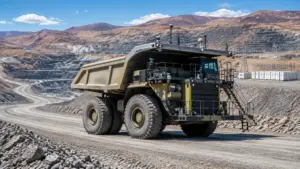
Logistics and fleet management will scale up significantly once the 2026 decision is finalized.