By Charles Pitts and Salini Krishnan

The Pakistan Mineral Investment Forum lands in March 2026 with a straightforward pitch: Balochistan sits on world-class geology, and the government wants foreign capital to develop it. Reko Diq: the copper-gold megaproject currently under construction: is the flagship proof point. US$60 billion in projected value. 5.9 billion tonnes of ore. Barrick Gold at the helm.
Those numbers check out. The geology is legitimate.
But geology doesn’t build mines. Institutions do.
And that’s where Pakistan’s mining story gets complicated. This isn’t about whether the copper is in the ground: it demonstrably is. It’s about whether the regulatory apparatus, infrastructure capacity, and governance frameworks can actually translate resource endowment into operational projects that deliver returns over 37-year mine lives.
More Read

The gap between those two realities is what we’re calling the “institutional middle.” It’s the unglamorous layer of permitting agencies, grid planners, water regulators, customs offices, and dispute resolution mechanisms that determine whether billion-dollar commitments turn into functioning assets or expensive litigation.

Reko Diq offers the clearest ground-level view of how this plays out in a frontier mining jurisdiction.

More Read
The Scale Is Real: And So Are the Dependencies
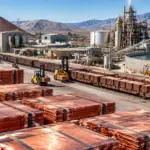
Reko Diq’s resource base places it among the largest undeveloped copper-gold deposits globally. Located in Chagai District, Balochistan, the project targets annual production of roughly 200,000 tons of copper and 250,000 ounces of gold starting in 2028. Mine life extends to at least 40 years. By any measure, this is Tier 1 geology.
The ownership structure, reconstituted in December 2022, splits equity 50-50 between Barrick Gold and a consortium of Pakistani state entities: three federal state-owned enterprises plus the Balochistan provincial government hold 25% each. Balochistan’s stake is fully funded: the province receives dividends and royalties without capital contribution during construction.
That arrangement signals political accommodation more than commercial optimization. Balochistan has historically felt excluded from resource revenue, and this structure attempts to bake in provincial buy-in from day one. Whether it actually delivers social license over a four-decade operating period is the institutional test case.
The financing commitments reflect cautious confidence. The International Finance Corporation committed $700 million in June 2025. The Asian Development Bank followed with $410 million in August 2025: $300 million in loans and guarantees directly to Barrick. Additional discussions are ongoing with the US Export-Import Bank, Export Development Canada, and Japan’s JBIC.
Total capital requirement sits around $2 billion. The gap between committed and required capital tells you where institutional risk still prices in: multilateral development banks are in, but private commercial banks remain selective.

The Institutional Middle: Where Projects Actually Succeed or Stall
Strip away the commodity price forecasts and reserve calculations, and you’re left with a series of operational dependencies that have nothing to do with geology:
Power infrastructure. Reko Diq will draw significant electricity from Pakistan’s grid or require dedicated generation capacity. Grid reliability in Balochistan is inconsistent. If the project builds its own power, it adds capital cost and timeline risk. If it relies on grid power, it inherits Pakistan’s energy sector challenges: fuel supply disruptions, transmission bottlenecks, tariff disputes.
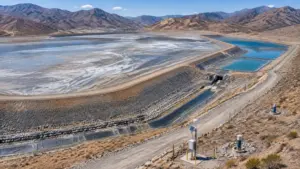
Water rights and environmental permitting. The mine operates in an arid region where groundwater is already stressed. The environmental impact assessment process involves federal and provincial agencies with overlapping jurisdictions. Balochistan’s capacity to monitor compliance over decades remains uncertain. The project is expected to generate approximately 850,000 tons of CO₂ equivalent annually: material in Pakistan’s national emissions profile.
Customs and logistics. Mining equipment, reagents, and spare parts flow through Pakistani ports and border crossings. Delays at customs, documentation requirements, and import duty disputes are routine friction points in frontier markets. For a 40-year mine, supply chain reliability isn’t a one-time issue: it’s a continuous operational requirement.
Dispute resolution and contract enforcement. The project history includes a protracted arbitration case between the Pakistani government and previous operator Tethyan Copper Company, ultimately settled through the 2022 reconstitution agreement. That litigation overhang lasted years and deterred investment. The new ownership structure is designed to prevent recurrence, but institutional memory runs long.
These aren’t glamorous topics. They don’t generate headlines at mining conferences. But they’re the difference between a project that ramps to nameplate capacity on schedule and one that spends years in operational limbo, bleeding capital and missing production targets.

Social License in a Politically Sensitive Region
Balochistan’s security dynamics add another institutional layer. The province has experienced separatist insurgencies, infrastructure attacks, and political instability. Reko Diq sits in Chagai District, relatively remote from major population centers: no permanent villages exist within the 5-kilometer direct area of influence, though settlements fall within the 15-kilometer extended zone.
The project’s social performance framework must navigate local pastoralist and agricultural livelihoods, land acquisition, and benefit-sharing expectations. Balochistan’s 25% equity stake creates a direct provincial interest in project success, which theoretically aligns incentives. But equity ownership doesn’t automatically translate into community-level acceptance.
Local employment commitments, procurement preferences, and infrastructure development obligations form part of the social compact. Delivering on those commitments requires coordination across multiple government tiers: federal, provincial, district. That coordination is itself an institutional capacity question.
The mine will operate for four decades. Governments change. Local leadership turns over. Grievance mechanisms need to function independently of political cycles. Pakistan’s institutional history suggests this will be tested repeatedly.
What Frontier Mining Investment Actually Looks Like
The Pakistan Mineral Investment Forum will showcase geology maps, resource estimates, and fiscal incentives. Those are table stakes. What matters more: and what serious operators evaluate carefully: is the institutional substrate.
Can permitting agencies process applications within predictable timeframes? Do infrastructure ministries follow through on committed grid expansions? Are customs procedures standardized or subject to ad hoc interpretation? Does the judicial system resolve commercial disputes within reasonable durations?
Reko Diq benefits from high-level political sponsorship and multilateral development bank involvement. That creates institutional buffers most greenfield projects don’t enjoy. But even with those advantages, the project timeline from discovery to first production spans decades, marked by setbacks, renegotiations, and legal disputes.
For smaller-scale projects without Barrick’s institutional weight or development bank backing, those same institutional gaps become insurmountable. That’s the constraint on sector development in Pakistan: not geology, but execution capacity.

The 2028 Inflection Point
Production start in 2028 represents Pakistan’s best opportunity to demonstrate that institutional reform can pace geological potential. If Reko Diq ramps smoothly: hitting production targets, managing environmental commitments, distributing economic benefits as structured, and maintaining community relations: it validates the investment thesis for Pakistan’s broader mineral sector.
If it encounters prolonged commissioning delays, regulatory disputes, infrastructure shortfalls, or social conflicts, it reinforces investor skepticism that Pakistan can manage large-scale resource projects. That outcome doesn’t negate the geology. It confirms the institutional gap.
The stakes extend beyond copper and gold prices. Pakistan’s external debt position, foreign exchange needs, and fiscal pressures create urgency around resource development. Mining offers a pathway to hard currency earnings and economic diversification: if the institutional architecture can support it.
Balochistan holds additional copper, gold, and other mineral deposits. If Reko Diq succeeds, follow-on investment becomes feasible. If it struggles, the province’s resource potential remains stranded by execution risk.
What March’s Forum Will: and Won’t: Reveal
The Pakistan Mineral Investment Forum will feature government ministers, international mining companies, and financing institutions discussing opportunity. Presentations will highlight resource estimates, fiscal incentives, and policy commitments. That’s useful context.
What it probably won’t feature: detailed presentations on permitting timelines, customs reform initiatives, grid reliability improvements, water rights adjudication processes, or dispute resolution track records. Those topics don’t fill conference halls.
But those topics determine project outcomes. Investors evaluating Pakistan post-forum will run institutional capacity assessments alongside geological reviews. They’ll model scenarios where regulatory delays add 12–24 months to development timelines. They’ll stress-test assumptions about infrastructure availability. They’ll price in contingency for social conflict and political risk.
That’s not pessimism. It’s due diligence in frontier markets.
Pakistan’s mining crossroads is real. Reko Diq proves the geology exists. The question is whether the institutions: federal and provincial governments, regulatory agencies, infrastructure planners, judicial systems: can catch up to the resource base.
The institutional middle determines the answer.
Everything else is just rock in the ground.