By Penny Laneford

ULAN BATOR, Mongolia : The Mongolian government has intensified its pressure on Rio Tinto, demanding a 60% share of revenues from the massive Oyu Tolgoi copper-gold mine.
The move represents a significant escalation in a long-running dispute over the project's financial structure and the timing of state profits. Currently, Mongolia holds a 34% equity stake in the project, but structural economic imbalances have prevented the nation from seeing meaningful returns.
Here is the uncomfortable reality for Western miners: The 34% stake has delivered nothing but debt.
Under the current investment agreement, Mongolia's equity was financed through shareholder loans provided by Rio Tinto. This means dividends only flow to the state after these loans: plus heavy interest: are repaid. According to recent government audits, Oyu Tolgoi LLC owed approximately $12 billion to Rio Tinto in shareholder loans by late 2025.
More Read

The math is brutal. Original projections estimated dividends would start in 2019. By late 2025, that timeline had shifted to 2041.

Mongolia isn't waiting another 15 years.
The 60% Revenue Demand
Industry and Minerals Minister Gongor Damdinnyam confirmed that the state is pursuing a fundamental renegotiation of the financial terms. Rather than just holding equity that earns no cash, Ulan Bator is seeking a 60% share of top-line revenue.
More Read
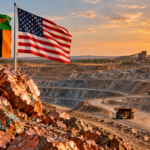
"We have secured Rio Tinto's consent to continue talks until the matter is fully resolved," Damdinnyam stated.
The shift from equity to revenue share is a tactical play to bypass the "debt trap" of shareholder loans. For Rio Tinto, it’s a direct hit to the project’s internal rate of return (IRR). For Mongolia, it’s a matter of national survival. Mining accounts for 35% of the country's GDP and a staggering 95% of total exports.

A diverse group of Mongolian government officials and Rio Tinto representatives reviewing site plans at the Oyu Tolgoi underground expansion project.
A History of Friction
The friction isn't new. The Oyu Tolgoi project has been a lightning rod for Mongolian politics since the 2009 Investment Agreement.
The project has operated at a loss for eight years. While the mine is a technical marvel: expected to be the world’s fourth-largest copper mine by 2028: the financial optics are grim for the locals. The project debt reached $20 billion by 2025.
Officials in Ulan Bator argue that their 34% stake "has not translated into meaningful influence over costs, financing terms or dividend timing."
This is a textbook case of resource nationalism in 2026. Governments in mineral-rich nations are no longer content with "trickle-down" economics or vague promises of future dividends. They want cash on the barrelhead, especially as copper becomes the most sought-after commodity in the energy transition.
Copper Production and the Global Stake
The stakes extend far beyond the Mongolian steppe.
Between 2028 and 2036, Oyu Tolgoi is projected to produce an average of 500,000 tonnes of copper annually. At a time when Chilean copper output is hitting multi-month lows, the world cannot afford a shutdown or a prolonged legal battle in Mongolia.
| Metric | Current Status (2025/2026) | Projected (2028-2036) |
|---|---|---|
| Annual Copper Production | ~250,000 tonnes | 500,000 tonnes |
| Total Project Debt | $20 Billion | Declining (est.) |
| Shareholder Loan Balance | $12 Billion | TBD |
| Dividend Start Date | 2041 (est.) | Negotiable |
Rio Tinto has spent billions on the underground expansion, which utilizes a complex "block caving" method. It is one of the most sophisticated mining operations on the planet. But you can't disrupt geology, and you certainly can't disrupt the political necessity of a host nation.

Geologists from diverse backgrounds analyzing high-grade copper ore samples at the Oyu Tolgoi core storage facility.
The Geopolitical Squeeze
Mongolia sits between Russia and China. It is landlocked. Its primary customer is China, which buys almost all of Oyu Tolgoi's concentrate.
Rio Tinto is facing a two-front war. On one side, they must manage the technical complexities of deep-underground mining. On the other, they must navigate a government that feels it was outmaneuvered in the original 2009 deal.
The demand for 60% revenue share isn't just a number; it's a declaration of sovereignty.
Western uranium explorers are already abandoning Kazakhstan due to similar geopolitical shifts. If Rio Tinto cannot reach a compromise that puts cash in the Mongolian treasury sooner rather than later, the risk profile of Oyu Tolgoi will skyrocket.
Investors are watching closely. The "Vicuña District" and other emerging hubs are attracting capital, but Oyu Tolgoi remains the crown jewel of the copper world. If the jewel becomes too expensive to hold, the global copper supply chain will feel the tremors.
The Negotiation Table: What’s Next?
Rio Tinto has already agreed to certain concessions, including the cancellation of $2.4 billion in debt owed by the Mongolian government in previous years. But that was a paper transaction. It didn't put money in the Mongolian budget today.
The current demands include:
- Lowering Shareholder Loan Interest Rates: The current rates are seen as predatory by Ulan Bator.
- Revised Management Fees: Mongolia wants to cut the fees Rio Tinto charges for operating the mine.
- Revenue Sharing: A move away from the debt-first dividend model toward a direct cut of every pound of copper sold.
"We have seen this coming," says one industry analyst who requested anonymity. "You cannot have the world's fourth-largest mine in a country where the state sees no profit for 30 years. It’s politically unsustainable."

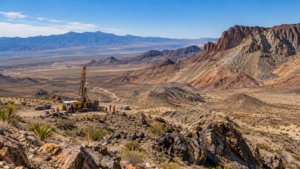
The massive infrastructure of the Oyu Tolgoi headframe stands against the Gobi Desert horizon, symbolizing the scale of the investment at risk.
The Bottom Line for Investors
The risk at Oyu Tolgoi is no longer technical; it is purely fiscal and political.
Rio Tinto is in a "must-win" situation. They have sunk too much capital into the Gobi Desert to walk away. However, the days of the 2009 agreement are over. 2026 marks the inflection point where host nations are clawing back the "upside" of the 2026 critical minerals scoreboard.
If Mongolia succeeds in securing a 60% revenue share, it will set a precedent that could ripple through Africa and South America. From Ghana’s bauxite boom to the lithium flats of the Andes, the message is clear: The old royalty models are dead.
For now, the Oyu Tolgoi dispute remains a "negotiation," but the tone in Ulan Bator suggests that patience has run out. The clock is already ticking for Rio Tinto to find a middle ground that keeps the concentrate moving to China while keeping the Mongolian treasury full.
As the lithium forecast for 2026 shows, supply growth is precarious. Any disruption at Oyu Tolgoi would send copper prices into a vertical climb.
Rio Tinto has yet to issue a formal response to the 60% revenue demand, but the company’s silence speaks volumes. The strategic calculus here isn't subtle: Pay up now or risk the entire asset later.

An ethnically diverse team of engineers and technicians monitors the automated conveyor systems in the Oyu Tolgoi underground mine.
This is not a drill. This is the new reality of mining in the late 2020s. The world wants the copper, but the host nations want the money. And they want it now.
Stay tuned to Skillings.net for further updates on the Oyu Tolgoi negotiations and the broader impact on global copper markets.