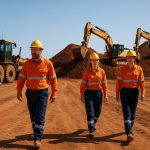
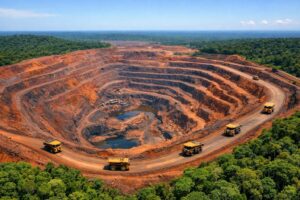
The New Zealand mining expansion is underway, with the government announcing plans to double the country’s mineral exports to $3 billion annually within the next decade—a move welcomed by investors and opposed by environmentalists.

Resources Minister Shane Jones unveiled the plan during a national mining conference in Rotorua, positioning the initiative as a cornerstone of New Zealand’s future economic resilience. The strategy hinges on tapping underutilized resources and positioning the country as a credible supplier of minerals critical to the global energy transition.
“New Zealand cannot afford to sit on the sidelines while the world races for secure mineral supplies,” said Minister Jones. “This expansion is about creating high-value jobs, strengthening regional economies, and supplying key materials for a greener future.”
Related News
- Egypt Targets Mining Boom with 5-Year Strategy to Become Regional Power
- Solaris Secures $200M from Royal Gold to Advance Warintza Copper-Gold Project in Ecuador
- BASF Strengthens R&D in Copper Hydrometallurgy Amid Global Push for Sustainable Mining
- Hindalco Secures Future Fuel Supply with EMIL Mines Acquisition
Strategic Imperatives Behind New Zealand’s Mining Expansion
At the heart of the New Zealand mining expansion is a targeted push to develop rare earth elements, gold, silver, and battery minerals such as lithium and cobalt. Officials say these resources are underexplored, particularly in regions of the South Island and along the West Coast.
The Ministry of Business, Innovation and Employment (MBIE) will streamline exploration permits, modernize regulatory frameworks, and boost access to geological data. The government has also pledged new investment incentives aimed at encouraging local and foreign companies to participate in long-term extraction projects.
More Read
According to New Zealand Petroleum & Minerals, mineral exports currently sit at around $1.5 billion annually. The new roadmap aims to lift that figure to $3 billion by 2035—a 100% increase over the next ten years.

Environmental Concerns Shadow the Expansion Strategy
While the government frames the New Zealand mining expansion as an economic necessity, environmental groups see it as a backward step. Activists argue that expanding mining operations—especially near conservation areas—threatens native ecosystems and undermines climate goals.
“This is extractivism dressed in climate clothing,” said Amanda Larsson, campaign lead at Greenpeace Aotearoa. “We should be protecting biodiversity and honoring climate agreements, not opening new mines in pristine landscapes.”
More Read

Some of the most contentious proposals could affect conservation land, prompting Māori iwi and ecological groups to call for legal safeguards. Prior mining bids in protected areas have sparked public protests and litigation, and the latest expansion plan has reignited those tensions.
Balancing Economic Goals With Environmental Integrity
Minister Jones insists that the expansion will be governed by strict environmental protocols. The MBIE is expected to introduce more robust environmental assessments and implement offsetting mechanisms to mitigate the ecological impact of approved projects.
“We are not sacrificing the environment—we are strengthening the economy with responsible, world-class standards,” Jones stated. He floated the idea of a sovereign minerals fund to reinvest royalties into conservation and infrastructure.
Critics remain skeptical, warning that promises of “responsible mining” have not always matched outcomes in other jurisdictions. The government, however, maintains that this iteration of mining policy will integrate environmental performance metrics and indigenous consultation frameworks more deeply than ever before.
Global Context and Long-Term Outlook
The New Zealand mining expansion aligns with a global pivot toward diversifying critical mineral supply chains. As geopolitical tensions heighten and the clean energy transition accelerates, countries such as Australia and Canada have made similar moves.
With demand for green technologies rising, New Zealand hopes its reserves can offer both an economic windfall and a geopolitical advantage. Still, whether it can expand mining without fracturing its environmental reputation remains uncertain.
As Jones put it: “New Zealand has the minerals the world needs—and the ability to mine them right.”