Africa’s mining sector is creating jobs at a pace not seen in decades, and 2026 is shaping up to be the inflection point everyone’s been waiting for. The critical minerals boom, driven by global demand for lithium, cobalt, and copper, is fundamentally reshaping mining jobs Africa-wide. We’re talking about an estimated 286,000 additional formal jobs in these commodities alone by 2040, according to recent workforce projections. That pipeline starts now.

But here’s the thing: the employment story isn’t just about pickaxes and pit walls anymore. Most of the new mining sector careers being created sit outside the mine itself, processing, refining, logistics, compliance, and manufacturing. A single $1 billion investment in mining and processing can generate between 3,000 and 6,000 direct jobs, with ripple effects touching procurement specialists, safety officers, environmental consultants, and downstream manufacturers.
The opportunity is massive. So is the skills gap standing in the way.
South Africa: The Established Giant Under Pressure
South Africa remains the continent’s mining employment heavyweight, but 2026 brings a complicated picture. The country’s mining workforce has historically dominated African production across gold, platinum group metals, and coal. Today, it’s pivoting, slowly, painfully, toward the critical minerals jobs that global supply chains desperately need.

The challenge? South Africa’s mature mining sector means fewer greenfield projects and more brownfield optimization. Employment growth is concentrated in technical modernization roles: automation specialists, data analysts, and environmental compliance officers. Junior mining companies exploring lithium and rare earth deposits in the Northern Cape are hiring, but they’re competing for talent with established majors who can offer better pay and stability.

Local content requirements are tightening here too. The government is pushing hard for beneficiation, processing raw materials domestically before export, which creates new jobs in refining and manufacturing but demands skill sets the current workforce often lacks. Training partnerships between mining houses and technical institutions like the University of the Witwatersrand’s School of Mining Engineering are expanding, but the pipeline is years behind the demand curve.
DRC: Cobalt’s Kingdom Faces a Workforce Reckoning
The Democratic Republic of Congo produces roughly 70% of the world’s cobalt, and the employment implications of that dominance are enormous. Critical minerals jobs in the DRC are multiplying as battery manufacturers lock in supply agreements and junior miners race to develop new deposits in the Copperbelt.
But the DRC job market operates under conditions that would make most Western HR departments flinch. Artisanal and small-scale mining (ASM) employs hundreds of thousands of workers in often dangerous, informal conditions. The formal sector, dominated by companies like Glencore, CMOC, and Ivanhoe Mines, is expanding headcount, but the ratio of informal to formal mining employment remains stubbornly high.
Here’s where 2026 gets interesting: ESG pressure from downstream buyers (think Apple, Tesla, BMW) is forcing formalization. Companies are investing in workforce development programs, structured labor planning, and responsible sourcing certifications. This creates demand for compliance specialists, supply chain auditors, and governance professionals who can document ethical practices.
The DRC government is also pushing local processing mandates, which could create thousands of jobs in cobalt refining and battery precursor manufacturing. Whether those jobs materialize depends entirely on infrastructure investment and political stability, neither of which is guaranteed.
Ghana: West Africa’s Diversification Play
Ghana’s mining sector has long been synonymous with gold, but 2026 marks a deliberate push toward diversification. The government is actively courting lithium exploration companies, and junior miners are staking claims across the Volta Region.

For job seekers, Ghana offers something increasingly rare in African mining: relative stability and a functioning regulatory framework. The Minerals Commission has streamlined permitting processes, and mining sector careers here come with better labor protections than many neighboring countries.
The workforce composition is shifting. Beyond traditional mining engineer and geologist roles, Ghana is seeing growth in:
- Environmental and social governance specialists managing community relations and impact assessments
- Procurement and logistics professionals supporting local supply chain requirements
- Technical trainers bridging the skills gap through industry-education partnerships
- Digital and automation technicians as mines modernize operations
Gold mining remains the employment anchor, but lithium exploration is generating buzz. Companies like Atlantic Lithium are advancing projects that could create hundreds of direct jobs and thousands of indirect positions in processing and support services.
The Skills Gap: Africa’s Biggest Employment Bottleneck
Every mining executive interviewed across the continent repeats the same refrain: we can’t find enough qualified workers. The skills gap isn’t just a hiring inconvenience, it’s a structural barrier to Africa capturing the full employment potential of the critical minerals boom.
The shortage hits hardest in specialized technical roles. Mining engineers, geologists with exploration expertise, metallurgists, and automation specialists are in chronic undersupply. Companies are poaching talent from competitors, importing expatriate workers at premium costs, and watching projects delay because they can’t staff them properly.
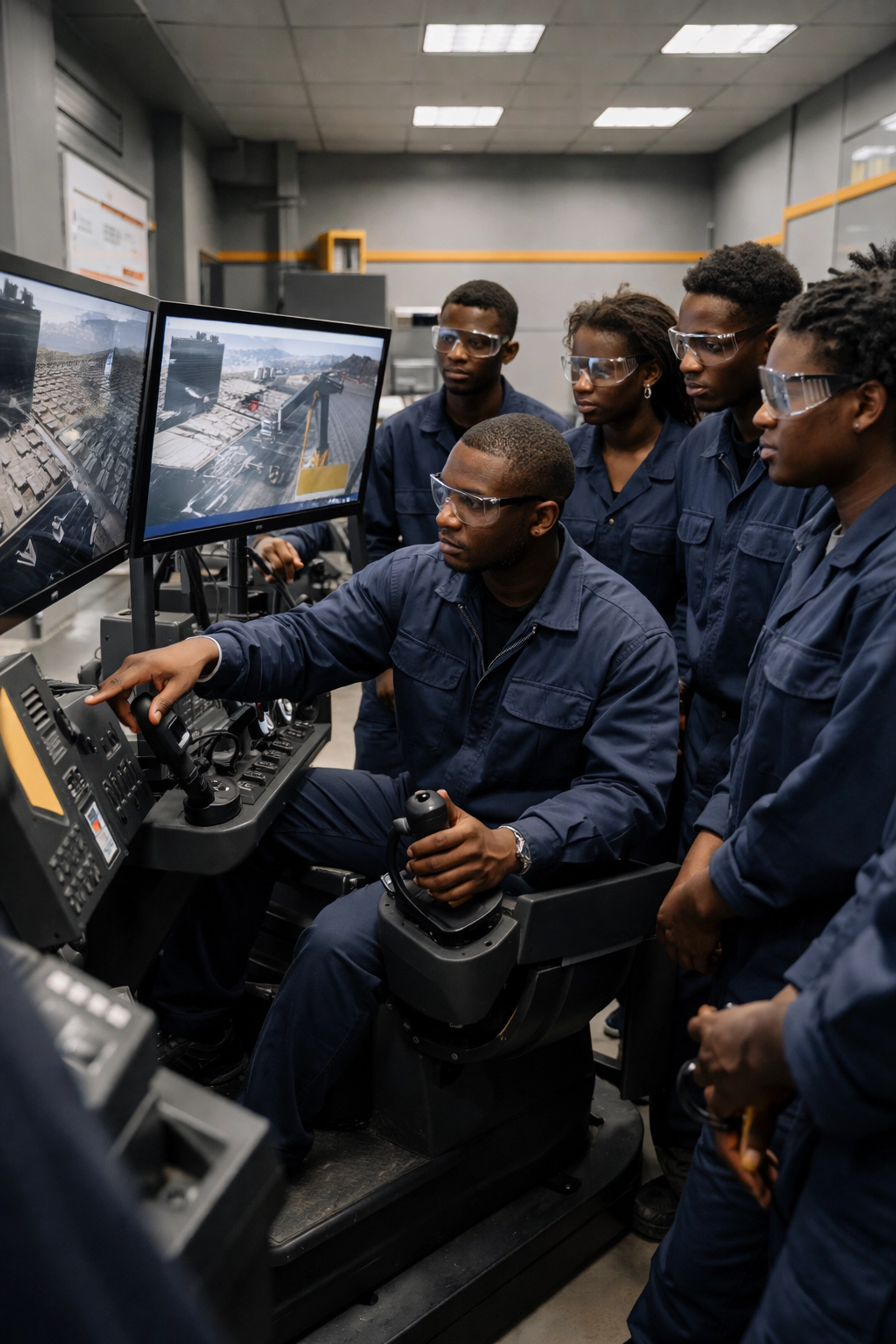
But the gap extends beyond technical expertise. Behavioral and leadership skills are increasingly critical for workforce retention and performance. Soft skills training, inclusive team environments, and adaptive management practices aren’t afterthoughts anymore, they’re core requirements for mines trying to reduce turnover and improve safety records.
The solutions emerging in 2026 focus on partnerships. Mining houses are funding training programs at technical colleges, sponsoring scholarships for engineering students, and creating apprenticeship pipelines. Some are building their own training academies from scratch, figuring that investing in workforce development beats competing for a shrinking pool of experienced talent.
For job seekers, this creates opportunity. Entry-level candidates with the right certifications and a willingness to work in remote locations can fast-track careers that would take decades in saturated markets.
Regulatory Shifts Creating New Job Categories
Stricter safety and compliance standards across Africa are generating entirely new employment categories. Gabon’s creation of the National Observatory of Mining Risks exemplifies a continent-wide trend toward formalized oversight.
Companies now need dedicated headcount for:
- Regulatory compliance officers tracking evolving national and international standards
- Safety managers implementing structured incident prevention programs
- Community liaison specialists managing relationships with local populations
- Environmental monitoring technicians conducting ongoing impact assessments
These aren’t peripheral roles. As African governments strengthen mining codes and international buyers demand ethical sourcing documentation, compliance functions are becoming central to operations. A mine that can’t demonstrate responsible practices risks losing offtake agreements worth hundreds of millions of dollars.
What Job Seekers Should Know Right Now
If you’re targeting mining jobs Africa in 2026, here’s the practical reality:
Location matters enormously. The DRC offers volume but volatility. South Africa offers stability but slower growth. Ghana offers balance but smaller scale. Your risk tolerance should drive your geography.
Technical credentials open doors, but soft skills close deals. Companies are desperate for engineers and geologists, yes: but they’re equally desperate for people who can lead teams, navigate cultural complexity, and communicate across language barriers.
Junior miners are hiring aggressively. The big majors get the headlines, but junior mining companies exploring critical minerals deposits are often more willing to take chances on less experienced candidates. They’re leaner, faster, and hungrier.
Local content requirements are your friend. African governments are mandating local hiring, local procurement, and local training. If you’re an African professional with relevant skills, you have structural advantages that didn’t exist five years ago.
The critical minerals boom is real, and so are the jobs it’s creating. The question isn’t whether Africa’s mining sector will hire: it’s whether the workforce can skill up fast enough to meet the demand.
For more coverage on Africa’s mining sector, visit Skillings Mining Review.