By Charles Pitts | Published in Skillings Mining Intelligence

The global lithium market is navigating a critical inflection point. After enduring a severe price correction through 2023 and 2024 that decimated valuations and forced widespread project deferrals, spot prices for battery-grade lithium carbonate have established a firm technical floor near US$18,000 per tonne. As the industry moves deeper into 2026, analysts and market participants are increasingly signaling a transition away from persistent oversupply toward a projected structural deficit.
Understanding the trajectory of the lithium price forecast 2026 requires examining the delicate interplay between revised supply additions in Australia and China, accelerating stationary energy storage demand, and tightening macroeconomic fundamentals across the critical minerals sector.
1. Current Market Baseline: Rebounding from the 2025 Reset
The severe price collapse of previous years weeded out high-cost marginal producers and prompted senior miners to scale back expansion capital expenditures. By mid-2026, spot prices for battery-grade lithium carbonate in key Asian markets have stabilized in the US$21,000 to US$24,000 per tonne range. Shanghai Metals Market (SMM) and Platts assessments indicate that spot material DDP China is trading around US$22,000–$24,000/t, reflecting a modest yet durable recovery from cyclical lows.

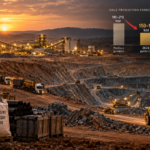
This price stabilization demonstrates that producers cannot sustainably operate at sub-$15,000 levels without triggering widespread supply curtailments. Consequently, the $18,000/t threshold has hardened into a critical cost-curve floor, below which tier-one and tier-two assets alike face margin compression that halts new project approvals.

2. Supply and Demand Drivers: The 2026 Tightening Cycle
The shift from surplus to potential deficit is driven by two primary vectors: converging demand growth from electric vehicles (EVs) and energy storage systems (BESS), coupled with slower-than-expected project ramp-ups in hard-rock and brine operations.
Accelerating Stationary Energy Storage (BESS)
While EV adoption rates have moderated into a steady growth trajectory, Battery Energy Storage Systems have emerged as a dominant force in lithium consumption. Industry data indicates that BESS demand share of total lithium consumption is projected to expand significantly, rising from roughly 14.5% in 2025 to over 19% in 2026. Grid-scale storage installations in North America, Europe, and East Asia are absorbing large volumes of lithium carbonate equivalent (LCE), offsetting any near-term softening in consumer automotive markets.
Upstream Constraints and Project Delays
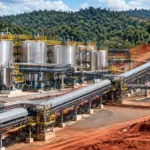
On the supply side, despite recent mine restarts in Western Australia and processing expansions in China, cumulative output growth has faced headwinds. Permining bottlenecks, capital discipline among major producers, and technical challenges in greenfield brine and spodumene projects have tempered output expectations. Global supply estimates for 2026 cluster around 1.58 million tonnes LCE against consumption forecasts approaching 1.48 to 1.55 million tonnes LCE, setting the stage for a structurally tight market balance.
3. Institutional Outlook: Deficit vs. Surplus Forecasts
Major financial institutions and price reporting agencies diverge on whether 2026 will register a minor surplus or an outright supply deficit, but consensus agrees that the surplus buffer is shrinking rapidly.
- Morgan Stanley & UBS: Highlighting aggressive deficit scenarios, Morgan Stanley and UBS have projected potential deficits ranging from 22,000 to over 80,000 tonnes LCE in 2026, driven by surging BESS demand and constrained project delivery. These institutional models underpin bullish price targets moving toward the upper-$25,000 to $30,000/t band.
- Fastmarkets: Fastmarkets has revised its 2026 outlook upward, pointing to an average of approximately US$23,800/t as demand growth systematically overtakes incremental supply additions.
- S&P Global / Conservative Views: More cautious models suggest a narrowing surplus of roughly 100,000 tonnes LCE, maintaining that while the market is exceptionally tight, immediate physical shortages may be localized rather than global.

4. 2026 Lithium Price Scenarios: Base, Bull, and Bear Cases
To assist operators, financial institutions, and strategic investors in navigating market volatility, we have modeled three primary scenarios for battery-grade lithium carbonate through the remainder of 2026:
| Scenario | Market Balance | Average Price Range ($/tonne LCE) | Key Drivers & Assumptions |
|---|---|---|---|
| Base Case | Balanced to Mild Deficit (-22k to +20k t LCE) | $18,000 – $25,000 | Steady EV adoption, robust BESS growth, normal project ramp-ups in Australia and South America. |
| Bull Case | Structural Deficit (-50k to -80k t LCE) | $26,000 – $32,000 | Accelerated grid-scale energy storage demand, severe delays in major greenfield projects, supply chain restocking. |
| Bear Case | Persistent Surplus (+80k to +120k t LCE) | $12,000 – $17,000 | Subdued global macroeconomic growth, faster-than-expected commercialization of alternative extraction technologies (DLE), aggressive supply expansion. |
5. Strategic Implications for Operators and Investors
For mining executives and exploration companies, the 2026 outlook underscores the necessity of operational efficiency and disciplined capital allocation. Projects with lowest-quartile operating costs on the cost curve are well-positioned to generate robust free cash flow at the current $20,000/t baseline.

For institutional investors, the collapse in lithium valuations experienced during the previous cycle is increasingly viewed as a generational entry point. As structural deficits loom on the horizon, market participants are shifting focus from short-term spot volatility to long-term security of supply for critical transition metals.