By Charles Pitts

Komatsu just pledged to launch hydrogen-powered mining trucks by 2030, aiming to revolutionize the zero-emission vehicle landscape for heavy-duty mining equipment.
Key Takeaways
- Komatsu targets commercial hydrogen-powered mining trucks ready for use by 2030.
- Mining equipment sales make up about 40% of Komatsu’s total revenue.
- The company plans to source fuel cell stacks externally, anticipating cost reductions through mass production.
- Ambitious emission-cutting goals include halving CO2 from equipment by fiscal 2030 versus 2010 levels.
Komatsu’s Ambitious Bet on Hydrogen Mining Trucks by 2030
Komatsu aims to replace diesel engines with hydrogen power for mining dump trucks—a first in the industry. Development kicked off in 2021, with a 2030 target for operational vehicles. This shift aligns tightly with mining customers’ escalating demands to drastically cut carbon emissions. Unlike vehicles powered by overhead electric lines, which are rare in mining, hydrogen trucks offer zero-emission mobility on conventional roads inaccessible to wired systems. Komatsu’s approach speaks directly to evolving industry needs for sustainability in large-scale extraction.
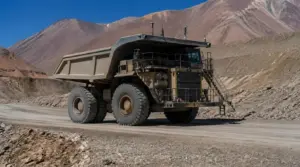
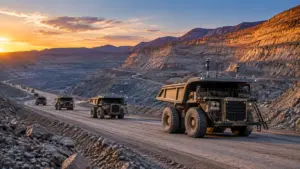
Mining trucks, which can weigh up to 600 tonnes when fully loaded, dwarf buses. They present a different degree of technological challenges in terms of hydrogen power than regular fuel cell vehicles.
Overcoming Technological and Cost Barriers for Hydrogen Mining Trucks
Hydrogen fuel cells must scale to meet the extreme demands of mining trucks weighing up to 600 tonnes fully loaded—much heavier than conventional vehicles. Komatsu plans to purchase fuel cell stacks from specialized vendors. Although fuel cell prices remain high, broadening hydrogen applications across industries could drive mass manufacturing and reduce costs. As mining accounts for about 40% of Komatsu’s revenue, the stakes for a successful hydrogen implementation are significant. To stay competitive, Komatsu must counter moves by rivals like Sany, which absorbed Joy Global in 2017 to boost its foothold in mining machinery.
Hydrogen Mining Trucks: A Critical Step Toward Industry Decarbonization
Replacing fossil fuels with hydrogen-powered trucks helps eliminate CO2 emissions during extraction, a critical decarbonization milestone. This technological pivot aligns with a global mining trend to minimize carbon footprints across the commodity life cycle—from production through disposal. Mining companies are already investing in hydrogen infrastructure, exemplified by Anglo American’s 320-megawatt solar facility powering hydrogen production near its South African platinum mine, generating roughly one tonne of hydrogen daily.
More Read

Industry Impact: What This Means for Hydrogen Mining and Heavy Equipment
Komatsu’s announcement signals a major pivot in hydrogen mining technology by aggressively targeting heavy-duty trucks that dominate fleet emissions. This development pressures industry-wide innovation in green mining vehicles, where most trucks remain diesel-powered. Komatsu’s 40% revenue stake in mining equipment underscores the economic importance of hydrogen adoption. Competitors like Sany, backed by Joy Global, will likely accelerate their own clean tech advancements to maintain market share, triggering a ripple effect across mining machinery manufacturers.

This breakthrough could set a new standard for zero-emission mining fleets, encouraging further investments in hydrogen infrastructure and renewable energy integration, amplifying the decarbonization momentum across global mining regions.
Market Analysis: Hydrogen Mining Truck Costs, Adoption, and Investment Trends
Hydrogen fuel cell technology for mining trucks currently faces steep costs, particularly for fuel cell stacks. However, Komatsu’s plan to source externally and the prospect of scaling across industries suggests downward pricing pressure over the next decade. With mining equipment representing a large chunk of Komatsu’s revenue, the strategic investment validates growing market appetite for hydrogen solutions amid rising fossil fuel regulations.
Enhanced public and private investments in renewable hydrogen production facilities, such as Anglo American’s solar-powered hydrogen plant, will support the fuel supply chain necessary for hydrogen mining trucks’ commercial viability. Investors should watch closely as hydrogen pricing and fuel cell efficiency improve, potentially unlocking significant value in hydrogen mining sectors.
Future Outlook: Milestones and Industry Trends Heading into 2030
Investors and industry watchers should anticipate Komatsu’s hydrogen truck prototypes emerging post-2023, paving the way for field testing and regulatory approvals throughout the late 2020s. Komatsu’s internal targets to cut equipment CO2 emissions by 50% by fiscal 2030 underpin the urgency to commercialize hydrogen mining trucks within this timeline.
Broader supply-chain readiness, such as infrastructure expansions by major mining firms and fuel cell manufacturers, will determine hydrogen mining adoption speed. The next eight years are critical for technological breakthroughs and cost efficiencies to solidify hydrogen as a mainstream alternative in mining fleets.
Frequently Asked Questions About Hydrogen Mining
The move by Komatsu to pioneer hydrogen mining trucks marks a watershed moment for the industry’s transition away from diesel. Hydrogen mining vehicles offer a scalable path to zero emissions by 2030, addressing both environmental imperatives and operational flexibility. This strategic shift positions Komatsu at the forefront of sustainable heavy equipment innovation, reinforcing hydrogen mining as a cornerstone of future mining industry advancements.
Explore more mining investment outlook and mining company news to stay updated on hydrogen technology adoption in mining fleets.
Read the original Komatsu hydrogen mining truck announcement on Nikkei
Anglo American sustainability reports on hydrogen projects