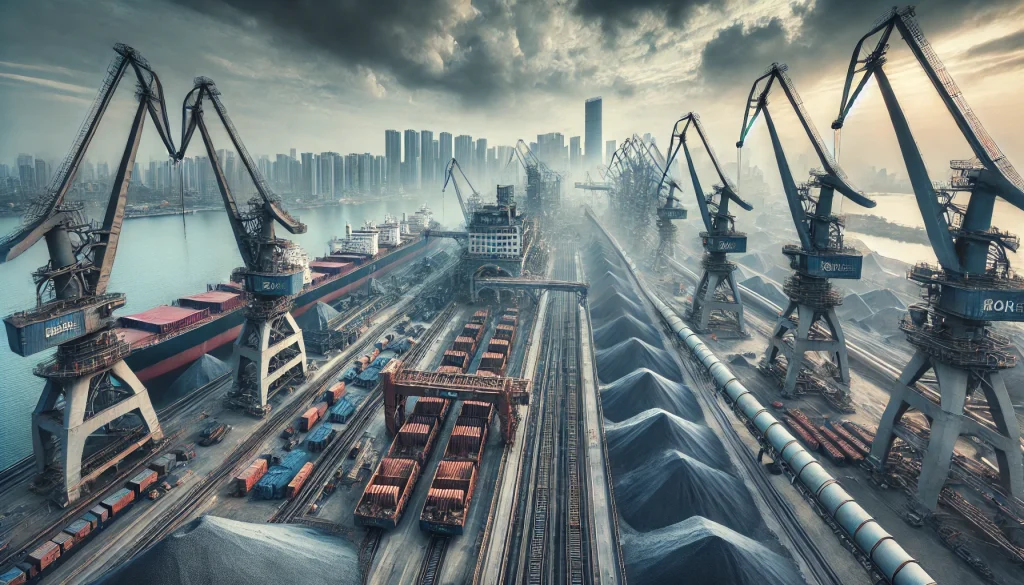
Iron ore prices closed 2024 with a steep decline of over 15%, driven by elevated portside inventories in China and sluggish demand. The downturn underscores mounting concerns about China’s economic outlook, weak steel margins, and muted industrial activity, despite Beijing’s stimulus efforts to stabilize growth.

Related News
- Cordoba Minerals Bridge Financing Secures $10M to Advance Alacran Project
- India Critical Mineral Auctions: Challenges and the Path Forward
- Zimbabwe Mining Sector Faces Revenue Decline Despite Higher Sales Volumes
- British Columbia Mining Groups Call for Regulatory Reform Amid Criticism of Delays Report
- Decarbonization in Mining: CEFC’s $75M Investment in Critical Mineral Supply Chain
Faltering Demand and Steel Output Slowdown
China’s crude steel production declined by 2.7% year-on-year in the first 11 months of 2024, reflecting a prolonged slump in the property sector, traditionally a key driver of steel consumption. While strong steel exports provided some relief, domestic demand faltered, dampening iron ore requirements.
Iron ore futures mirrored this downward trajectory. The benchmark February contract on the Singapore Exchange (SGX) dropped 18.5% year-to-date, settling at $100.4 per ton by year-end after briefly falling below $100 in December. Similarly, the most-traded May contract on the Dalian Commodity Exchange (DCE) ended the year 16% lower.
Stimulus Measures Offer Temporary Respite
In response to its struggling economy, China introduced a series of stimulus measures in late 2024, including targeted support for the real estate sector and increased infrastructure spending. While these actions helped iron ore prices recover some ground in the final quarter, they failed to offset broader market challenges.
Chinese President Xi Jinping’s forecast of 5% GDP growth for 2024—a slight improvement over the World Bank’s projection of 4.9%—briefly buoyed market sentiment. However, signs of slowing factory activity in December tempered optimism.
More Read

Oversupply Looms in 2025
Looking ahead, the global iron ore market faces significant pressure from weak demand and growing supply. Tomas Gutierrez, head of data at consultancy Kallanish Commodities, highlighted increased Australian exports and new project ramp-ups as key contributors to an impending oversupply.

“Prices will remain under pressure with higher exports and softening demand in China,” Gutierrez stated.
This oversupply is expected to weigh on iron ore prices throughout 2025, even as producers contend with narrowing margins. Steelmakers, meanwhile, face mixed pricing trends for other inputs like coking coal and coke, which declined 44% and 32.5%, respectively, in 2024.
More Read

Steel Market Mixed as Benchmarks Decline
Steel benchmarks on China’s Shanghai Futures Exchange (SHFE) showed varied performance, reflecting the sector’s volatility. Rebar and wire rod posted modest gains of 0.39% and 0.08%, respectively, while hot-rolled coil and stainless steel registered slight losses of 0.09% and 0.35%. However, on a year-to-date basis, steel products experienced sharper declines, ranging from 11% to 25%.
Outlook: A Challenging Year Ahead
The iron ore market enters 2025 with significant headwinds. Weak Chinese demand, high inventory levels, and a looming supply glut are likely to dominate market dynamics. Although government interventions may support the broader economy, their capacity to rejuvenate the steel sector—and, by extension, the iron ore market—remains uncertain.
For miners and traders, the path forward will depend on strategic adjustments to production volumes and alignment with shifting global steel demand.