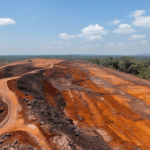
Glencore Plc, the Swiss mining and commodities giant, has decided to retain its coal assets, reversing its previous plan to coal spin off the business. This decision comes after extensive consultations with shareholders, who largely opposed the move, citing the strong cash flow generated by coal operations.

Background and Initial Plans
In November 2023, Glencore announced its intention to merge its coal assets with those acquired from Teck Resources and subsequently spin off the combined entity. This move was seen as a significant shift for Glencore, which has long been a major player in the coal industry. The company aimed to align itself with global trends towards reducing carbon emissions and transitioning to cleaner energy sources.
Related News
- Anglo American Engages Financial Advisors for Major Coal Asset Sale
- Steelmaking Coal Supply Hit as Anglo American Suspends Grosvenor Mine Operations
- FutureCoal Calls for Balanced Approach to Energy Policy Amidst G7 Announcement on Unabated Coal
- India’s Government to put 26 coal mines up for auction
Shareholder Opposition
However, the plan faced significant resistance from investors. Shareholders representing nearly two-thirds of eligible voting shares were consulted, and over 95% of those who expressed a preference supported retaining the coal and carbon steel materials business. Investors argued that the coal division’s robust cash flow was crucial for capital returns and buybacks, especially in the current economic climate.
Financial and Environmental Implications
Glencore’s decision underscores the complex balancing act that fossil fuel companies face. While there is mounting pressure to reduce carbon emissions, the profitability of coal remains a compelling factor for investors. Glencore’s thermal coal output is projected to be between 98 million and 106 million tonnes this year, making it one of the largest producers and exporters globally.
Despite its decision to retain its coal assets, Glencore has reiterated its commitment to its Climate Action Transition Plan (CATP). The company aims to achieve a 15% reduction in carbon dioxide equivalent emissions for its industrial assets from 2019 levels by the end of 2026 and a 50% reduction by 2035.
More Read
Market and Community Reactions
The decision has elicited mixed reactions from various stakeholders. Environmental groups like the German NGO Urgewald have cautiously welcomed the move, emphasizing the need for a just transition for coal workers and affected communities. “Glencore should keep its coal mines and wind them down in line with the IEA Net Zero scenario,” said Sebastian Rötters, energy and coal campaigns coordinator at Urgewald.

Conversely, some market analysts and community leaders have expressed dissatisfaction. Simon Nicholas from the Institute for Energy Economics and Financial Analysis pointed out that divesting coal assets could lead to increased production by pure-play coal miners, thereby exacerbating emissions. Meanwhile, Juan Pablo Gutiérrez, a Colombian social leader, called for Glencore to close its mines and address its social and environmental responsibilities.
Future Prospects
Glencore’s CEO, Gary Nagle, hinted at the possibility of acquiring more steelmaking coal assets if they meet the company’s criteria for price, quality, and location. This indicates that while Glencore is committed to managing the decline of its thermal coal operations, it remains open to strategic acquisitions in the coal sector.