The energy transition isn’t a concept anymore. It’s a massive, resource-hungry machine that’s finally starting to realize it’s running low on fuel. Specifically, copper. Everyone likes to talk about “green” this and “sustainable” that, but you can’t build a wind turbine or an EV charging network with good intentions. You need red metal. Lots of it.

Here’s the reality nobody wants to admit: finding new copper deposits is getting harder, more expensive, and politically messier. That’s why the biggest wins in 2026 aren’t coming from wildcat exploration in unproven jurisdictions. They are coming from brownfield expansions in stable, tier-one regions.
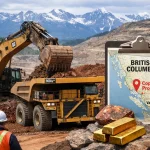
Hudbay Minerals just proved the point. By securing British Columbia environmental permits for a massive three-phase expansion at Copper Mountain, they aren’t just digging a deeper hole. They are fundamentally resetting the clock on one of Canada’s most critical assets.
We’re talking about an extension to 2040. A 90% boost in copper production. And a C$11.5 billion injection into the provincial GDP.
This isn’t just a corporate update. It’s a survival strategy for the North American supply chain.
More Read

The 2040 Roadmap: Three Phases of Scale
Most people see a mine and think it’s a static operation. It isn’t. It’s a living organism that requires constant surgical adjustments to remain viable. Hudbay’s strategy for Copper Mountain revolves around a three-phase expansion centered on the New Ingerbelle pit.

The goal? Unlock access to higher-grade mineralization that was previously considered out of reach.
The timeline is aggressive but calculated. From now until 2027, the focus is on stripping and preparation. Between 2027 and 2037, the mine will hit its stride at expanded capacity. The final stretch, from 2036 to 2040, will involve re-handling low-grade stockpiles and beginning the heavy lifting of site reclamation.
More Read

It’s a masterclass in life-of-mine (LOM) planning. By using “nested pit” designs: essentially pushbacks on the historical Ingerbelle pit: Hudbay is maximizing every ounce of value. This isn’t just about moving dirt; it’s about the precision of grade control.

The Brutal Numbers: Why This Matters
Let’s look at the production profile. This expansion is projected to deliver:
- 750,000 tonnes of copper.
- 900,000 ounces of gold.
- 5.5 million ounces of silver.
That’s a lot of metal. To put that 90% production boost into perspective: it’s the difference between being a steady producer and becoming a dominant regional force. In a market where copper supply risks are the primary concern for 2026, Hudbay is creating a buffer.
But the numbers that really turn heads are the economic ones. A C$11.5 billion contribution to provincial GDP isn’t a rounding error. It’s a lifeline. For the Princeton region, this means preserving 800 direct jobs. In an era where mining often faces stiff local opposition, Hudbay has managed to weave itself into the economic fabric of the province.
The “New Ingerbelle” Pivot
The secret sauce here is the New Ingerbelle pit. Historically, the Ingerbelle side of the operation was the “other” pit. Now, it’s the main event.
By focusing on this area, Hudbay is chasing the higher-grade core. In mining, grade is king. You can have all the tonnage in the world, but if the grade isn’t there, your margins evaporate the moment copper prices dip.
Hudbay is betting that the New Ingerbelle mineralization will provide the necessary cushion to navigate the volatility of the 2026-2030 market cycle. They aren’t alone in this “grade-first” mindset. We’ve seen similar discipline from other majors, like BHP shunning M&A mania to focus on their own sector-leading pipelines.
99 Years of History Meets 21st-Century Tech
Hudbay isn’t some newcomer trying to figure out the Canadian landscape. They have a 99-year history in this country. They know how to navigate the bureaucracy, the weather, and the geology.
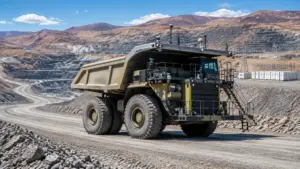
However, they aren’t stuck in the past. Copper Mountain is becoming a testing ground for decarbonization in an industry that desperately needs it. They’ve already implemented an electric trolley assist haulage system: the first of its kind in a North American open-pit mine.
Think about that. It’s not just a PR move. It’s an operational efficiency play. Reducing diesel consumption doesn’t just lower emissions; it lowers the Opex. When you’re hauling millions of tonnes of rock up a pit ramp, the fuel savings are astronomical.
This aligns with the broader trend we’re seeing across the industry. As we noted in our analysis of why mining ESG reporting will change capital access, these “green” operational shifts are becoming prerequisites for securing institutional investment in 2026.

Ownership and Control: The April 2025 Consolidation
You can’t run a 3-phase, multi-decade expansion with one hand tied behind your back. In April 2025, Hudbay made the strategic move to acquire the remaining 25% stake in Copper Mountain from Mitsubishi Materials Corporation.
Achieving 100% ownership was critical. It simplified the decision-making process. No more board-level negotiations with partners over capital expenditures or expansion timelines. Hudbay is now the sole pilot of this ship.
This kind of consolidation is a recurring theme. While some companies are overpaying for growth (see our take on M&A mania in 2026), Hudbay’s move to buy out a partner on an asset they already operated was a low-risk, high-reward play. It’s cleaner. It’s more efficient.
The BC Factor: Permitting in a Tough Jurisdiction
Let’s be honest: British Columbia isn’t exactly a “rubber stamp” jurisdiction. The environmental standards are some of the most stringent in the world. Getting a life-of-mine extension to 2040 is a massive win that speaks to Hudbay’s relationship with the provincial government and local stakeholders.
A key part of this success is their collaboration with First Nations. Hudbay has signed participation agreements with two First Nations groups, embedding oversight and benefit-sharing into the core of the operation. This isn’t optional anymore. If you want to mine in Canada in 2026, you either have a real partnership with indigenous communities, or you don’t have a project. Period.

The Risk Calculus: What Could Go Wrong?
No project is without risk, and a 15-year expansion plan has plenty of variables.
- Labor Shortages: 800 jobs is a lot of people to find in a tightening labor market. The competition for skilled operators and engineers in BC is fierce.
- Inflationary Pressures: While the trolley system helps with fuel, the cost of steel, explosives, and heavy machinery continues to creep up.
- The Copper Price Floor: Hudbay is banking on the “energy transition” keeping copper prices elevated. If global growth stutters or a massive new supply source (like a sudden breakthrough in seabed mining) hits the market, the economics of re-handling low-grade stockpiles in the 2030s might look different.
However, when you compare these risks to the alternative: trying to permit a brand-new greenfield mine from scratch: the choice is obvious. Expanding an existing site is the only logical way to meet near-term demand.
Final Thoughts: The 2040 Horizon
Hudbay’s move at Copper Mountain is a signal to the rest of the industry. The “easy” copper is gone. The future belongs to the operators who can squeeze more value out of existing assets through technical innovation and disciplined planning.
By securing the 2040 timeline, Hudbay has de-risked its medium-term production profile. They’ve given themselves a seat at the table for the duration of the energy transition’s most critical decade.
There’s not enough copper to go around. That’s a fact. But for Hudbay, that scarcity is exactly what makes the Copper Mountain expansion a C$11.5 billion bet worth taking.
Welcome to the new reality of mining: it’s longer, deeper, and smarter. Or you’re out of the game.