Robots in mining are no longer a distant vision — they are actively reshaping how minerals are discovered, extracted, and transported. From AI-powered autonomous trucks hauling ore across open-pit mines to drones surveying underground tunnels, mining robots are making operations safer, faster, and more profitable. In this guide, we cover the key types of mining robots, their real-world applications, measurable benefits, and what the future holds for fully automated mines.
Why Robots in Mining Are Transforming the Industry
Mining has always been one of the most dangerous professions in the world. Workers face cave-ins, toxic gases, heavy machinery, and long hours underground every single day. According to data from the Mine Safety and Health Administration (MSHA), 27 miners died in 2018 — and while that figure marked near-historic lows, even one preventable death is too many.
This is exactly why the push for robots in mining has accelerated so rapidly. Automation removes human workers from the most hazardous tasks. It also solves a second major challenge: efficiency. Mining robots work 24 hours a day, 7 days a week, without fatigue, and with consistent precision. The business case for mining automation is now overwhelming.
Major mining companies — including BHP, Rio Tinto, and Komatsu — are already deploying fleets of autonomous machinery at scale. The trend is only growing. According to Mining Technology, robotics is now one of the key investment priorities highlighted in global mine-site technology adoption surveys.
Types of Robots Used in Mining
Not all mining robots are the same. The type of robot deployed depends on the task, the environment (surface vs. underground), and the level of automation required. Below are the most common categories of robots in mining today.
1. Autonomous Haul Trucks
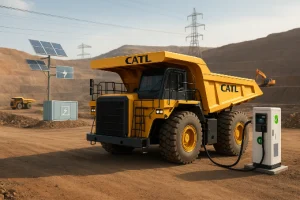
Autonomous haul trucks are the most widely deployed robots in mining, especially in large open-pit operations. These massive, driverless vehicles transport mined ore from the pit to processing facilities around the clock. They use GPS, radar, and lidar sensors to navigate safely without a human operator in the cab.
The performance gains are significant. Studies show that autonomous haul trucks can cut fuel consumption by around 10%, increase overall productivity by 15–30%, and reduce accident risks by up to 80% compared to human-operated vehicles. One of Australia’s largest mining companies operates a fleet of more than 80 of these autonomous three-story trucks across its iron ore operations.
2. Robotic Drilling Systems
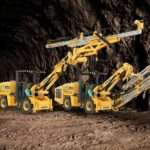
Drilling is the first and most critical step in the mining process. Before any mineral can be extracted, holes must be drilled to plant explosives and break open rock. Robotic drilling systems can perform this task semi-autonomously or with minimal human supervision, drilling precise hole patterns to specific depths using GPS and obstacle-detection technology.
Drilling robots improve accuracy significantly. More accurate drilling means better-placed explosives, which in turn means less waste, fewer secondary blasting requirements, and improved safety for workers on site.
3. Mining Drones (UAVs)
Drone technology has grown rapidly as a tool for mining exploration, mapping, and safety monitoring. Unmanned aerial vehicles (UAVs) survey mine sites and collect detailed topographic data, track mineral layer distribution, and monitor structural integrity — all without putting a human at risk.
The adoption rate tells the story: in Asia, drone usage at mine sites grew from 46% in 2019 to 88% in 2023. Similar growth has occurred in Europe and the Middle East, where drone penetration rose from 37% to 70% over the same period, according to a GlobalData survey of 150 mine sites.
4. Robotic Conveyor and Transport Systems
Underground mines rely on conveyor systems to move extracted material from deep inside the earth to the surface. Robotic conveyor systems — including hydraulic conveyors made by companies like Komatsu and Caterpillar — handle this job automatically. They offer high-capacity transport over long distances at low maintenance costs, making them a strong return-on-investment choice for mine operators.
5. AI-Enabled Inspection and Monitoring Robots
Smaller, sensor-equipped robots can crawl into areas that no human should enter. These inspection robots detect dangerous gases, monitor structural stability, measure temperature and air quality, and send real-time alerts to mine managers above ground. Some are also equipped to place IoT (Internet of Things) sensors throughout a mine for continuous data collection.
Key Applications of Mining Robots
Automated Transport of Extracted Material
Once ore is blasted and broken, someone — or something — has to move it. In underground mining, this material travels from the extraction face to the surface via automated conveyor belts, robotic loaders, and autonomous transport vehicles. Removing human drivers from this task eliminates the risk of rockfall injuries and allows transport to continue 24 hours a day.
Drilling and Explosive Positioning
Modern automated drill machines bore to depths of many meters using GPS guidance. After drilling, robots can also assist with positioning explosive charges — a task that currently requires workers to manually place detonators, primers, and wiring. Automating this step removes people from one of the most dangerous moments in any mining cycle.
Secondary Rock Breaking
After a blast, large boulders often remain that are too big to be loaded and transported. AI-powered rock crusher robots can calculate the precise amount of explosive needed to break these boulders into manageable pieces, then haul the crushed material to the surface. This secondary breaking process was previously manual, slow, and dangerous.
Underground Roadway Construction
Underground mines need roadways — tunnels, drifts, and crosscuts — to move workers, machinery, and materials. Constructing these roadways involves mapping geology, drilling blast holes, clearing debris, and reinforcing walls. Robots can survey the mining area to identify the best route, place explosives, and remove fragile rock. They can also monitor air quality and gas levels during construction, alerting crews to take precautions before entering.
Exploring Flooded and Abandoned Mines
Thousands of old mines have been shut down and flooded, many containing minerals that were not economically viable to extract when they were first abandoned. Rare earth elements — a group of 15–17 metals used in laptops, LED TVs, electric vehicle batteries, and other modern technology — are now in high demand, making these old sites worth revisiting.
Sending human divers into flooded, pitch-dark tunnels is extremely dangerous. Mining robots can go where humans cannot. They navigate submerged passages, deploy IoT sensors, collect data, and transmit it to the surface so engineers can assess whether reopening a mine is commercially viable — all without putting a single person at risk.
Benefits of Robots in Mining: A Quick Overview
| Benefit | Impact |
|---|---|
| Worker Safety | Up to 80% reduction in accident risk (autonomous trucks) |
| Productivity | 15–30% increase in operational efficiency |
| Fuel Savings | ~10% reduction in fuel consumption via optimized routing |
| 24/7 Operations | No shift changes, fatigue, or rest periods needed |
| Precision | Reduced material waste through accurate drilling and blasting |
| Data Collection | Continuous IoT monitoring of gas levels, stability, and output |
| Access | Robots can reach areas impossible or too dangerous for humans |
Challenges and Limitations of Mining Automation
Despite the impressive progress, robots in mining face real limitations — especially underground. Unlike the controlled environment of a factory floor, mines are unpredictable. Geology shifts, water levels change, rock quality varies, and tunnel conditions can change from hour to hour.
Experienced mining workers point out that many tasks still require human judgment and dexterity. Installing timber supports in narrow-vein mines, performing complex repairs on heavy equipment mid-shift, or responding to unexpected structural failures are jobs that current robots simply cannot do reliably. As one underground miner put it in an industry discussion: robots are great for drilling rings, but a robot that could also “mesh a heading” and charge up a face without getting covered in saltwater and explosives residue is still a long way off.
There is also a social dimension. Many mining operations exist within a community “social contract” — local communities tolerate the noise, dust, and disruption of a mine in exchange for well-paying jobs. If robots eliminate the workforce, communities may withdraw their support for operations. Mining companies will need to think carefully about how automation is introduced and what economic benefits remain for local communities.
Maintenance is another open question. Robots break down. Who repairs them? And who repairs the machines that repair the robots? For fully autonomous mines to work, that chain of maintenance itself must also become largely automated — a challenge that remains unsolved at scale.
The Future of Robots in Mining
So when will mines be worked entirely by robots? The honest answer depends on the type of mine. Surface and open-pit mines are much closer to full automation — the environment is more structured, machinery is larger, and routes are more predictable. Some analysts expect certain open-pit operations to reach near-full autonomy within the next decade.
Underground mining is a different story. The sheer complexity of variables — dynamic geology, narrow passages, variable rock conditions, and the need for human-like dexterity in maintenance — means that full underground automation is likely decades away, if it happens at all in its current form. Some experts believe true full autonomy underground would require artificial general intelligence (AGI) to handle the unpredictability that human miners navigate instinctively every day.
One emerging approach is the use of large swarms of smaller, specialist robots — one type for exploration, another for drilling, another for battery swaps and repairs — that communicate with each other and coordinate tasks autonomously. This modular swarm approach could sidestep some of the limitations of single, multipurpose robots.
Humanoid robots are also entering the conversation. As robotics technology advances, human-shaped robots that can physically perform the same actions as a human miner — climbing ladders, operating hand tools, replacing components — may eventually handle the tasks that today’s purpose-built mining machines cannot. For a deeper look at this direction, see Persona AI’s analysis of humanoid robots for mining.
Read our related articles: Mining Technology Trends | AI in Heavy Industry | Autonomous Vehicles in Mining
Frequently Asked Questions: Robots in Mining
Mining robots are used for a wide range of tasks including autonomous haulage, robotic drilling and blasting, underground surveying, gas detection, roadway construction, and exploring flooded or abandoned mines. Their primary purpose is to improve safety, efficiency, and operational continuity.
Autonomous haul trucks use a combination of GPS, radar, lidar, and onboard computing systems to navigate mine sites without a human driver. They follow pre-programmed routes, avoid obstacles, and can communicate with other autonomous vehicles on site. They operate around the clock and have been shown to reduce fuel use by roughly 10% and increase productivity by up to 30%.
Not in the near future. While robots and automation are reducing the number of workers needed for repetitive and dangerous tasks, skilled roles in maintenance, engineering, operations management, and safety oversight remain firmly human. Full autonomy in underground mining in particular is likely many decades away due to the complexity of the environment.
Open-pit and surface mining operations are much more straightforward to automate than underground mines. The terrain is more predictable, vehicles are larger, and navigation is simpler. Several large open-pit iron ore and coal mines already operate with significant fleets of fully autonomous trucks and equipment.
Yes. Drone adoption in mining has grown dramatically over the past several years. In Asia, penetration at mine sites grew from 46% in 2019 to 88% in 2023. Drones are commonly used for site surveying, topographic mapping, safety inspections, and monitoring mineral layer distribution.
Yes. Submersible and semi-aquatic robots can navigate flooded mine shafts to assess mineral content and structural condition — tasks that would be extremely dangerous for human divers due to poor visibility and unstable environments. This capability is becoming increasingly valuable as demand for rare earth elements drives interest in reopening old mines.