By Salini Krishnan | Skillings Mining Review

The clock started ticking louder on January 1, 2026. That’s when the European Union’s Carbon Border Adjustment Mechanism shifted from its transitional phase into full implementation, requiring importers of steel and other carbon-intensive products to purchase certificates covering embedded emissions. For iron ore producers watching from the sidelines, the message is unmistakable: the steel you feed into is changing, and your product needs to change with it.
Here’s the uncomfortable reality. Major steel producers have committed to net-zero emissions by 2050, with interim targets demanding 80-95% CO2 reductions compared to 1990 levels. That’s not a vague aspiration anymore: it’s a procurement specification in the making. Iron ore that doesn’t fit into a decarbonized production chain will find fewer buyers, lower prices, and eventually, closed doors.
So what does green steel technology implementation actually mean for iron ore producers in 2026? Let’s break it down.
The Three Pathways Reshaping Steel Production
Steel decarbonization isn’t following a single trajectory. Three distinct technology pathways are emerging, each with different implications for iron ore demand and quality requirements.
More Read



Electric Arc Furnace (EAF) expansion is the fastest-moving piece of the puzzle. EAF technology currently produces approximately 70% less greenhouse gas emissions than traditional integrated steelmaking using blast furnaces. Companies like U.S. Steel and Nippon Steel are prioritizing EAF expansion and mini mill construction through 2030, and that trend is accelerating globally.
The catch? EAF primarily runs on scrap steel, not virgin iron ore. As scrap collection infrastructure expands, traditional iron ore demand from this segment shrinks. U.S. Steel has publicly committed to a 20% emissions intensity reduction by 2030 through expanded EAF deployment alone.
More Read

Hydrogen-based direct reduction (H2-DR) represents the second major pathway, and this one is more interesting for iron ore producers. H2-DR replaces coal-derived carbon with hydrogen as the reducing agent, producing direct reduced iron (DRI) that feeds into EAF operations. This method still requires iron ore: specifically, high-grade iron ore with low impurity levels.
The infrastructure buildout for H2-DR is substantial. We’re talking hydrogen production facilities, storage systems, modified reduction plants, and entirely new supply chain logistics. Most major deployments are targeted for the 2030-2050 window, but pilot projects are already operational in Sweden, Germany, and parts of Asia.
Alternative smelting reduction methods form the third pathway, including hydrogen plasma smelting reduction, alkaline iron electrolysis, and molten oxide electrolysis. These technologies remain largely in development stages, but they could reshape iron ore specifications entirely over the next two decades.
What Iron Ore Producers Need to Understand About Timing
The implementation timeline isn’t uniform, and that creates both risks and opportunities for iron ore producers navigating this transition.

Through 2030, the primary industry focus centers on transitioning existing blast furnace capacity to EAF operations while ramping up scrap collection infrastructure. This near-term phase emphasizes standardizing green steel definitions and hydrogen production standards: critical groundwork that will determine which iron ore products qualify as “green” inputs.
For iron ore producers, the 2026-2030 window is about positioning. Premium pricing for high-grade ore suitable for DRI production is already materializing. Producers with lower-grade deposits face harder questions about beneficiation investments, strategic partnerships, or portfolio rationalization.
From 2030 to 2050, the real transformation accelerates. Full-scale hydrogen-based iron ore reduction technologies come online. Hydrogen infrastructure reaches critical mass in key steel-producing regions. The emerging smelting reduction methods mature from pilot to commercial scale.
“The next five years determine who captures the green steel premium and who gets left holding stranded assets,” notes one industry analyst tracking the transition. “Iron ore producers can’t afford to wait for perfect clarity: the specifications are being written now.”
The Quality Premium Is Real
Here’s where sustainable mining 2026 discussions get practical for iron ore operations. Green steel technology implementation creates a quality premium that didn’t exist five years ago.
Hydrogen-based direct reduction processes perform best with iron ore grading above 67% Fe content and minimal contaminants: particularly phosphorus, silica, and alumina. Traditional blast furnace operations could accommodate lower grades through blending and flux additions. H2-DR is less forgiving.

This quality threshold reshapes the competitive landscape. Australian and Brazilian producers with high-grade deposits gain structural advantages. Producers working lower-grade resources face capital-intensive choices about beneficiation technology or market repositioning.
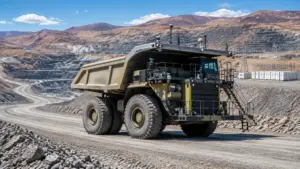
The iron ore decarbonization conversation extends beyond the ore itself. Steel customers increasingly audit entire supply chains, including mining operations, transportation emissions, and processing energy sources. Producers implementing renewable power at mine sites, electrifying haul fleets, and optimizing logistics for lower emissions capture additional premiums.
Carbon capture, utilization, and storage (CCUS) technologies offer complementary pathways, with potential emissions reductions of 947 kg CO2 per metric ton of crude steel when integrated with steelmaking operations. Green electricity procurement for EAF operations delivers comparable reductions at 928 kg CO2 per metric ton.
Building the Business Case
Iron ore producers evaluating green steel technology implementation face a straightforward strategic calculation: the cost of inaction exceeds the cost of transition.
CBAM certificates add direct costs to carbon-intensive steel entering European markets. Similar carbon border mechanisms are under development in the UK, Canada, and other jurisdictions. Steel customers are embedding emissions specifications into procurement contracts that flow upstream to iron ore suppliers.
The business case for producers involves several elements:
Product development means understanding exactly which ore grades and specifications fit H2-DR requirements, then optimizing extraction and processing to deliver those products. Some producers are developing “DR-grade” product lines specifically marketed for hydrogen-based steelmaking.
Operational decarbonization addresses scope 1 and 2 emissions at mine sites. This includes renewable power procurement, fleet electrification, process efficiency improvements, and methane capture from mining operations. These investments increasingly influence customer purchasing decisions.
Strategic partnerships connect iron ore producers directly with steelmakers pursuing decarbonization. Joint ventures, long-term offtake agreements with green specifications, and co-investment in technology development create competitive moats that transactional relationships cannot match.
Certification and transparency systems demonstrate emissions profiles across the value chain. Blockchain-based traceability, third-party verification, and standardized reporting frameworks are becoming table stakes for premium market access.
The Path Forward
Green steel technology implementation isn’t a distant concern for iron ore producers: it’s a present-tense strategic priority. The regulatory framework is operational. The technology pathways are defined. The customer specifications are crystallizing.

Producers who move decisively capture premium pricing, secure long-term offtake relationships, and position their assets for the decarbonized steel economy emerging by 2030. Those who wait face margin compression, stranded asset risk, and increasingly limited market access.
The roadmap isn’t complicated. Understand your ore quality relative to H2-DR requirements. Quantify your operational emissions footprint. Identify steel customers pursuing decarbonization and engage them directly. Invest in the certifications and traceability systems that demonstrate green credentials.
The steel industry’s transformation is underway. Iron ore producers choose whether to lead that transition or get pulled along by it.
For ongoing coverage of sustainable mining developments and green steel technology implementation, visit Skillings Mining Review.