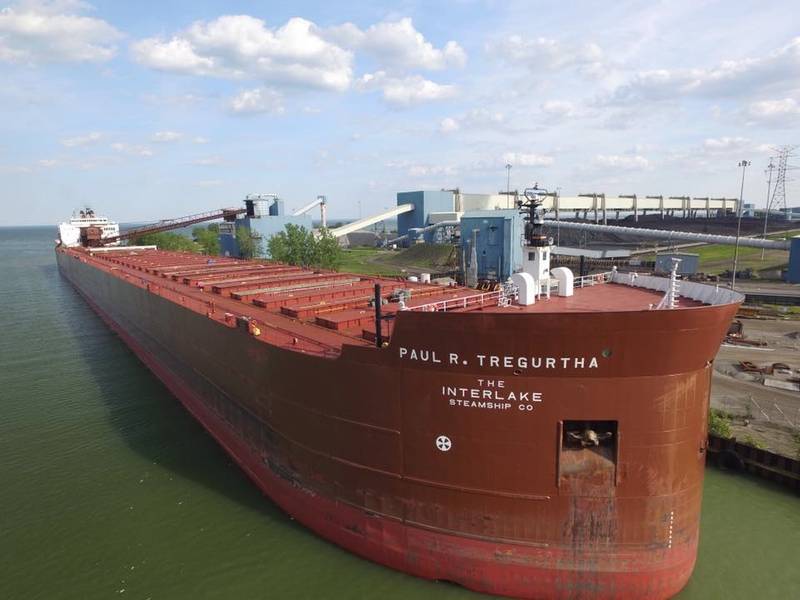
Cleveland – The Great Lakes iron ore trade experienced a challenging year in 2024, with shipments totaling 49.8 million tons—a 2.5% decline compared to 2023. December alone saw a 4.5% drop in shipments, amounting to 4.6 million tons, according to the Lake Carriers’ Association (LCA). Despite these decreases, the trade outperformed its five-year average by 3.8%, signaling resilience in a volatile market.

Key Data Highlights
- December Shipments: Down 4.5% year-over-year but above the five-year average.
- 2024 Year-End Total: 49.8 million tons, down 2.5% from 2023 but up 3.8% compared to the five-year average.
- Top Ports in 2024:
- Two Harbors, MN: 15.3 million tons shipped, slightly exceeding its five-year average of 14.9 million tons.
- Superior, WI: 11.7 million tons, consistent with its robust long-term performance.
- Marquette, MI: 6.9 million tons, maintaining steady output levels.
Analysis: Challenges and Resilience
The decline in shipments reflects broader economic and logistical challenges faced in 2024, including fluctuating demand for iron ore and disruptions in the supply chain. However, the above-average performance compared to the five-year benchmark suggests that the industry remains on solid footing, buoyed by robust infrastructure and the versatility of U.S.-flagged Great Lakes carriers.
Notably, Superior, WI, and Two Harbors, MN, sustained high volumes, underscoring their importance as strategic hubs for the iron ore trade. The slight decline at other ports like Cleveland, OH, reflects shifts in trade patterns and demand dynamics, potentially tied to global market conditions and localized production trends.
Long-Term Trends and Outlook
Looking ahead, the trade’s performance will likely depend on several factors, including:
- Global Demand for Iron Ore: As international markets recover, exports could rise, especially through transshipment points like Quebec City.
- Infrastructure Investment: Modernizing port facilities and addressing logistical bottlenecks could further enhance efficiency.
- Environmental Regulations: With growing focus on sustainability, the industry may face pressures to adapt, impacting operations and costs.
While 2024 marked a modest decline for the Great Lakes iron ore trade, the industry demonstrated adaptability and strength. With a solid infrastructure base and a history of resilience, the sector is well-positioned to navigate future challenges and capitalize on emerging opportunities.