The global mining outlook 2026 reveals an industry with a split personality: bullish production targets on paper, but a far grittier reality on the ground shaped by operational complexity, workforce shortages, and supply chains still recovering from years of disruption. While copper output is projected to climb by 4.7% to approximately 24.5 million tonnes, this growth should not be mistaken for a return to easy expansion.

Copper’s Tight Squeeze Despite Growth Numbers
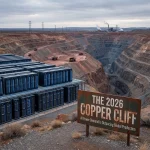
Within the global mining outlook 2026, copper stands out as the clearest example of how headline growth masks deeper structural stress. Production gains are being driven primarily by expansions in Chile, Peru, the Democratic Republic of Congo, Indonesia, and China. Yet according to the International Copper Study Group, the refined copper market is expected to post a deficit of roughly 150,000 tonnes this year.
This imbalance is not the result of temporary disruption. Average global copper ore grades have declined by approximately 40% since 1991, forcing miners to go deeper, process more material, and spend significantly more capital to maintain output. The production growth reflected in the global mining outlook 2026 increasingly represents companies running faster simply to stand still.
Demand pressures compound the challenge. Global copper consumption is projected to rise by roughly 30% by 2040, driven by electrification, renewable energy, and grid expansion. At the same time, supply could fall short by a similar margin by 2035, tightening markets well before the end of the decade.
Coal’s Stubborn Persistence
The global mining outlook 2026 also challenges the assumption that coal is in rapid decline. Despite aggressive decarbonization targets in developed economies, coal production continues to rise in countries such as India, Australia, South Africa, and Russia. China is showing early signs of moderation, while the United States continues its gradual retreat from coal-fired power.
More Read
This persistence is rooted less in ideology and more in economics. Many emerging economies still rely on coal for affordable, reliable baseload power. Until renewable energy systems can deliver consistent, large-scale baseload at competitive costs, coal is likely to remain embedded in the global energy mix, regardless of political commitments.

The Critical Minerals Reality Check
A defining feature of the global mining outlook 2026 is the widening gap between critical mineral demand and supply readiness. Lithium demand alone is expected to increase by more than 500% by 2040, driven primarily by electric vehicle adoption and energy storage systems.
Yet existing supply chains are struggling to meet current demand. By 2035, lithium markets could face supply deficits approaching 40%, while copper shortfalls could reach 30%. These projections are no longer speculative; they are reshaping capital allocation decisions, jurisdictional risk assessments, and long-term procurement strategies across the mining and manufacturing sectors.
More Read
Strategic responses are already underway. The US–Australia rare earths agreement signed in late 2025 reflects a broader trend toward supply-chain insurance, as governments increasingly view critical mineral access as a matter of national security.
Market Sentiment Shifts from Strategic to Tactical
Perhaps the most notable shift reflected in the global mining outlook 2026 is a change in executive mindset. Operational complexity has overtaken geopolitical risk and commodity pricing as the top concern for mining leaders.
In practice, this has translated into a focus on predictable, profitable output rather than large, high-risk expansion projects. Capital discipline has become paramount, with companies prioritizing balance-sheet strength over aggressive growth. While this defensive posture makes sense in an uncertain environment, it also lays the groundwork for future supply constraints.
Brownfield developments near existing operations are receiving priority, while greenfield exploration remains subdued. Grassroots exploration budgets across major jurisdictions such as Canada, Australia, and the United States remain largely flat, reducing the pipeline of future discoveries.
Geopolitical Winds Are Stabilizing
The global mining outlook 2026 also reflects a modest easing of geopolitical tensions. Trade relations between the United States and China have stabilized, with tariff levels declining and export restrictions giving way to licensing frameworks. While the relationship remains cautious, the shift toward functional cooperation has reduced some of the friction in global supply chains.
Strategic alliances are becoming standard practice. Bilateral and multilateral agreements aimed at securing critical mineral supply are increasingly common, as countries recognize that resource security is inseparable from economic and national security.
The Workforce Cliff
Workforce availability is an underreported but critical risk shaping the global mining outlook 2026. In the United States and Canada, more than half of the mining workforce is expected to retire within the next decade. Australia faces the challenge of expanding its workforce by approximately 10% to support more than 100 new projects currently in development.
These roles require specialized technical expertise that cannot be replaced quickly. While automation and digital tools can mitigate some gaps, human judgment and experience remain central to safe and efficient mining operations. Knowledge transfer and workforce development are therefore becoming strategic priorities.
Technology Adoption Accelerates
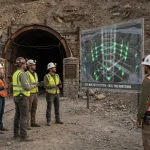
One of the brighter elements of the global mining outlook 2026 is the accelerating adoption of advanced technology. Autonomous and semi-autonomous equipment, once limited largely to iron ore operations in Western Australia’s Pilbara region, is now expanding across copper and gold operations in the Americas and Africa.
Technology adoption is increasingly about operational feasibility rather than cost reduction alone. As mining operations move deeper underground and into more remote locations, automation enables production in environments that would otherwise be unsafe or impractical for human workers.
The Investment Reality
Despite stable production forecasts, the global mining outlook 2026 reveals a growing disconnect between near-term output and long-term investment. Mining companies are optimizing existing assets but are not investing at the scale required to meet projected future demand.
The emphasis on future-facing minerals such as lithium and rare earths has also diverted attention from traditional commodities like iron ore, even as global infrastructure development continues to require massive volumes of steel. This selective investment approach is creating new imbalances that may define the next commodity cycle.
Looking Through the Year
As 2026 progresses, the global mining outlook 2026 suggests that production targets are likely to be met, but at the cost of increasing strain on systems, people, and capital. Underinvestment in exploration, workforce development, and greenfield projects is steadily laying the groundwork for tighter markets ahead.
The mining industry has learned to be cautious after years of volatility, but excessive caution carries its own risks. The companies that succeed will be those able to balance near-term profitability with long-term supply security in an environment defined by complexity rather than crisis.