On July 23, 2024, the European Commission published updated Guidance Documents (GDs) for the Directive on geological storage of carbon dioxide (CCS Directive), marking a major step toward mitigating geological risks. This update focuses on simplifying permitting procedures and promoting sustainable CO2 storage solutions in the European Economic Area (EEA), highlighting the growing significance of Carbon Capture and Storage (CCS) technologies in the pursuit of climate neutrality.

The revised GDs have been updated to include valuable input from stakeholders and offer improved guidance on identifying appropriate geological areas for CO2 storage. In addition, a risk-based approach is taken for financial provisions concerning storage permits[5]. This development is in line with the European Union’s Industrial Carbon Management (ICM) strategy, which acknowledges the increasing importance of CCS in climate policy and technological progress.
Related News
- Top 8 Mineral Exploration Phases: From Discovery to Production Decision”
- Mining Tech Trends: AI, Robotics, and ESG Solutions Take Center Stage
- Chile to Evaluate 81 Private Lithium Proposals, Aiming for Four Projects by 2026
- The Rise of Open Source Geological Modelling Tools: Loop and GemPy Leading the Way
- Boosting Mine Safety and Efficiency & The Power of AI and Big Data
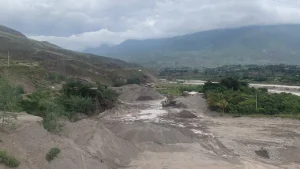
Meanwhile, there is a growing global focus on effectively addressing geological risks. The SPIRAL project, scheduled to run from 2024 to 2026, has the objective of minimizing the consequences of landslides in the Pyrenees region. This collaborative effort between Spain, France, and Andorra aims to establish a regional early warning system for ground movements and evaluate the potential risks of landslides on urban areas and infrastructure.
The project, funded by the European Union through the Interreg VI-A Spain-France-Andorra Programme, aims to enhance collaboration and technology exchange among geological surveys, research centers, and local authorities. SPIRAL’s risk management approach takes into account various factors, including precipitation, earthquakes, and the influence of forest fires on landslide incidents.
Research in this field is actively supported by the U.S. Geological Survey (USGS) in the United States. The agency has recently made an announcement regarding a call for project proposals for Fiscal Year 2024 grants that are specifically focused on the science of reducing landslide risks. This initiative is part of a larger endeavor to enhance the country’s research capabilities in landslides and strengthen strategies for managing risks.
These developments highlight the growing awareness of the importance of implementing thorough geological risk management strategies on a global scale. Given the ongoing effects of climate change on geological stability, it is evident that initiatives aimed at safeguarding communities and infrastructure are of utmost importance.

The British Geological Survey (BGS) highlights the significance of comprehending and addressing different geological hazards, such as earthquakes, landslides, and volcanic eruptions. Their research is dedicated to understanding and describing complex, multi-hazard processes in various regions around the world, including Latin America, the Caribbean, eastern Africa, and Asia. The work of the BGS is in line with the United Nations’ Sustainable Development Goals and the Sendai Framework for Disaster Risk Reduction, emphasizing the interconnection between geological risk management and broader sustainability efforts.