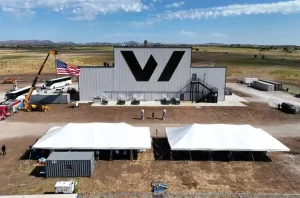
The world’s wealthiest democracies are done playing nice. In a high-stakes gathering in Washington this month, G7 finance ministers unveiled what amounts to an economic counterpunch aimed squarely at Beijing’s stranglehold on the rare earth supply chain. The plan? Establish price floors for critical minerals: a mechanism designed to make Western mining and processing projects viable against China’s heavily subsidized production machine.

It’s a bold move. And frankly, it’s long overdue.
For years, the G7 nations have talked a big game about supply chain resilience and strategic autonomy. But talk doesn’t mine neodymium. Talk doesn’t process dysprosium. What the mid-January 2026 meetings in Washington signaled is that the rhetoric might finally be catching up with reality: and the mining industry should pay very close attention.
The Price Floor Gambit
At the heart of this new strategy sits a deceptively simple idea: set minimum price levels for rare earth elements and critical minerals. The logic goes like this: Chinese producers, backed by state subsidies and lower environmental standards, can undercut Western competitors at will. Every time a promising domestic project in Australia, Canada, or the United States starts gaining traction, Beijing can flood the market and crater prices until the project bleeds out.
Price floors change that calculus entirely.
More Read

German Finance Minister Lars Klingbeil confirmed the discussions are underway, noting that participants explored “a potential rare-earths price floor and partnerships to boost supplies.” He tempered expectations, acknowledging that “the talks had just begun with many unresolved issues.” Fair enough. Nobody expected this to be easy.


But here’s what matters: the conversation has shifted from vague commitments to specific mechanisms. That’s not nothing. In the glacial world of international economic policy, it’s actually quite significant.
More Read

The G7 understands that without some form of price protection, private capital will continue to view Western rare earth projects as unacceptably risky. Why pour hundreds of millions into a processing facility in Texas when a policy shift in Beijing could render it worthless overnight? Price floors provide a safety net: one that could unlock investment that’s been sitting on the sidelines for years.
China’s Iron Grip on Critical Minerals
Let’s be clear about what the G7 is up against. China doesn’t just participate in the rare earth market. China is the rare earth market.
Beijing refines between 47 and 87 percent of the world’s copper, lithium, cobalt, graphite, and rare earths. That’s not a typo. Depending on which mineral you’re talking about, China controls somewhere between half and nearly nine-tenths of global processing capacity. Meanwhile, the G7 nations and European Union combined account for approximately 60 percent of global demand for these materials: yet they possess nowhere near the corresponding supply capabilities.
The math doesn’t work. It never has.
This imbalance has always been precarious, but recent moves by Beijing have transformed precarious into alarming. China has escalated tensions by imposing strict export controls, including outright bans on rare earth supplies destined for Japan’s military applications. When your adversary can turn off the tap on materials essential to your defense industry, your fighter jets, your guided missiles: that’s not a trade dispute. That’s a strategic vulnerability.
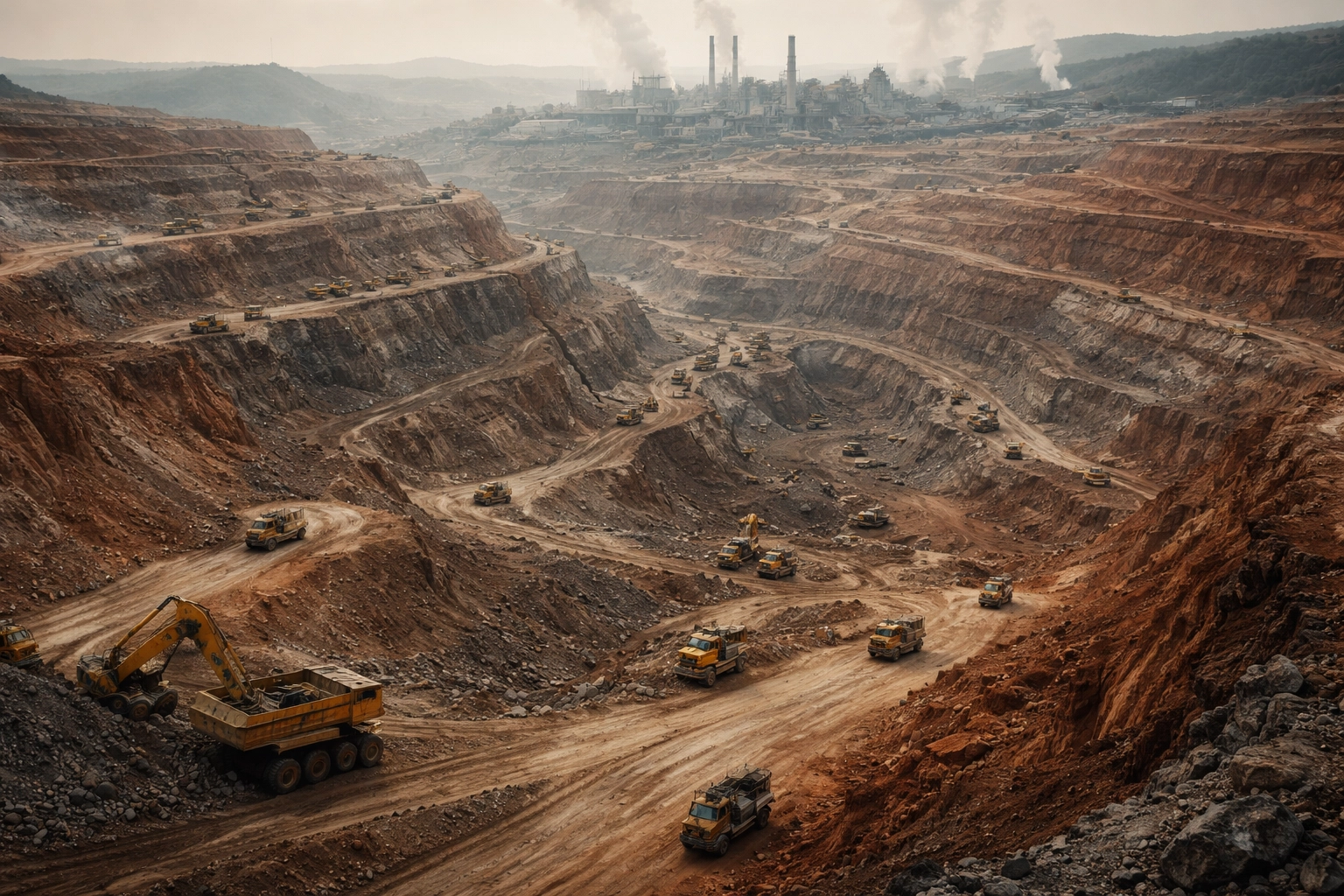
Japanese Finance Minister Satsuki Katayama emphasized the urgency during the Washington meetings, stressing the importance of “committing to these measures” across short-, medium-, and long-term timeframes. Translation: we need action now, not another decade of feasibility studies.
The rare earth dependency problem touches virtually every sector that matters in the modern economy. Electric vehicles. Wind turbines. Smartphones. Advanced manufacturing. Medical equipment. Defense systems. Without access to materials like neodymium, praseodymium, and dysprosium, the green energy transition stalls. Without samarium and cobalt, precision-guided munitions become a lot less precise.
Beyond Price Floors: The Full Toolkit
The G7 isn’t putting all its eggs in the price floor basket. Ministers outlined a comprehensive policy framework that goes well beyond minimum pricing.
Public financial institutions will play a larger role in backing critical mineral projects. Think export credit agencies, development banks, and sovereign wealth funds stepping in where private capital remains skittish. Tax incentives and financial sweeteners are on the table. Trade measures, including potential tariffs on Chinese rare earth exports, are under active discussion.
Perhaps most intriguingly, participants floated the idea of creating new markets based on labor standards and human rights criteria. This could be a game-changer. Much of China’s processing advantage comes from practices that Western companies cannot: and should not: replicate. If G7 nations can establish a premium market for ethically sourced rare earths, they might create a parallel supply chain that operates outside Beijing’s influence.
Recycling initiatives also featured prominently in the discussions. The reality is that millions of tons of rare earths already exist in discarded electronics, decommissioned wind turbines, and end-of-life vehicles. Urban mining: recovering these materials from waste streams: could meaningfully reduce import dependency if scaled properly.
The challenge, as always, lies in execution. Coordinating industrial policy across seven major economies, each with its own domestic political pressures and economic interests, is notoriously difficult. Germany’s priorities don’t perfectly align with Japan’s. Canada’s mining sector operates under different constraints than Italy’s manufacturing base.
A Coalition of the Willing
The Washington meetings drew more than just the G7 core. Australia, Mexico, South Korea, and India all sent representatives. That’s significant.
Australia sits on massive rare earth deposits and has been actively positioning itself as an alternative supplier to China. South Korea, heavily dependent on Chinese processing, has strong incentives to support supply chain diversification. India, pursuing its own critical minerals strategy, brings both demand and potential supply to the table. Mexico, with its proximity to the U.S. market and emerging mining sector, could emerge as a nearshoring destination for processing facilities.
This broader coalition suggests the G7 recognizes it cannot solve the rare earth problem alone. The strategy requires partners with deposits, processing expertise, and the political will to push back against Chinese market dominance.

Participants achieved what officials described as “broad agreement on the need to swiftly reduce reliance on China for rare earths.” More concretely, rare earth and critical mineral supplies have been designated as a central topic for France’s G7 presidency throughout 2026. That means this issue stays on the front burner for at least the next twelve months.
What Comes Next
The mining industry should view these developments as a potential inflection point. For years, junior explorers and developers focused on rare earths have struggled to attract investment, precisely because the China risk loomed over every project. If price floors materialize: even partial ones covering strategic minerals used in defense applications: the investment thesis changes dramatically.
Established players with dormant rare earth assets may want to dust off those feasibility studies. Processing companies eyeing expansion outside China suddenly have reason to believe Western governments will back their bets.
None of this happens overnight. German Finance Minister Klingbeil’s caution about “many unresolved issues” wasn’t diplomatic hedging. It was an honest assessment of the road ahead. Implementing coordinated price floors across multiple jurisdictions, reconciling World Trade Organization commitments with what amounts to market intervention, and actually building the physical infrastructure to compete with China: all of this takes time, money, and sustained political will.
But for the first time in years, the conversation has moved from “should we do something” to “here’s what we’re going to do.” That shift matters. Explore more critical minerals coverage at Skillings Mining Review as this story develops.
The G7’s rare earth gambit is a high-stakes wager on the future of Western industrial policy. Whether it succeeds may determine not just who builds tomorrow’s electric vehicles and wind turbines, but who maintains technological leadership in an increasingly fractured global economy.
By Penny Laneford | Skillings Mining Review