Freeport-McMoRan Chile is no longer waiting for the global copper market to sort itself out.

The Phoenix-based mining giant has officially moved the needle on its $7.5 billion expansion of the El Abra mine, filing its Environmental Impact Assessment (EIA) to kickstart what is now the largest mining investment in Chile since 1992. This isn’t just another project update. It’s a massive bet on a supply-strained future.
The strategic calculus here isn’t subtle: the world needs copper, and it needs it in quantities that current global production simply cannot meet. By moving forward now, Freeport is positioning itself to fill a void that everyone else is still just talking about.
The $7.5 Billion Reality Check
Let’s talk about the scale. $7.5 billion. That is not a rounding error. It is a fundamental shift in the Chilean mining landscape.
The expansion at El Abra, a joint venture where Freeport-McMoRan holds a 51% stake and Chilean state miner Codelco holds the remaining 49%, is designed to solve a very specific problem: the transition from leaching to large-scale sulfide processing. The current operation is running out of oxide ore. Without this investment, El Abra becomes a footnote. With it, it becomes a titan.
More Read
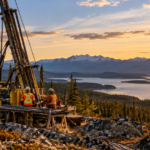
The plan includes a new massive concentrator plant and a desalination unit. The water component is critical. In the arid Antofagasta region, you don’t mine without a secure, sustainable water source. Freeport knows this. They aren’t relying on depleting aquifers; they are building the infrastructure to thrive in a water-stressed environment.


Breaking Down the Output: Copper Supply 2026 and Beyond
The numbers coming out of the EIA are aggressive. Freeport expects the expansion to increase output by approximately 300,000 tonnes (700 million pounds) of copper per year. On top of that, the project will churn out 9 million pounds of molybdenum annually.
More Read
That’s a 1.5% increase in total global copper supply from a single site.
But here is the catch: the timeline.
While the permitting starts now in early 2026, the first ton of copper from this expansion isn’t expected until 2033. That is a seven-year lead time assuming everything goes perfectly. It rarely does.
This illustrates the “uncomfortable truth” of the energy transition. Politicians talk about 2030 targets for EVs and renewable grids, but the mining industry works on a decade-long clock. Those two clocks do not sync. Even with this massive expansion, the copper supply 2026 outlook remains tight, and the market will likely be screaming for metal long before El Abra’s new concentrator comes online.
Chile’s Political Pivot: The Kast Factor
The timing of this filing isn’t accidental. It’s a direct response to a changing political climate in Santiago.
President Jose Antonio Kast has made “streamlining” the mantra of his administration. For years, Chile’s permitting process: often referred to as the “permits-permits-permits” trap: slowed major capital expenditures to a crawl. Kast’s push to ease these rules has provided the regulatory “green light” Freeport needed to pull the trigger on a $7.5 billion spend.
For an industry that has been wary of Chilean tax reforms and regulatory shifts over the last five years, this represents a significant stabilization. The government has realized a grim reality: they can’t fund social programs or energy transitions without the revenue from large-scale extraction.
The El Abra expansion is the litmus test for this new era. If Freeport can navigate the EIA process in the projected three years, it will signal to the rest of the global mining community that Chile is officially back in business.

Technical Integration and Infrastructure
You can’t just flip a switch and triple production. The El Abra project requires a complete overhaul of how the site operates.
The transition to sulfide ore means moving away from heap leaching: which is relatively low-cost but limited in scale: to a full-scale milling and flotation circuit. This is where the bulk of that $7.5 billion is going.
The new concentrator will be one of the largest in the world. It’s designed to handle the lower-grade sulfide ores that represent the future of the deposit. This is a common story in the Andes: the easy ore is gone. What’s left is deep, complex, and requires massive capital to extract.
For more on how these complex mineral processing facilities are designed, see our deep dive on rare earth processing and what it matters for the 2026 outlook. While the minerals are different, the infrastructure hurdles: power, water, and waste: are identical.
The Water Bottleneck
In Chile, water is more valuable than gold.
Freeport’s inclusion of a desalination plant isn’t just a “green” initiative; it’s a survival strategy. The permitting for water rights is often more contentious than the mining permits themselves. By opting for desalinated seawater, Freeport bypasses the local community’s concerns regarding the depletion of the Salar d’Atacama and other sensitive water tables.
This infrastructure will likely serve as a hub for the region. In the mining world, we call this “de-risking.” By spending more upfront on desalination, Freeport ensures that a drought or a change in local water laws won’t throttle their 318,000-metric-ton-per-year production target.

Why This Matters for Investors
If you are looking at the copper market, you are looking at a supply-demand gap that looks like a canyon.
The “shiny AI revolution” that everyone is obsessed with runs on data centers. Those data centers run on electricity. Electricity runs on copper. Every GPU added to a rack in Virginia or Dublin adds to the pressure on sites like El Abra in Chile.
Freeport is one of the few majors with the balance sheet to take this on. While other companies are busy with “black mass” recycling or looking for junior mining deals, Freeport is going for the throat with Tier-1 asset expansion.
You can read about similar strategic pivots in our analysis of the Trafigura and Nth Cycle $1.1B black mass move. While Trafigura is looking at the circular economy, Freeport is betting that the primary extraction is still where the real volume lives.
The Risks: Not a Guaranteed Win
Let’s be clear: $7.5 billion is a lot of money to have tied up in a permitting phase.
The risks are still substantial.
- Price Volatility: Freeport needs copper prices to stay relatively robust to justify the 2033 startup. If prices dip below $4.00 for a sustained period, the internal rate of return (IRR) on a $7.5B project starts to look shaky.
- Social License: Even with the Kast administration’s support, local communities and environmental groups in Chile remain highly active. The EIA process is public and prone to litigation.
- Codelco’s Role: Dealing with a state-owned partner like Codelco adds a layer of bureaucracy. Codelco has its own debt issues and operational struggles to manage, which could impact the speed of decision-making.

The Long Game
Freeport-McMoRan’s move at El Abra is a declarative statement. They are telling the market that the era of “easy” copper is over and the era of “industrial-scale” copper is here.
The investment of $7.5 billion is the largest single-project commitment in the country in over 30 years. It signals a return of confidence in Chile and a desperate realization that the global copper deficit is not a myth: it’s a math problem.
As we look toward the 2030s, the El Abra expansion will likely be the benchmark against which all other Andean projects are measured. Freeport has fired the first shot in the race for 2033 supply. Now we wait to see if the Chilean regulatory machine can keep up with the pace.

For more updates on global copper projects and Chile’s evolving mining policy, visit our home page or check out our archived reports, including the January 2025 review for historical context on the El Abra planning phase.