By Salini Krishnan and Penny Laneford

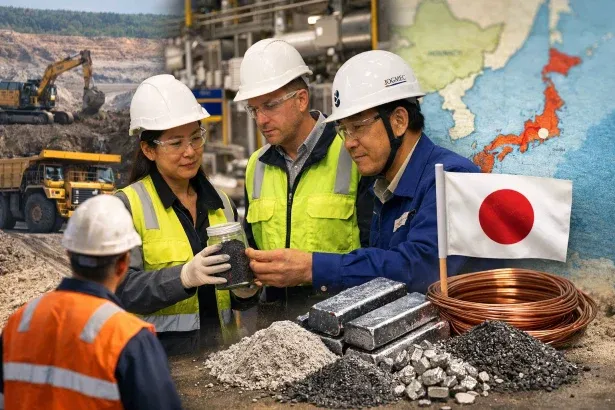
SAO PAULO and TOKYO : In a significant shift for the global battery supply chain, Atlas Lithium’s (NASDAQ: ATLX) Neves Project has been officially recognized as a cornerstone of the burgeoning Japan-U.S. strategic alliance. Following a high-level summit between U.S. President Donald Trump and Japanese Prime Minister Sanae Takaichi, the Brazilian lithium asset was the sole representative from South America included in a joint fact sheet detailing critical mineral project cooperation.
The designation, announced on March 20, 2026, and highlighted in market updates on April 2, positions Atlas Lithium as a primary beneficiary of Western efforts to decouple essential mineral dependencies from Chinese processing hubs. Shares of Atlas Lithium rose 4% in early trading following the confirmation of the project’s inclusion in the pact, reflecting investor confidence in the sovereign support now backing the venture.
The Trump-Takaichi Summit: A New Era of Mineral Diplomacy
The inclusion of the Neves Project follows the U.S.-Japan Critical Minerals Investment Ministerial held earlier in March 2026 in Tokyo. This diplomatic push is part of a broader “54-nation forge alliance” designed to secure supply chains for the energy transition. Industry analysts suggest that the selection of a Brazilian asset underscores the strategic importance of the “Lithium Valley” in Minas Gerais as a stable alternative to other, more volatile jurisdictions.
For the U.S. and Japan, the Neves Project represents a de-risked opportunity. Unlike many greenfield sites, Atlas Lithium has already secured operational permitting and has begun the physical mobilization of its processing infrastructure. This alignment between the two largest economies in the G7 aims to provide financial support and expedited offtake security for projects that meet high ESG standards and provide high-volume output.
More Read

This diplomatic movement is a central pillar of the 2026 Critical Minerals Ministerial, which seeks to break the “China chokehold” on the global lithium-ion battery market.

Project Fundamentals: The Economics of Neves
Atlas Lithium’s Neves Project is not merely a diplomatic pawn; it is backed by some of the most robust economic figures in the junior mining sector. According to the company’s Definitive Feasibility Study (DFS), the project boasts a staggering 145% after-tax internal rate of return (IRR).
More Read

Key Financial and Operational Metrics
| Metric | Value |
|---|---|
| Annual Production | 300,000 tonnes of spodumene concentrate |
| After-Tax IRR | 145% |
| Net Present Value (NPV) | $539 Million |
| Payback Period | 11 Months |
| Mineral Rights Area | 557 Square Kilometers |
The project’s low capital intensity and rapid payback period are largely attributed to the use of Dense Media Separation (DMS) technology. Unlike more complex chemical conversion plants, DMS allows for the physical separation of lithium-bearing spodumene from waste rock, a process that is both more cost-effective and environmentally benign. The modular DMS plant has already been transported to Brazil, significantly shortening the timeline to first production.
The Mitsui Connection: Japan’s Strategic Stake
A critical factor in the Neves Project’s inclusion in the U.S.-Japan pact is its existing relationship with Mitsui & Co., one of Japan’s premier “Sogo Shosha” (general trading companies). In March 2024, Mitsui committed $30 million in equity to Atlas Lithium, securing an offtake agreement for lithium concentrate that will feed directly into Japan’s domestic battery manufacturing industry.
This $30 million investment served as a precursor to the current diplomatic recognition. By having a major Japanese industrial player already embedded in the project’s capital structure, the U.S. and Japanese governments have a pre-vetted vehicle for further financial intervention. This “de-risking” through private-public partnership is becoming a standard model for the scarcity premium positioning seen across the critical minerals landscape.

Operational Progress in Minas Gerais
In Minas Gerais, often referred to as Brazil’s mineral heartland, Atlas Lithium has consolidated the largest lithium exploration footprint among publicly listed companies. The 557 square kilometers under their control provide a significant pipeline for resource expansion beyond the initial Neves pits.
Operational highlights from the current quarter include:
- DMS Plant Arrival: The modular units for the processing facility have reached the site, with assembly expected to conclude ahead of schedule.
- Permitting Status: Environmental and operational permits are fully secured, removing the primary bureaucratic hurdle that often stalls South American mining ventures.
- Exploration Upside: Recent drilling has confirmed the extension of high-grade spodumene pegmatites, suggesting the current 300,000-tonne annual target may have room for upward revision.
The efficiency of the Brazilian mining authorities in the Minas Gerais region has been cited by CEO Charles Pitts as a key differentiator for the company. As global markets grapple with supply crunches: similar to the antimony supply crunch recently seen in other sectors: Atlas Lithium’s speed to market is a primary asset.
A Century of Mining Intelligence
The emergence of Atlas Lithium as a global player is the type of development that Skillings Mining Review has documented for over 114 years. Since its inception, Skillings has provided the industry with the data and analysis required to navigate shifting geopolitical tides. From the iron ore booms of the early 20th century to the current lithium-driven energy transition, our publication remains the primary source for professionals seeking to understand the intersection of geology, finance, and policy.
Today, as the SMR OPS 100K ($Daily Content) initiative continues to scale, we provide real-time updates on projects like Neves that are redefining national security and global trade.

Risks and Challenges Ahead
While the diplomatic backing of the U.S. and Japan provides a significant tailwind, the project is not without risks common to the lithium sector:
- Price Volatility: Spodumene concentrate prices remain sensitive to EV adoption rates in Europe and North America.
- Infrastructure Logistics: While Minas Gerais is a developed mining district, the scale of production will require robust logistics to move concentrate to Brazilian ports for export to Japan and the U.S.
- Geopolitical Shifts: While the current U.S. administration is supportive, long-term mining projects must weather potential changes in trade policy over several election cycles.
However, the 11-month payback period estimated in the DFS suggests that even in a depressed price environment, the project remains economically resilient. The low-cost nature of the spodumene extraction in Brazil provides a “margin of safety” that many Australian or North American hard-rock projects struggle to match.
Looking Forward: 2026 and Beyond
As Atlas Lithium moves toward full-scale production, the industry will be watching the Neves Project as a bellwether for Western-aligned mining in South America. The partnership between ATLX and Mitsui, now bolstered by the Trump-Takaichi pact, creates a formidable blueprint for how junior miners can navigate the complexities of modern “Lithium Diplomacy.”
Investors and operators interested in the broader implications of these shifts can find detailed historical context and future forecasts in our gold price forecast 2026 and other commodity-specific deep dives available via our sitemap.