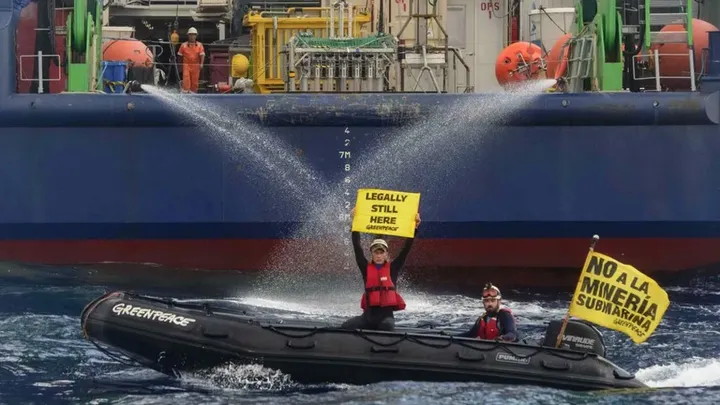
In the depths of the ocean lies a contentious battleground where mining companies seek precious metals while environmentalists fiercely defend untouched ecosystems. The latest clash has escalated tensions, drawing international attention to a remote region of the Pacific. Greenpeace activists have found themselves at the center of controversy after disrupting a research expedition conducted by The Metals Company, sparking debate over the future of deep-sea mining. With the stakes high and the outcome uncertain, the international community braces for a pivotal decision at the United Nations’ International Seabed Authority (ISA) meeting.

Escalating Conflict on the High Seas
The dispute between miners and environmentalists intensifies as Greenpeace activists board The Metals Company’s vessel during a research expedition in the Pacific. The incident raises questions about the legitimacy of the protest and the implications for Greenpeace’s involvement in the ISA.
Stakes and Perspectives
Mining companies, led by The Metals Company, argue for the economic importance of accessing polymetallic nodules containing crucial battery metals like copper, cobalt, nickel, and manganese. Conversely, Green campaigners express concerns over potential environmental damage to pristine deep-sea ecosystems, advocating for stricter regulations and a moratorium on deep-sea mining.
Related News
- Uncertainty Looms Over Canadian Mineral Exploration Amid Proposed AMT Changes
- Major new gigafactory fuel cell thrust enlivening demand outlook for platinum
- Sibanye-Stillwater’s Rhyolite Ridge Project Faces Funding Uncertainty Amidst Redrafted Legislation
- O3 Mining sells Louvem task in Quebec to Eldorado
- Solid 1st-half progress for Helium One Global in Tanzania
Global Implications and Political Pressure
The international community grapples with the implications of deep-sea mining as demand for battery metals escalates in the transition to a low-carbon economy. Influential figures, including former US Secretary of State Hillary Clinton, underscore the strategic importance of accessing deep-sea minerals amid geopolitical competition, while calls for US ratification of the ISA treaty gain momentum.
Science vs. Activism
The Metals Company accuses Greenpeace of hindering scientific research vital for assessing the environmental impact of deep-sea mining, emphasizing the need for evidence-based decision-making. Greenpeace defends its actions as necessary to challenge what it perceives as insufficient environmental safeguards and industry-driven research agendas.
Regulatory Crossroads
At the heart of the debate lies the International Seabed Authority’s mandate to establish regulations governing deep-sea mining activities by 2025. Member states face a critical decision on whether to strip Greenpeace of its observer status within the ISA, reflecting divergent views on the balance between economic development and environmental conservation.

As tensions escalate and stakeholders remain entrenched in their positions, the future of deep-sea mining hangs in the balance. With competing interests at play, the international community grapples with the complex task of balancing economic imperatives with environmental stewardship. As the ISA meeting unfolds, the world awaits a verdict that will shape the fate of our deepest oceans for generations to come.