By Sonny Jimerson
Copper sits at the center of the data center buildout now taking shape across North America, Europe, the Middle East, and parts of Asia. For investors evaluating the long-duration effects of artificial intelligence infrastructure spending, the core question is no longer whether AI will require more power, land, and cooling. It is how much physical copper must be deployed across grids, substations, switchgear, transformers, busbars, backup systems, racks, and cabling to make that expansion possible.
That matters because copper exposure in public markets is still often framed through traditional demand buckets such as construction, transport, and China industrial activity. AI changes the mix. Hyperscale campuses and accelerated compute clusters are creating an additional layer of electricity-intensive demand that is highly copper-dependent and difficult to substitute at scale.
The investment case is not that AI suddenly turns every copper producer into a pure-play data center beneficiary. It is that AI infrastructure adds a structurally important source of demand to an already tight medium-term supply picture. In valuation terms, that can support higher long-run price assumptions, improve strategic scarcity premiums for large-scale copper assets, and increase the relative attractiveness of companies with low-cost production growth, expansion optionality, or exposure to power-enabling equipment markets.

Why Copper Matters More in AI Infrastructure
Copper is not just another input in the digital economy. It is embedded across the entire electrical chain that supports compute deployment. Utilities use it in transmission and distribution upgrades. Data center developers use it in power feeds, grounding systems, internal wiring, and equipment interconnections. OEMs and electrical suppliers use it in transformers, generators, switchboards, power distribution units, and cooling-related systems.

AI-specific infrastructure tends to raise copper intensity because it pushes power density higher. More power per rack, more redundancy, and more supporting electrical equipment generally mean more copper per megawatt deployed. The exact figure varies by design, cooling architecture, grid connection distance, and redundancy standard, but the directional point is consistent: AI-heavy data center capacity is materially more metals-intensive than a conventional digital footprint.
For equity markets, that creates a useful framework. Copper demand tied to AI should not be viewed as a narrow technology theme. It is better understood as power infrastructure demand wearing a technology label.

A Practical Copper-Intensity Framework for Investors
A helpful way to evaluate the theme is to separate copper demand into three layers:
- Grid and interconnection copper: transmission upgrades, substations, transformers, feeders, and utility-side reinforcement needed to energize new campuses.
- Campus and building copper: switchgear, bus duct, cable, grounding, backup generation, and internal electrical balance-of-plant.
- Equipment and replacement copper: ongoing demand embedded in expansions, retrofits, cooling upgrades, and maintenance cycles.
This matters for valuation because the listed beneficiaries are not limited to miners. The chain can include diversified copper producers, developers with large future supply pipelines, recyclers, wire and cable manufacturers, transformer suppliers, and selected electrical equipment names with pricing leverage.
Investors should also separate headline data center spending from metal-relevant spending. A large AI campus budget may include land, concrete, chips, networking gear, and cooling systems, but the copper signal is strongest in the power stack. The more constrained the power connection, the more likely additional copper-bearing equipment is required upstream.
Copper Demand and the Supply Constraint Problem
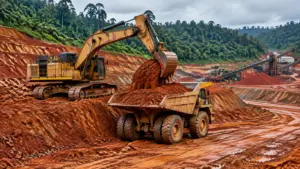
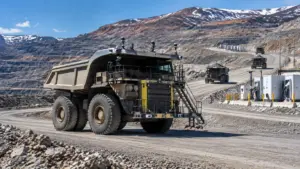
The bullish case for copper linked to AI gains force because it arrives on top of a supply side already facing permitting delays, lower average ore grades, rising capex intensity, and long development timelines. New copper supply is difficult to bring on quickly. Large projects regularly require many years from feasibility to commissioning, and cost inflation has made the hurdle rate for greenfield builds more demanding.
That means even a moderate uplift in AI-related copper demand can have an outsized effect on long-term pricing assumptions if the market is already undersupplied. Investors do not need AI to represent the majority of total copper demand for it to matter. They only need it to tighten an already fragile balance.
A simple way to think about this is through marginal demand. If electrification, grid modernization, and defense-related industrial spending are already absorbing available supply growth, then AI infrastructure can become the incremental force that pushes project economics, acquisition logic, and reserve valuations higher.
What It Means for Equity Valuations
For mining equities, the implication is straightforward: assets with long reserve lives, scalable production profiles, and manageable jurisdictional risk may deserve higher strategic value if the market increasingly prices copper as a bottleneck metal for AI infrastructure.
Three valuation channels stand out:
- Higher long-run copper price decks: even small increases in long-term price assumptions can materially lift NAV for large undeveloped or expandable assets.
- Scarcity premiums for quality projects: advanced copper projects in stable or improving jurisdictions may command more interest from majors that need future volume.
- Multiple support for producers with growth optionality: companies able to expand brownfield output or unlock district-scale resources may capture a premium versus flat or declining peers.
For equipment and electrical infrastructure names, the effect is different. Investors should watch order books, margin performance, backlog duration, and evidence of pricing power tied to transformer, cable, connector, and switchgear constraints. In those cases, the copper story is partly about volume and partly about the broader power bottleneck that AI is intensifying.

Risks to the Thesis
A data-driven view also needs to recognize what could weaken the investment case.
First, AI infrastructure spending could become more cyclical than current expectations suggest. If hyperscalers moderate capex or improve compute efficiency faster than expected, near-term copper demand tied specifically to AI campuses may undershoot bullish models.
Second, substitution and design optimization can reduce copper intensity at the margin. Aluminum can replace copper in some applications, particularly where cost and weight matter more than conductivity and footprint. That said, substitution is not universally feasible in high-performance electrical environments.
Third, a sustained slowdown in broader industrial activity could offset some of the upside from AI. Copper remains a global macro metal, and investors should be careful not to isolate one demand driver from the wider cycle.
Fourth, supply can surprise. Restarts, brownfield expansions, improved recovery rates, scrap availability, or faster-than-expected project execution could soften the scarcity premium embedded in some copper names.
What to Track From Here
For investors building a watchlist around the AI-copper nexus, the most relevant indicators are practical rather than thematic:
- Utility interconnection queues for large data center campuses
- Transformer and switchgear lead times
- Hyperscaler and colocation capital expenditure trends
- Long-term copper price assumptions used in feasibility studies and NAV models
- M&A activity involving late-stage copper development assets
- Scrap market tightness and refined copper treatment dynamics
These indicators help distinguish between narrative momentum and real demand transmission into the copper market.
Bottom Line
Copper is emerging as one of the most important physical enablers of the AI buildout. The key investment insight is not simply that more servers require more metal. It is that AI adds another power-intensive layer of demand to a copper market that was already being reshaped by electrification, grid upgrades, and energy transition spending.
For long-term equity valuations, that combination matters. It can support more constructive assumptions for copper pricing, reinforce the scarcity value of large and long-life assets, and create secondary opportunities across the electrical equipment and power-delivery chain.
Investors do not need to treat copper as a proxy for AI. But they should recognize that the economics of the data center boom increasingly run through a metal that remains difficult, slow, and expensive to replace.