By Charles Pitts

Chile has been the undisputed heavyweight champion of copper for decades, but the industry has been waiting for a move that proves the country still has its championship grit. The wait is over.
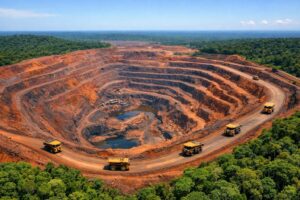
Freeport-McMoRan (FCX) just signaled a massive return to form, initiating the permitting process for a $7.5 billion expansion of its El Abra mine. This isn't just another project update. It is the largest mining investment in Chile since 1992.
For an industry that has spent years complaining about regulatory hurdles and declining grades in the Atacama, this is the ultimate "put up or shut up" moment. Freeport isn't just dipping a toe back into Chilean waters; they are diving headfirst into a multi-billion-dollar sulfide play that could redefine the region's output for the next generation.
The $7.5 Billion Bet: Why Now?
The strategic calculus here isn't subtle: the world is running out of "easy" copper while the demand for electrification reaches a fever pitch. We’ve seen the reports about the structural pivot and copper’s potential $13,000 reset. Freeport isn't waiting around for the spot price to hit $6.00 before they act.
More Read
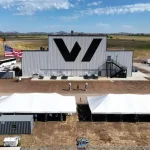
The El Abra expansion is designed to solve a fundamental geological problem. The mine has traditionally relied on leaching oxide ores: a process that is winding down as those resources are depleted. To keep the lights on, Freeport has to go deep. They have to target the massive sulfide deposits sitting beneath the surface.

To do that, they need a large-scale concentrator plant. Per facility. That’s not a rounding error; that’s a complete industrial overhaul.

More Read

Breaking Down the Numbers: 300,000 Tonnes and Beyond
Let’s look at the brutal numbers. Currently, El Abra is a shadow of its potential, producing roughly 98,400 metric tons of copper cathode annually. The expansion is designed to catapult that figure by an additional 300,000 tonnes.
Total projected annual output: 340,000 metric tons of copper and 4,100 metric tons of molybdenum.
That is a staggering increase. To put it in perspective, this single expansion would add more annual capacity to the global market than many mid-tier miners produce across their entire portfolios. And the resource base supports it: Freeport estimates approximately 17.5 billion pounds of recoverable proved and probable mineral reserves associated with this mill project.
17.5 billion pounds. That’s not a typo.
The Codelco Partnership: A Geopolitical Necessity
Freeport isn't doing this alone. They own 51% of El Abra, with the remaining 49% held by the Chilean state-owned giant, Codelco.
This partnership is critical. In a landscape where resource nationalism often creates friction between private capital and government interests, the FCX-Codelco alliance provides a layer of stability. Codelco needs this win just as much as Freeport does. The state miner has struggled with its own production declines and aging infrastructure across its legacy assets.
By partnering on El Abra, Codelco gets a massive production boost without having to shoulder 100% of the operational risk or the $7.5 billion price tag. For Freeport, it ensures they have a seat at the table with the most powerful entity in Chilean mining.

Water, Power, and the Permitting Gauntlet
You can't mine in the driest desert on earth without water, and you can't process sulfide ore without a massive amount of it.
The $7.5 billion budget isn't just going into the mill. A significant portion of that capital is earmarked for a desalination plant and a complex pumping system to transport water from the coast to the high-altitude site. This is the new reality of mining in Chile: if you don't bring your own water, you don't get to play.
The timeline, however, is where the optimism meets a reality check. Freeport expects to submit its Environmental Impact Study (EIA) to Chilean regulators in the first half of 2026. From there, the clock starts ticking:
- Permitting: ~3 years
- Construction: ~4 years
- Startup: Projected 2033
That’s a seven-year wait. In the world of global commodities, 2033 feels like an eternity. But as we noted in our March 16 intelligence briefing, the "Critical Minerals Corridor" is built on these long-lead-time projects. There are no shortcuts in the Andes.
The Incentive Price: A Grudging Respect for Geology
Perhaps the most telling detail in Freeport’s recent disclosures is the "incentive price." The company believes the project’s economics are supported with a copper price below $4.00 per pound.
Ironically, this suggests that even with $7.5 billion in CapEx, the sheer scale and grade of the El Abra sulfides are high enough to keep margins healthy at current market rates. Most "new" greenfield projects today require $4.50 or even $5.00 copper just to break even on an IRR basis. Freeport is sitting on a Tier-1 asset that can survive the cycles.

What Happens Next?
The submission of the EIA in 2026 will be the first major test. The Chilean government under President Boric has signaled a desire for more "green" mining, but the bureaucracy remains a formidable obstacle. If Freeport can navigate the SEIA (Environmental Impact Assessment System) without significant delays, it will send a massive signal to the rest of the industry that Chile is once again open for business.
Meanwhile, Freeport is already ramping up its global spend. The company is projecting $4.3 billion to $4.5 billion in capital expenditures for 2026 and 2027 alone. They aren't just talking about growth; they are funding it.
But here’s where it gets uncomfortable: even if El Abra hits its 2033 target, will it be enough? By 2033, the supply gap for the global energy transition is expected to be several million tonnes wide. Freeport’s 300,000-tonne boost is a massive contribution, but in the grand scheme of global demand, it’s just one piece of a very broken puzzle.
The Bottom Line
Freeport-McMoRan is making a statement. By committing $7.5 billion to El Abra, they are doubling down on the belief that copper is the indispensable metal of the 21st century and that Chile remains the best place to find it at scale.
It’s a bold move. It’s a necessary move. But it’s also a reminder of the sheer scale of investment required just to keep the status quo in the mining industry. You don't just "find" more copper; you build small cities in the desert and wait a decade for the first pour.
Welcome to the new reality of the copper titan.
Social Media Snippet:
Freeport-McMoRan (FCX) has officially triggered a $7.5B expansion bid for Chile’s El Abra mine: the largest investment in the country since 1992. Aiming for a 300,000-tonne annual output increase by 2033, this move highlights the massive CapEx required to bridge the looming copper supply gap. Is this the spark Chile's mining sector needs? #Copper #Mining #FCX #Chile #EnergyTransition #ElAbra