SAINDAK, PAKISTAN : The operators of Pakistan’s largest active copper and gold mine have issued a formal warning that production could cease within 30 days as a surge in militant violence across Balochistan paralyzes essential supply lines.

Saindak Metals Limited (SML), the state-owned entity overseeing the project, recently informed the Ministry of Energy that the "prevailing law and order situation" in the Chagai District has reached a critical threshold. According to internal correspondence, the disruption of road transport for project cargo and production materials has made continuous operations untenable. If the logistical blockade persists, the mine: which generated approximately US$750 million in export revenue last year: faces an imminent, indefinite shutdown.
The warning underscores a deteriorating security environment in a province central to Pakistan’s mineral ambitions and China’s regional investment strategy. Operated by the Metallurgical Corporation of China (MCC) under a lease extending to 2037, the Saindak project has long been a target for separatist groups who view foreign extraction as a form of colonial exploitation.
Logistics at a breaking point
For the MCC, the challenge is no longer geological or technical, but purely logistical. The Saindak mine is located in a remote corner of Balochistan, near the borders of Iran and Afghanistan. This isolation makes its supply chain: reliant on long desert highways: uniquely vulnerable to the Baloch Liberation Army (BLA) and other insurgent factions.

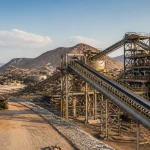
Heavy machinery at Saindak remains idle as supply bottlenecks prevent the delivery of fuel and spare parts.

The "serious likelihood" of a shutdown within a month is a direct result of increased attacks on security forces and transport convoys. In recent months, insurgents have expanded their theater of operations, targeting not just military outposts but the very infrastructure that sustains industrial activity. For copper mining news watchers, the situation at Saindak is a bellwether for the region's overall stability.

The Chinese connection and diplomatic pressure
The Saindak project is a cornerstone of China-Pakistan industrial cooperation. Under the current lease terms, which were revised in 2023, Pakistan retains a 53% share of profits, while the provincial government of Balochistan receives a 6.5% royalty. Despite these concessions, the project remains a flashpoint for local grievances.
Beijing has reportedly placed significant pressure on Islamabad to bolster security for its personnel and assets. This pressure follows several high-profile attacks on Chinese engineers working on various infrastructure projects across Pakistan. The threat of a Saindak shutdown would not only impact Pakistan's export balance sheet but could also strain the diplomatic ties that underpin the China-Pakistan Economic Corridor (CPEC).

Geopolitical risk and the "Reko Diq" shadow
The instability at Saindak casts a long shadow over the nearby Reko Diq project, one of the world's largest untapped copper-gold deposits. Managed by Barrick Gold, Reko Diq is central to Pakistan’s hopes of becoming a major player in the global copper supply chain.
However, the risks identified at Saindak are already impacting Reko Diq. Earlier this year, Barrick announced a 12-month extension of its project review, citing the need to reassess security protocols and logistical schedules in light of regional violence. The United States, which has supported Reko Diq as part of its critical minerals strategy, is closely monitoring the situation as it seeks to diversify supply away from Chinese dominance.

Operational complexity in Balochistan is compounded by the need for multi-layered security cordons.
Market implications: The 2026 outlook
While Saindak is a relatively small contributor to global copper volumes compared to Chilean or Congolese giants, its potential shutdown adds another layer of uncertainty to a market already facing structural deficits. With Codelco struggling to meet production targets, any loss of production: especially from a project yielding $750 million annually: tightens the supply side.
Analysts suggest that the "Pakistan risk premium" is currently at an all-time high. Investors are increasingly wary of the "extractive model" in Balochistan, where high-stakes geopolitical competition meets entrenched local insurgency.
| Metric | Saindak Project Details |
|---|---|
| Operator | Metallurgical Corporation of China (MCC) |
| Lease Expiry | 2037 |
| 2025 Revenue (Est.) | US$750 Million |
| Primary Commodities | Copper, Gold, Silver |
| Pakistan Profit Share | 53% |
| Balochistan Royalty | 6.5% |
| Current Status | Critical Warning (Shutdown Looming) |
Security response and operational control
In response to SML's warning, the Pakistani government has pledged to enhance security deployments along the N-40 highway and other critical routes. However, the sheer scale of the terrain makes total protection difficult. Within the mine's perimeter, operations continue under a siege-like atmosphere, with control rooms monitoring not just ore throughput but also external perimeter sensors.

Security and operational efficiency are now inextricably linked at the Saindak facility.
The next 30 days will be a decisive period for the project. If the government cannot guarantee the safe passage of supplies, the MCC may be forced to put the mine into "care and maintenance," a move that would signal a major defeat for Pakistan’s mining sector and its foreign investment climate.
Geopolitical risk: A regional bottleneck
The situation in Balochistan is no longer a local issue. It is a convergence of Chinese industrial strategy, US critical mineral security, and local nationalist aspirations. As long as the transport corridors remain contested, the mineral wealth of the Chagai District will remain trapped by the very geography that contains it.

Logistical vulnerabilities: Remote desert roads have become the primary battleground for the mine's survival.
Social Media Snippet:
Pakistan’s Saindak Copper-Gold mine warns of a shutdown within 30 days. Militant attacks in Balochistan are choking supply lines for the $750M project. With Reko Diq already slowing down, the geopolitical risk in Pakistan's mineral belt is reaching a boiling point. #MiningNews #Copper #Geopolitics #Saindak #PakistanMining