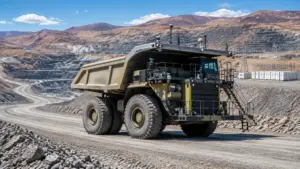
Copper supply narratives usually start and end at the pit’s edge. Analysts obsess over mine grades, labor strikes in Peru, and the “massive” discovery announced by a junior in the Andes. But in 2026, those numbers are becoming secondary. The real story isn’t how much copper we can pull out of the ground; it’s how much of it we can actually turn into wire, foil, and busbars.

Refining capacity is the new gatekeeper.
As we sit in late March 2026, the structural imbalance in the copper market has moved from a theoretical warning to a brutal reality. J.P. Morgan estimates a 330,000-metric-ton shortfall for the year. Prices are hovering around the $12,075/mt mark. While the headlines focus on the “shiny AI revolution,” the industry is hitting a nasty wall: we have enough dirt, but we don’t have enough “cookers.”
If you’re still valuing junior projects based solely on tonnage and grade, you’re missing the shift. In 2026, a project’s proximity to: and relationship with: smelters and refineries is the only metric that matters.
The AI Appetite and the Refined Reality
The numbers coming out of the tech sector are staggering. Data centers are projected to consume approximately 475,000 metric tons of copper this year alone. That is an increase of roughly 110,000 tons from 2025. This isn’t a gradual climb; it’s a vertical ascent.
More Read

Single hyperscale AI facilities, specifically those housing Nvidia’s advanced clusters, are now requiring up to 50,000 tons of copper each. Per facility. That’s not a typo. It’s an appetite that traditional supply chains simply weren’t built to feed.


But here is where the disconnect happens. These high-tech end-users don’t buy concentrate. They buy cathode. They buy 99.99% pure copper.
More Read

While the International Copper Study Group (ICSG) points toward a 150,000-ton deficit, the gap between mined copper and refined copper is widening. This is the “Refining Bottleneck,” and it’s about to hammer project valuations for any junior that hasn’t secured a downstream path.
Why Mining Companies are Smelter-Squeezed
For decades, the power dynamic in the copper world favored the miners. If you had the ore, you had the leverage. That has flipped.
In 2026, treatment and refining charges (TC/RCs) have plummeted to near-zero, and in some spot markets, they’ve even gone negative. This sounds like a technicality, but it’s a distress signal. It means smelters have so much concentrate sitting at their gates that they are charging miners a premium just to take it, or they simply don’t have the capacity to process it.
The Grasberg Block Cave mine in Indonesia is a prime example of the supply chain’s fragility. Shuttered under force majeure until the second quarter of 2026, it stripped 70% of previously forecasted production from the market. When one of the world’s largest sources of supply goes dark, the remaining smelters don’t just “pick up the slack.” They prioritize their own equity-linked production.
For a junior miner, this is a death sentence for valuation. If your project is “stranded”: meaning you don’t have a signed offtake with a smelter that actually has room for your concentrate: your Net Present Value (NPV) is a fantasy.
The Geopolitical Stranglehold
Geography is no longer just about geology; it’s about geopolitics. We are seeing a fragmented market where “friendly” copper is valued differently than “hostile” copper.
The Washington and Santiago strategic pact to secure supply chains is a direct response to this bottleneck. The U.S. realizes that having access to Chilean mines is useless if the refining is still done in jurisdictions that can throttle supply on a whim.

Japan is also moving aggressively. They are no longer just passive investors; they are becoming strategic partners in the refining space to ensure their own industrial survival. We’ve seen this play out with increased interest in strategic mineral supply chains, where the focus has shifted from “where is the mine?” to “where is the metal being finished?”
If you look at the Norwegian rare earth jackpot, the focus isn’t just on the size of the deposit: it’s on the European mandate to process it within the EU. Copper is headed for the same regulatory reality.
Revaluing the Junior Sector: The “Refining Discount”
In the current market, we are seeing a “Refining Discount” being applied to junior developers. Investors are beginning to realize that a project with 1% copper in a jurisdiction with no smelter capacity is worth less than a 0.5% project sitting next to a modern refinery with available capacity.
Take the Vicuña District as an example. While the grades are exceptional, the massive capital required to move that volume of material into the refined market is changing the calculus for majors like Lundin. They aren’t just buying copper; they are buying a logistical solution.

When evaluating junior miners in 2026, ask these three questions:
- Who is the Smelter? Does the junior have a memorandum of understanding (MOU) or a binding offtake with a smelter that is currently expanding?
- What is the Power Profile? Smelting is energy-intensive. In a world of high carbon taxes and energy volatility, a project powered by green-grid refining capacity will trade at a premium.
- Is it “Clean” Concentrate? Smelters are becoming increasingly picky. If your ore has high arsenic or other impurities, it’s going to sit at the back of the line. In 2026, “dirty” copper is effectively unminable.
The Contrarian View: Is the Deficit Overblown?
It’s worth noting that not everyone is screaming “crisis.” Goldman Sachs has offered a dissenting perspective, forecasting a 300,000-ton global surplus for 2026. Their logic? High prices will dampen demand and trigger a massive influx of scrap supply.
But they are missing the geological reality: you can’t disrupt geology. Scrap can fill small gaps, but it cannot power a global AI infrastructure build-out. Furthermore, the “clarity” Goldman expects on U.S. refined copper tariffs won’t fix the physical lack of smelting capacity in the Western Hemisphere.
The surplus narrative assumes that every ton of mined copper becomes a ton of refined copper instantly. Those two clocks do not sync.
What Happens Next?
The 2026 copper deficit isn’t just a commodity price story; it’s a structural reshuffling of the mining industry.
We are moving into an era of “Integrated Mining.” The days of the pure-play junior that discovers a deposit and waits for a buyout are fading. To get a deal done in 2026, juniors must prove they can fit into a refining ecosystem.

Expect to see more “Mine-to-Metal” partnerships. Expect to see tech giants like Microsoft or Google bypass the middleman and sign direct funding agreements with miners to build dedicated refining capacity.
The strategic calculus here isn’t subtle: if you don’t control the refining, you don’t control your destiny.
Investors who understand that refining is the real bottleneck will find the true value in the 2026 market. Those who continue to chase “tons in the ground” without a plan for the “metal in the hand” will be left holding the bag.
The market is shifting. The bottleneck is real. And the clock is already ticking.
Shareable Insight:
In 2026, a junior copper project’s value is determined by its proximity to a smelter, not just its grade. Stranded assets are dead assets in a refined-starved market.