By Charles Pitts

The global mining industry is entering a period of structural misalignment that is fundamentally rewriting the playbook for institutional and retail investors alike. As the second quarter of 2026 unfolds, the copper market is no longer defined by the cyclical ebbs and flows of global industrial production. Instead, it is governed by a persistent, structural supply deficit that J.P. Morgan analysts now project at 330,000 metric tons for the 2026 calendar year.
This deficit: the first significant structural shortage since the post-recession rebound of 2009: is forcing a total re-evaluation of how mining stocks are priced. Historically, valuation models for copper producers focused almost exclusively on the cost curve. Investors looked for the lowest-cost quartile producers to weather periods of low prices. However, in an era where copper prices remain supported between $12,000 and $12,650 per tonne, the market is beginning to value production reliability and volume growth over simple cost efficiency.
Understanding the Structural Shift
A structural deficit differs from a cyclical one in its permanence. While cyclical deficits are usually solved by a temporary slowdown in demand or a quick ramp-up in existing capacity, the 2026 copper shortage is driven by long-term technological and geopolitical trends that are largely price-insensitive.
The International Copper Study Group (ICSG) has tightened its forecast, estimating a minimum 150,000 metric ton gap, though many independent analysts suggest this is conservative given the operational headwinds currently facing major producers. For a deeper dive into these numbers, the 2026 copper deficit explained in under 3 minutes provides a concise breakdown of the immediate portfolio implications.
More Read

The primary driver is the “Electrification Trifecta”: the simultaneous scaling of electric vehicle (EV) infrastructure, renewable energy grid modernization, and the massive expansion of AI-driven data centers. J.P. Morgan estimates that data centers alone will consume roughly 475,000 metric tons of copper in 2026, a figure that was negligible in most supply-demand models just three years ago.


Demand Breakdown: More Than Just EVs
While EVs remain a significant consumer of red metal, the 2026 outlook is increasingly dominated by the energy nexus. Grid modernization projects in North America and Europe are consuming high-voltage cabling at record rates. Unlike consumer electronics, these utility-scale projects are backed by government mandates and multi-year capital budgets, making their copper demand highly inelastic.
More Read

| Sector | Estimated 2026 Copper Consumption (Metric Tons) | Growth Rate vs. 2024 |
|---|---|---|
| AI Data Centers | 475,000 | +112% |
| EV Infrastructure | 1,200,000 | +45% |
| Renewable Energy (Wind/Solar) | 2,100,000 | +30% |
| Traditional Construction | 7,400,000 | +2% |
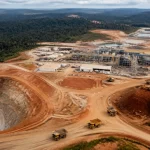
This surge is occurring at a time when the “easy” copper has already been mined. The industry is currently facing a “grade decline” crisis, where the average copper content per ton of ore is dropping globally. This means companies must move more earth and use more energy just to maintain steady output levels.
Supply Constraints and Smelting Bottlenecks
The supply side of the equation is equally pressured. Major operational disruptions have become the new normal. For instance, the Grasberg mine in Indonesia, a cornerstone of global supply, has faced prolonged force majeure events that are not expected to fully clear until late 2026.
Beyond the mine gate, a secondary crisis has emerged in the smelting sector. China has expanded its smelting capacity by roughly four times the rate of global concentrate supply growth over the last three years. This has created a massive bottleneck; there is plenty of capacity to turn ore into refined copper, but there isn’t enough raw concentrate to feed the furnaces. This imbalance led to spot treatment charges (TCs) crashing to nearly –$70/t in March 2026, an unprecedented scenario that effectively forces smelters to pay to process ore just to keep their facilities operational.

Why Valuation Models Are Changing
For decades, the standard valuation for a mining company was its Net Present Value (NPV) calculated at a conservative long-term copper price (usually $3.00 – $3.50/lb). In 2026, these models are becoming obsolete.
- Volume over Margin: In a deficit market, a company that can increase production by 10% is often more valuable than a company that can reduce costs by 10%. Investors are now looking at “growth pipelines” with much higher scrutiny. Assets like those held by Hudbay Minerals, which recently posted record revenue, are being valued for their ability to deliver consistent tonnage into a hungry market.
- The Geopolitical Premium: Jurisdiction matters more than ever. Copper in Chile or Peru: historically the world’s primary sources: now carries a “risk discount” due to shifting regulatory environments and water scarcity issues. Conversely, assets in North America or stable emerging frontiers are commanding a premium. This is why exploration activity in “secondary” regions, such as Solis Minerals’ efforts in South America, is being watched closely by majors looking to de-risk their portfolios.
- Technological Integration: As grades decline, technology becomes the primary lever for value. Companies utilizing the latest mining tech stack for remote operations and automation are able to operate at lower cut-off grades, effectively turning waste into ore and extending the life of their mines.
The Rise of the “Negative Cash Cost” Producer
One of the most radical shifts in 2026 valuation is the focus on by-product credits. As gold and molybdenum prices also trend higher, companies with high concentrations of these secondary metals are reporting “negative cash costs.” This means that after selling the gold and silver found in their copper ore, the cost to produce the copper itself is effectively zero or less.
This phenomenon, seen with industry leaders like Southern Copper and Vale, creates a valuation floor that is nearly indestructible. Even if copper prices were to see a temporary correction, these producers remain highly profitable, a level of resilience that traditional valuation models are only now beginning to accurately price in.

2026 Outlook: A New Baseline
Looking toward the end of 2026 and into 2027, the copper market is unlikely to return to its pre-2020 norms. The International Energy Agency (IEA) projects that by 2035, the copper deficit could reach 30% of total demand if current investment trends do not drastically accelerate.
For decision-makers, this suggests that the current “high” prices are not a peak, but a new baseline. The cost to build a new copper mine has tripled over the last decade, and the time from discovery to first production now averages 16 years. This “supply lag” ensures that the current deficit is not something that can be solved by mid-decade.
Valuation models are shifting toward “Scarcity Multiples.” We are seeing a move away from simple cash-flow discounting toward models that account for the strategic value of the metal in the global energy transition. Mining stocks are no longer being viewed just as commodity plays; they are being viewed as essential infrastructure providers for the 21st-century economy.

Summary for Investors and Operators
The 2026 copper deficit is the culmination of a decade of underinvestment in exploration and a sudden, massive surge in high-tech demand. As a result, the way we value these companies must evolve.
- Reliability of Tonnage: Companies that meet their production guidance are being rewarded far more than those that promise future growth but fail to deliver in the present.
- Infrastructure Synergy: Integration with smelting or long-term processing contracts is now a major value driver, protecting companies from the volatility of treatment charges.
- Safe Jurisdictions: The premium for “safe” copper is at an all-time high, as resource nationalism continues to create uncertainty in traditional mining hubs.
As we move through 2026, the question is no longer if copper will remain in deficit, but how long it will take for the industry to bridge a gap that is growing wider by the day. For those tracking the sector, Skillings Mining Review continues to monitor these fundamental shifts daily, providing the data necessary to navigate this new era of mineral economics.