By Charles Pitts

Codelco’s Maricunga lithium project has officially seen its timeline extended by four years, with first production now targeted for 2034. The shift, confirmed by Codelco Chairman Bernardo Fontaine in July 2026, represents a significant recalibration of Chile’s National Lithium Strategy, which originally envisioned the state-led project delivering critical battery metals to the global market by the turn of the decade.
The delay comes at a critical juncture for the global energy transition. While lithium prices have experienced volatility over the last 24 months, the long-term structural demand for high-purity lithium carbonate remains robust. By pushing the Maricunga start date into the mid-2030s, Codelco and its strategic partner, Rio Tinto, are signaling a preference for technical and regulatory precision over speed: a “long game” approach that acknowledges the immense complexity of developing greenfield projects in the current ESG and permitting environment.
The Strategic Blueprint: Chile’s State-Led Ambition
The Maricunga project, situated in the Atacama region, is a cornerstone of the Chilean government’s strategy to diversify its lithium production beyond the current duopoly held by SQM and Albemarle. Under the National Lithium Strategy, the state aims to take a controlling interest in “strategic” salars while leveraging the capital and technical expertise of global mining majors.
The partnership with Rio Tinto, which is set to finalize its 49.99% stake in the joint venture (Maricunga SpA) by late 2026, is the first major test of this model. For Chile, the delay to 2034 is a blow to the short-term goal of regaining the title of the world’s largest lithium producer. However, officials argue that the extended timeline allows for more rigorous environmental impact assessments and deeper community consultations: factors that have stalled projects across the “Lithium Triangle” in recent years.
More Read



Rio Tinto’s Entry: Technology and Capital Discipline
For Rio Tinto, the 2034 timeline represents a measured entry into the Chilean lithium sector. The Anglo-Australian major has committed approximately $350 million to fund initial studies and development, with another $500 million earmarked for construction following a Final Investment Decision (FID).
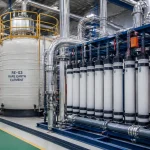
A core component of the joint venture’s strategy is the implementation of Direct Lithium Extraction (DLE). Unlike traditional evaporation ponds, which can take up to 18 months to yield product and recover only about 50% of the lithium from brine, DLE aims to:
More Read

- Increase Recovery: Targeting 90%+ recovery rates.
- Reduce Footprint: Minimizing the physical land use compared to massive evaporation ponds.
- Water Conservation: Returning spent brine to the salar, potentially reducing the impact on local water tables.
Despite a $50 million incentive originally offered for production by 2030, the shift to 2034 suggests that the technical hurdles of scaling DLE at altitude, combined with regulatory hurdles, have outweighed the appetite for early-production bonuses.
Why the 2034 Timeline? Understanding the Bottlenecks
The transition from a 2030 target to 2034 is not the result of a single failure but rather a convergence of several high-stakes challenges. In a recent update on the Chilean mining landscape, industry analysts noted that the permitting environment in the Andes has become increasingly stringent.
| Factor | Impact on Timeline | Primary Constraint |
|---|---|---|
| Environmental Permitting | High | Multi-year baseline studies for water and biodiversity. |
| Indigenous Consultation | Medium-High | Alignment with ILO 169 requirements for prior consent. |
| DLE Technical Scale-up | High | Moving from pilot plant to industrial scale at 3,700m elevation. |
| Infrastructure | Medium | Power and road access in remote high-altitude regions. |
| Regulatory Framework | High | Finalizing the Special Lithium Operation Contract (CEOL). |
The CEOL modification in February 2026 effectively extended the exploration and characterization phase. While some observers initially viewed this as a bureaucratic adjustment, it is now clear that Codelco requires this additional time to ensure the project meets the “triple bottom line” of economic, social, and environmental sustainability.

Market Implications: The 2030s Supply Gap
The delay of Maricunga has significant implications for global lithium supply forecasts. By 2030, many analysts predict a structural deficit as EV adoption continues and energy storage systems scale up. The removal of Maricunga’s projected capacity: estimated at 20,000 to 30,000 tonnes of LCE per year: from the 2030–2034 window tightens the market for Tier-1, low-carbon lithium.
This delay may provide a window for other regional projects, particularly in Argentina and Australia, to fill the void. However, Maricunga’s high-grade brine remains one of the most attractive undeveloped assets globally. For investors and lithium market watchers, the focus now shifts to whether this delay will be unique to Codelco or if other state-led projects in Chile will face similar “timeline slippage.”
Operational Control and Safety Metrics
As the project moves into its extended characterization phase, the role of modern data integration and remote monitoring will grow. Codelco has already integrated advanced telemetry into its copper operations, and the Maricunga project is expected to follow suit.

The use of real-time data in the control room will be vital for managing the complex logistics of the salar. With the production start date pushed back, the JV has the luxury: or the necessity: of building out a “digital twin” of the operation before a single tonne of lithium is commercially produced. This digital-first approach is increasingly common among majors like Rio Tinto to de-risk capital-intensive projects.
Conclusion: A Strategic Shift
The postponement of Maricunga to 2034 is a pragmatic admission of the realities of modern mining. For Codelco, it ensures that its foray into lithium does not compromise its balance sheet or its social license to operate. For Rio Tinto, it secures a long-term foothold in a premium jurisdiction without the immediate pressure of a rushed ramp-up.
As the industry looks toward the next decade, the Maricunga delay serves as a reminder that the “white gold” rush is maturing into a marathon. The winners in the lithium space will likely be those who can navigate the regulatory maze and technical frontiers of the Andes, even if it takes a few more years to reach the finish line.