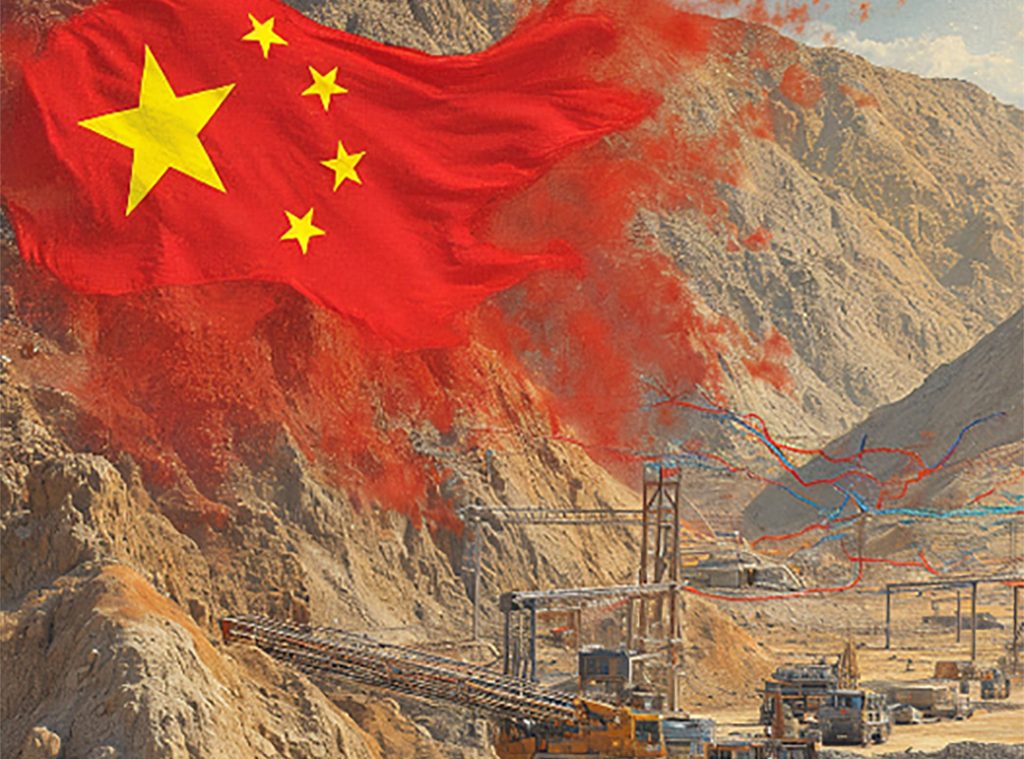
China’s dominance over critical minerals is not merely an economic advantage but a strategic chokehold that threatens global stability and security. By controlling approximately 70% of global mining and 90% of processing capacity for essential minerals, China has positioned itself as an indispensable player in industries ranging from semiconductors to military hardware.

This monopolistic grip is not a natural consequence of resource distribution but a calculated strategy. China’s willingness to manipulate market prices and implement export bans, as seen with gallium and germanium, underscores a deliberate intent to leverage its mineral supremacy for geopolitical gain. Such actions are tantamount to economic blackmail, holding industries and nations hostage to China’s policy whims.
Related News
- Zulu Lithium and Tantalum Project: Premier African Minerals Secures $4.35 Million to Revive Operations
- Rio Tinto and Glencore’s Merger Talks Signal a Potential Shift in Mining Industry Dynamics
- The Dark Side of Job Recruitment: Exposing Fake Jobs in the Mining Industry
- Death Toll Reaches 87 in South African Illegal Mining Standoff
- Trump Administration Could Spur Deep-Sea Mining Boom Amid Controversy
The repercussions of this dominance are profound. Industries critical to national security and technological advancement are at the mercy of China’s export policies. The United States, for instance, finds itself in an “unfathomable” national security bind due to this dependency. The lack of a diversified supply chain for these minerals is a glaring vulnerability that cannot be overstated.
Efforts by other nations to counterbalance this influence have been tepid at best. While the European Union contemplates adding materials like magnesite to its list of critical raw materials, such measures are insufficient without substantial investment in domestic production and processing capabilities. Similarly, the United States’ initiatives to strengthen partnerships with countries like Canada and Australia are steps in the right direction but lack the urgency and scale required to effect meaningful change.
The time for half-measures and diplomatic hand-wringing is over. Western nations must embark on a concerted and aggressive strategy to break free from China’s stranglehold. This includes massive investments in mining and processing infrastructure, streamlined permitting processes to encourage domestic production, and the establishment of strategic reserves to buffer against supply disruptions. Without such decisive action, the free world will remain ensnared in China’s web of mineral manipulation, with dire consequences for global security and economic independence.