Researchers have unearthed new information regarding the genesis of rare earth elements (REEs) in a ground-breaking study that provides insight into the complex mechanisms governing these elements’ formation. Because of their intricate creation procedures, these components have long baffled researchers and are essential to many advanced technologies.

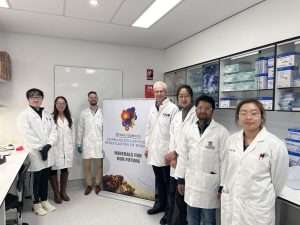
The kinetics of REE mineral production and crystallization were the main subjects of the investigation, which was carried out by a team from Trinity College Dublin. Scientists found that a wide range of parameters, such as host grain solubility, temperature, duration, and ionic radii, affect the synthesis of these elements. This in-depth knowledge refutes earlier theories and offers a more complete picture of the geochemical cycles involved in the production of rare earth elements.
One of the rarest and most elusive lanthanides, promethium, was successfully isolated and examined by scientists at Oak Ridge National Laboratory (ORNL), marking another important accomplishment. The group examined promethium’s bonding characteristics using sophisticated methods like synchrotron-based X-ray absorption spectroscopy, which provided important new information about the chemical behavior of promethium. This study closes a significant knowledge gap regarding the lanthanide series and creates new opportunities for the extraction and use of REEs in many technological contexts.
Related News
- House Approves Funds for Great Lakes Icebreaker, Championing Winter Commerce
- Why Insurance is Crucial for the Mining Sector
- Predicting Venezuela vs Mexico Soccer Match Mining Industry Parallels
- Peru 2-2 Canada: A Soccer Match That Reflects Mining Productivity
These findings have far-reaching ramifications since they not only improve our basic understanding of REEs but also open the door to more effective extraction and usage techniques. This might have a big effect on sectors like electronics, renewable energy, and advanced manufacturing that depend on these elements.
In order to replicate natural REE-carbonate deposits, the research teams created synthetic rocks using a range of cutting-edge tools and processes. They were able to examine the intricate and quick events that lead to the production of rare earth elements (REEs) thanks to this creative method, which produced useful data that could enhance industrial separation procedures.
All things considered, these investigations constitute a major advancement in the domains of geochemistry and mineralogy, providing fresh instruments and perspectives for the search and application of rare earth elements.