Look, we all knew this was coming. The White House just dropped a Section 232 Proclamation on January 14, 2026, and it’s basically the federal government saying what everyone in the mining industry has been muttering for years: we’re way too dependent on foreign sources for processed critical minerals, and that’s a national security problem.

President Trump’s latest move doesn’t slap tariffs on anything, not yet, anyway. But it sets the stage for some serious negotiations with trading partners over the next six months. And if those talks don’t pan out? Well, that’s when things could get spicy.
The 180-Day Clock Starts Now
Here’s the deal. The proclamation orders the U.S. Secretary of Commerce and the Trade Representative to jointly negotiate agreements with trading partners on processed critical minerals and their derivative products (PCMDPs). The goal is pretty straightforward: secure adequate supplies and plug the gaping holes in America’s mineral supply chain.
Negotiators have until July 13, 2026: exactly 180 days: to report back on how things are going. If President Trump decides that progress is too slow or the agreements aren’t cutting it, he’s got the authority to pull the trigger on import restrictions and tariffs.
No immediate action was taken with this proclamation. That’s the administration’s way of saying, “We’re giving diplomacy a shot first.” But make no mistake, the threat of tariffs is very much on the table.
More Read



Why This Matters: The Import Reliance Problem
Let’s talk numbers, because the situation is honestly kind of wild.
As of 2024, the United States is 100 percent net-import reliant for 12 critical minerals. Read that again. One hundred percent. We don’t produce a single ounce domestically for a dozen minerals that are essential to everything from defense systems to electric vehicles.
More Read

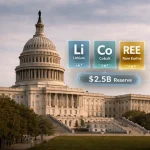
And it gets worse. The U.S. is more than 50 percent reliant on imports for 29 other critical minerals. We’re talking copper, lithium, rare earths, cobalt: the building blocks of modern infrastructure and the energy transition.
The proclamation specifically calls out the problem that domestic mining alone can’t fix this. Even when we do pull minerals out of the ground here, we often lack the processing capacity to turn raw ore into usable materials. Rare earth minerals, for example, frequently get shipped overseas for processing and then imported back. It’s an absurd round-trip that leaves the entire supply chain vulnerable to disruption.
The administration’s position is clear: over-reliance on foreign sources: especially adversarial nations: creates unacceptable price volatility and national security risks.
The Minimum Import Price Option
One interesting wrinkle in all of this: the administration is also considering establishing minimum import prices for specific types of critical minerals.
This would be a different approach than straight-up tariffs. Instead of taxing imports, you’d essentially set a floor price that foreign suppliers have to meet. The idea is to protect domestic producers from being undercut by cheap foreign minerals (often subsidized by governments that don’t exactly play by free-market rules) without completely shutting off the import spigot.
It’s a middle-ground strategy. Whether it actually works in practice is another question entirely, but it shows the White House is thinking about multiple tools in the toolbox.

16 Critical Infrastructure Sectors in the Crosshairs
The scope of this proclamation is massive. We’re not just talking about mining here: this touches 16 critical infrastructure sectors, including:
- Defense
- Energy
- Chemicals
- Semiconductors
- Transportation
- Communications
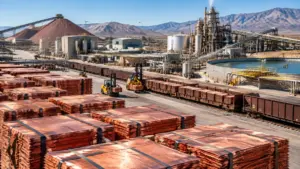
Copper keeps the lights on and data flowing through every server farm powering AI development. Lithium is the backbone of the EV revolution. Iron ore is still the foundation of steel production for everything from bridges to battleships. These aren’t niche commodities. They’re the materials that make the modern economy function.
When supply chains for these minerals get disrupted: whether by geopolitical conflict, trade disputes, or simple price manipulation: the ripple effects hit every corner of the economy. The administration is betting that getting ahead of this problem now is better than scrambling to react later.
Building on Allied Partnerships
Here’s where things get a bit more optimistic. The U.S. isn’t going it alone on this.
The proclamation builds on existing critical minerals agreements with allied nations, including Australia, Saudi Arabia, Malaysia, Thailand, and Japan. The strategy is to diversify global supply chains and reduce dependence on adversarial nations: you know which ones we’re talking about.
This is the “friendshoring” approach that’s been gaining steam across the mining industry. The idea is that even if you can’t produce everything domestically, you can at least make sure your supply chains run through countries that aren’t likely to cut you off during a geopolitical crisis.
Australia, in particular, has been a major partner on this front. They’ve got significant lithium and rare earth deposits, and they’re actively expanding processing capacity. Japan has been investing heavily in recycling and alternative material technologies. These partnerships won’t solve the problem overnight, but they’re a step toward a more resilient supply chain.

What This Means for Domestic Producers
For American mining companies, this proclamation is a double-edged sword.
On one hand, it’s a clear signal that the federal government is serious about supporting domestic production. If negotiations fail and tariffs go into effect, that could create a more favorable competitive environment for U.S. producers who’ve been struggling to compete with cheaper foreign imports.
On the other hand, the mining industry has heard this kind of talk before. Permitting reform, infrastructure investment, processing capacity: these are all things that have been promised and delayed for years. Until shovels actually hit the ground on new projects and processing facilities, domestic producers are still operating in a challenging environment.
The smart money is watching the July 2026 deadline closely. If the administration follows through on import restrictions, we could see a significant shift in the market dynamics for copper, lithium, and rare earths. If the negotiations produce weak agreements and no follow-up action, it’ll be business as usual.
The Price Volatility Factor
One thing the proclamation doesn’t directly address: but definitely lurks in the background: is price volatility.
Critical mineral prices have been on a rollercoaster over the past few years. Lithium spiked, crashed, and is now showing signs of recovery. Copper has been climbing steadily on AI data center demand. Iron ore fluctuates with every shift in Chinese appetite.
The administration’s argument is that this volatility is partly a function of supply chain concentration. When a handful of countries control processing capacity, they can manipulate prices: either through direct intervention or simply by virtue of market dominance. Securing more diverse and reliable supply chains, in theory, should help stabilize prices over time.
Whether that theory holds up in practice is something the industry will be watching closely.
What Happens Next
So where do we go from here?
For the next six months, the real action will be happening behind closed doors as negotiators try to hammer out agreements with trading partners. The mining industry should be paying close attention to any signals coming out of those talks: especially regarding minimum import prices and specific mineral categories.
If you’re following critical minerals news, you’ll want to keep an eye on developments in zero-carbon mining equipment and domestic production capacity. The policy environment is shifting fast, and the companies that position themselves correctly now could be the big winners when the dust settles.
The July 13, 2026 deadline is circled on every calendar in the industry. That’s when we’ll find out if this proclamation has teeth: or if it’s just another round of tough talk with no follow-through.
Either way, the message from the White House is clear: the era of ignoring critical mineral supply chain risks is over. The only question is how aggressive the response will be.