JOHANNESBURG—With less than two months left in office, U.S. President Joe Biden is making a strategic play in Angola, underscoring the high stakes in the global scramble for Africa’s critical minerals. At the heart of his agenda: the U.S.-backed Lobito Corridor railway project, designed to tap into Angola’s vast reserves of lithium and cobalt—essential components for green technologies like electric vehicles and solar panels.

This marks the first Biden’s African visit by a U.S. president to sub-Saharan Africa since 2015, signaling a shift in American policy towards a continent pivotal to the global energy transition. Biden’s trip comes as China continues to deepen its foothold in Africa, leaving Washington scrambling to counter Beijing’s dominance.
Related News
- U.S.-Canada Critical Mineral Trade Fuels Calls for Cooperation Amid China Rare Metals Export Ban
- Norway Deep-Sea Mining: Plans Paused Amid Political and Environmental Pushback
- Trump’s Tariff Plans Could Reshape the Industrial Metals Market
- Sayona Mining to Acquire Piedmont Lithium in All-Stock Deal Amid Market Consolidation
Africa’s Critical Minerals: The New Geopolitical Battleground
Africa’s critical minerals are indispensable for the transition to cleaner energy. The continent holds 55% of the world’s cobalt, 48% of manganese, and 21.6% of natural graphite—key inputs for batteries and other clean technologies, according to the United Nations Trade and Development Agency. These resources underpin industries ranging from electric vehicles to renewable energy storage.
But the stakes are about more than supply chains. With an estimated $6.2 trillion in untapped mineral wealth, Africa is now the center of a geopolitical tug-of-war. China, with its Belt and Road Initiative, has invested heavily in African infrastructure in exchange for access to these vital resources. Meanwhile, the U.S. is banking on projects like the Lobito Corridor railway to bolster ties with African nations and challenge Beijing’s dominance.
The Lobito Corridor: A U.S. Foothold in Africa
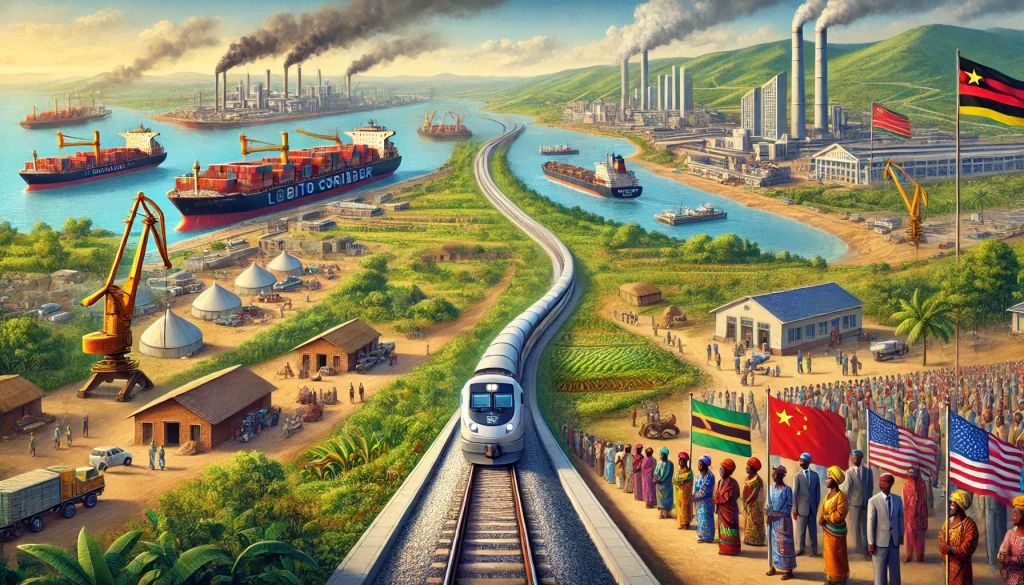
The Lobito Corridor railway, linking the Democratic Republic of Congo (DRC) and Zambia to Angola’s Lobito port, could transform mineral exports from the continent’s resource-rich Copperbelt. With a $550 million loan from the U.S. Trade and Development Agency, the project aims to enhance mineral transportation to Western markets via the Atlantic, bypassing China’s eastern-facing routes.
The railway also aligns with broader efforts to foster intra-African trade under the African Continental Free Trade Area. Biden’s Angola visit highlights Washington’s ambition to integrate African economies into a Western-aligned supply chain for Africa’s critical minerals.

However, Beijing is not standing idly by. Just months before Biden’s African visit, China inked a deal with Tanzania and Zambia to upgrade a competing rail corridor to the Indian Ocean, signaling its intent to maintain its dominance in Africa’s mineral trade.
China’s Lead in Africa
China’s presence in Africa’s mining sector is formidable. In the DRC, which produces 70% of the world’s cobalt, Chinese firms control stakes in 15 of the country’s 17 largest cobalt mines. The Belt and Road Initiative has solidified Beijing’s role as Africa’s largest trade partner, with China-Africa trade reaching nearly $300 billion in 2022—triple the volume of U.S.-Africa trade.
But cracks are beginning to show. While China has promised substantial infrastructure investments in exchange for mineral access, its commitments often fall short. For example, in the DRC, only $822 million of a promised $3 billion in infrastructure spending had materialized by 2023, according to Congo’s state auditor.
Challenges for Africa: Who Benefits From the Mineral Boom?
Despite Africa’s critical minerals riches, the benefits often fail to reach local populations. The so-called “resource curse” has seen minerals fuel corruption, conflict, and environmental degradation rather than economic development. According to the African Development Bank, natural resources account for 62% of Africa’s GDP, but a lack of local processing facilities, such as battery factories, limits the continent’s ability to capture higher-value benefits from its resources.
Grassroots organizations like the Women’s Climate Assembly have also raised concerns about the environmental and social toll of mining, calling for reparations and greater community involvement in decision-making. Their voices highlight a growing tension: African governments are eager to capitalize on their resources but face pressure to ensure equitable and sustainable development.
What’s Next for Africa’s Critical Minerals?
Biden’s African visit underscores a broader question for African nations: Can they navigate the competing interests of global powers to maximize their own gains? As the world shifts toward clean energy, Africa’s critical minerals are more valuable than ever, and the continent’s leaders are beginning to demand a bigger say in how their resources are used.
The outcome of this geopolitical competition could reshape Africa’s economic future—and determine who controls the supply chains powering the green energy revolution. Whether U.S. initiatives like the Lobito Corridor can match the scale and longevity of China’s investments remains an open question.
As Biden prepares to leave office, his Angola visit may be a turning point in the West’s engagement with Africa. But with a possible Trump presidency on the horizon, African nations are bracing for an uncertain future—one in which their strategic importance continues to grow, even as their political and economic agency remains contested.