In a significant move to enhance U.S. critical minerals production, the Biden administration has granted the final mining permit for the Perpetua Resources Stibnite project in Idaho. Announced on Friday, the decision highlights Washington’s strategy to reduce reliance on Chinese imports of antimony, a crucial mineral for military, renewable energy, and industrial applications. The permit also marks a pivotal step in advancing domestic production at the Idaho antimony and gold mine.

Securing Critical Mineral Supply Amid Trade Tensions
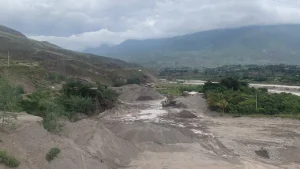
The Perpetua Resources Stibnite project, situated 138 miles north of Boise, is expected to meet over 35% of America’s annual antimony needs once operational in 2028, according to Perpetua Resources. Additionally, the mine will produce approximately 450,000 ounces of gold annually, providing revenue diversification and shielding the project from market fluctuations linked to China’s trade policies.
China’s recent restrictions on antimony exports to the U.S. have intensified the urgency of developing domestic mineral resources. “This mine is a national imperative,” stated Jon Cherry, CEO of Perpetua Resources, underlining the growing importance of securing critical minerals for national security and economic stability.
Related News
- Biden Offshore Drilling Ban: A Last-Ditch Effort to Cement U.S. Coastal Protections
- Mining Industry Faces Crucial Crossroads Amid Decarbonization and Demand for Critical Minerals
- Saudi Mining Innovation Program: Transforming Saudi Arabia’s Industrial Future
- Underground Mining Transition Drives Focus on Workforce Reskilling
Environmental and Regulatory Scrutiny
The Perpetua Resources Stibnite project underwent rigorous scrutiny during an eight-year review process by the U.S. Forest Service, resulting in a 154-page report supporting the decision. The review incorporated extensive environmental studies, Indigenous consultations, and collaboration with federal agencies, including the U.S. Army Corps of Engineers.
“I have taken into consideration the degree to which the [mine’s] environmental design features, monitoring, and mitigation measures will, where feasible, minimize adverse environmental impacts on federal lands,” wrote Matthew Davis of the Forest Service.
Despite these efforts, the project has drawn criticism. The Nez Perce tribe, concerned about potential harm to salmon populations, remains critical. “The Forest Service has been rushing to approve Perpetua Resource’s mine proposal without undertaking its required due diligence,” the tribe noted in a statement.

Financial Backing and Economic Impact
The Stibnite project, initially estimated at $1.3 billion in 2020, is expected to incur higher costs due to inflation. However, it has attracted significant financial backing. The Pentagon allocated $60 million for permitting, while the U.S. Export-Import Bank has shown interest in providing a loan of up to $1.8 billion.
By combining antimony and gold production, Perpetua Resources seeks to ensure the project’s economic resilience amid volatile markets. This approach contrasts with single-metal operations like Jervois Global’s cobalt mine in Idaho, which filed for bankruptcy last week due to competition from Chinese producers.
Strategic Implications
The Perpetua Resources Stibnite project is a cornerstone of U.S. efforts to reduce dependency on foreign sources of critical minerals, particularly amid growing trade tensions with China. Domestic production will bolster industrial and defense supply chains, enhancing economic and national security.
However, the project faces challenges, including opposition from environmental organizations and Indigenous communities. Balancing resource extraction with ecological and cultural preservation remains a contentious issue. The evolving dialogue among stakeholders will likely influence the future of critical mineral projects under the Biden administration’s mining and sustainability policies.