By Penny Langford

The deployment of autonomous haulage systems (AHS) has transitioned from an experimental "innovation" phase to an operational baseline for the world’s largest miners. In 2026, the discussion has shifted away from whether the technology works to a granular assessment of exactly how much it saves per tonne of moved material.
With more than 1,500 autonomous trucks now active globally, the industry is witnessing a widening gap between adopters and conventional operators. Real-world data from the Pilbara region and beyond indicates that autonomy is no longer just about safety; it is the primary lever for defending margins in a volatile commodity market.
The 2026 Efficiency Scoreboard
For mining executives and investors, the "scoreboard" is measured in three main categories: productivity, maintenance, and direct load-and-haul costs. While individual mine sites vary based on depth, gradient, and haul distance, 2026 industry benchmarks show a clear advantage for automated fleets.
| Metric | Manual Operations (Est.) | Autonomous Fleet (2026) | Efficiency Gain |
|---|---|---|---|
| Cost per Tonne-KM | $1.45 – $1.85 | $0.85 – $1.10 | 30–40% Reduction |
| Tire Life Expectancy | 100% (Baseline) | 115% – 120% | 15–20% Increase |
| Fuel Efficiency | Baseline | +8% to +12% | Substantial |
| Utilization (Annual Hours) | ~5,500 – 6,000 hrs | ~7,000+ hrs | ~20% Higher |
Data compiled from Skillings Mining Intelligence and industry performance reports.
Rio Tinto: Scaling the Autonomous Frontier
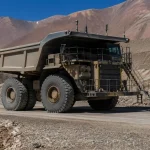
Rio Tinto remains a primary benchmark for AHS performance. By mid-2026, the company has integrated over 130 autonomous trucks across its Pilbara operations. The primary driver for Rio Tinto’s continued investment is a documented 15% reduction in overall operating costs for its autonomous fleets compared to conventional manned trucks on identical routes.


The savings at Rio Tinto are not derived from a single factor but from a cumulative "precision effect." Autonomous trucks operate within strict parameters: never over-revving, braking optimally, and maintaining a consistent speed that reduces wear on mechanical components. This consistency has allowed Rio Tinto to extend the life of its ultra-class assets while reducing the frequency of unscheduled maintenance events.
The integration of AHS at sites like Gudai-Darri has set a new standard for mining review processes, where the "intelligent" mine acts as a synchronized system rather than a collection of independent machines.
Fortescue: Productivity and the Electrification Nexus
Fortescue Metals Group has taken a slightly different path, focusing heavily on its partnership with Caterpillar and the rapid conversion of existing fleets. In 2026, Fortescue reports up to 15% productivity gains across its AHS-enabled hubs. Unlike manual fleets that require shift changes, breaks, and manual refueling stops, Fortescue’s autonomous trucks maintain a near-constant "heartbeat" of production.
However, the cost-per-tonne story for Fortescue is increasingly tied to its decarbonization goals. By integrating autonomy with zero-emission powertrains, the company is targeting a massive reduction in operational expenditure.
"Autonomy is the software, but electrification is the fuel," says one industry analyst. Fortescue’s push toward zero-carbon mining is expected to save the company over $400 million annually in fuel costs alone once the transition is complete. By removing the driver and then removing the diesel, the cost-per-tonne profile of a Fortescue mine could drop by an additional 20% beyond the gains of autonomy alone.
The Role of the Control Room
The cost savings on the ground are managed by a sophisticated layer of oversight from afar. The modern mining control room has evolved into a high-tech logistics center, where data is converted into direct cost savings in real-time.

Controllers can adjust the speed and spacing of trucks to avoid "queuing" at the shovel: a major source of fuel waste and lost productivity in manual mines. By smoothing the flow of traffic, these control centers ensure that the "scoreboard" remains in the green.
Key Cost Drivers in 2026
1. Tire Management
Tires remain one of the most significant variable costs in open-pit mining. In manual operations, aggressive cornering and harsh braking can destroy a $50,000 tire in a fraction of its expected lifespan. Autonomous systems eliminate human-induced stress, leading to a 20% improvement in tire life. In a fleet of 50 trucks, this translates to millions of dollars in annual savings.
2. Fuel and Energy Consistently
Autonomous trucks are programmed for the "perfect lap." By optimizing acceleration and maintaining momentum on gradients, AHS fleets consistently consume 10% less fuel than their manned counterparts. In 2026, with energy prices remaining a volatile factor for mining industry professionals, this efficiency is a critical hedge against inflation.
3. Labor and Safety
While the reduction in headcount is a clear cost-saving measure, the primary financial benefit of removing operators from the pit is safety-related. The cost of a single major safety incident can reach into the tens of millions when accounting for production stoppages, investigations, and legal liabilities. Autonomous fleets have virtually eliminated high-risk collisions and rollover incidents, significantly lowering the "risk premium" of the operation.
The Outlook for Late 2026 and Beyond
As we move toward 2027, the "Autonomous Haul Trucks: The 2026 Cost Savings Scoreboard" shows a definitive win for automation. The challenge for mid-tier miners is no longer the technology itself, but the capital intensity required to implement it.

While the majors like Rio Tinto and Fortescue reap the rewards of their early-mover status, the next frontier will be "Autonomy as a Service" (AaaS), allowing smaller operators to lease the software and hardware kits necessary to compete on a cost-per-tonne basis.
For now, the data is indisputable: the "perfect lap" of an autonomous truck is the most profitable lap in the history of the mining industry.
Shareable Social Snippet
LinkedIn/X: The 2026 Cost Savings Scoreboard for Autonomous Haul Trucks is in. Rio Tinto and Fortescue are seeing up to 15% lower operating costs, while industry benchmarks show a 30-40% reduction in cost per ton-km. Is autonomy now the baseline for survival? Read the full deep-dive on Skillings. #MiningTech #AutonomousHaulage #RioTinto #Fortescue #MiningIndustry