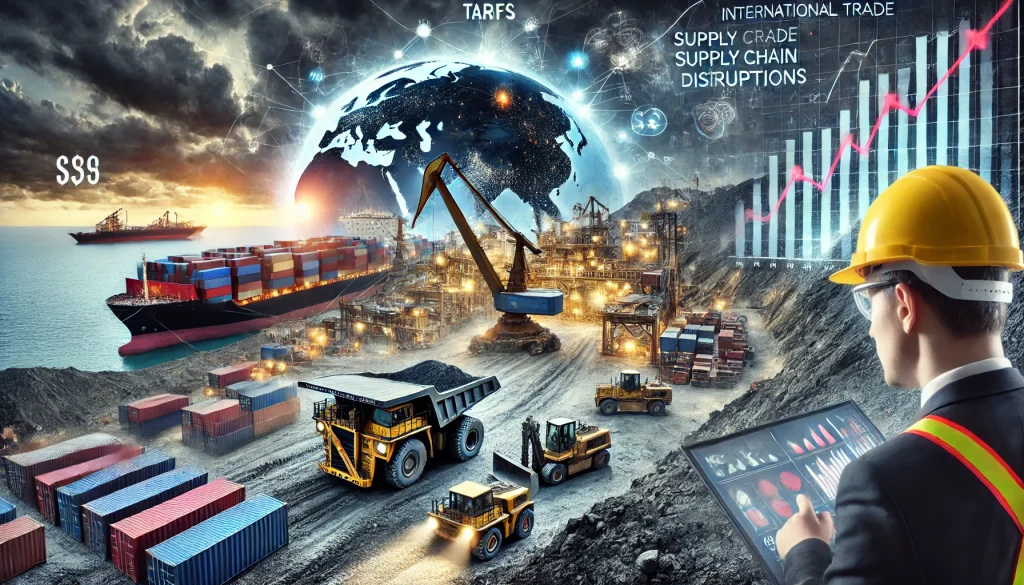
Anglo American’s CEO, Duncan Wanblad, has voiced concerns that the recent trump tariffs will significantly increase mining costs for years to come. His remarks highlight the broader implications of a burgeoning global trade war on the commodities sector.

Trump Tariff Fallout: Supply Chain Disruptions and Cost Increases
Speaking at the Investing in African Mining Indaba in Cape Town, Wanblad emphasized that the Trump tariff, particularly those affecting imports from Canada and Mexico, is expected to disrupt supply chains and elevate operational expenses. He noted that the mining industry relies heavily on a complex web of international suppliers for equipment, technology, and services. The imposition of tariffs threatens to inflate costs across this network, potentially leading to higher prices for end consumers.
Related News
- Capricorn Metals Expands WA Exploration with Mummaloo Acquisition
- Keystone Project Nevada: U.S. Gold Corp.’s High-Stakes Bet in the Cortez Trend
- Resources Top 5: Fortescue Splashes Cash on $254M Takeover of Red Hawk
Industry Leaders Warn of Economic Ramifications
This sentiment is echoed by other industry leaders. William Oplinger, CEO of aluminum producer Alcoa, previously warned that taxing Canadian imports would result in substantially higher aluminum prices in the U.S. He stated, “Ultimately, it will be in the price of pick-up trucks and beer cans.” Oplinger also expressed concerns about potential demand destruction if prices escalate significantly.
Analysts Predict Long-Term Price Hikes
Analysts predict that the impact of these tariffs will manifest in increased premiums for physical metals in the U.S. market. Duncan Hobbs, an analyst at trader Concord Resources, indicated that these premiums, which are added on top of benchmark exchange prices, are likely to rise. Furthermore, experts at BMO suggest that these elevated premiums may persist until supply chains can be restructured to circumvent the new duties. This adjustment process could involve rerouting Canadian metals to Europe and sourcing more materials from regions like Australia, thereby creating longer supply chains and sustaining higher U.S. premiums.
Global Trade Retaliation and Its Consequences
The tariffs’ repercussions extend beyond North America. China has responded by expanding export controls on critical minerals, including tungsten, tellurium, bismuth, indium, and molybdenum, which are essential across various industries from defense to clean energy. The Chinese Commerce Ministry stated that these measures aim to safeguard national security. While not an outright ban, the new export licensing requirements are expected to delay shipments, potentially leading to shortages and further price increases globally.
More Read
Africa’s Response: Calls for Trade Retaliation Against Trump Tariff
In Africa, the response has been swift. South Africa’s mining minister, Gwede Mantashe, called on African nations to halt mineral exports to the U.S. in retaliation for Trump’s decision to suspend funding aid programs on the continent. He asserted, “They want to withhold funding, but they still want our minerals. Let us withhold minerals. Africa must assert itself.”

Navigating the Trump Tariff Challenges in the Mining Industry
The mining sector is now grappling with the challenge of navigating these geopolitical tensions. The imposed tariffs and subsequent retaliatory measures are poised to disrupt the flow of commodities, leading to increased costs and supply chain complexities. Industry stakeholders are closely monitoring the situation, assessing the long-term implications for global trade and the stability of commodity markets.
Future Strategies for Mining Companies Amid the Trump Tariff
As the situation evolves, companies may need to explore alternative sourcing strategies, invest in local production capabilities, or seek new markets to mitigate the adverse effects of the Trump tariff. The coming months will be critical in determining how the mining industry adapts to this shifting landscape and what strategies will be employed to maintain operational efficiency and profitability amidst rising costs.