A 37.4-carat Botswana pink diamond, discovered at the Karowe Mine, has captivated gemologists worldwide with its unique half-pink, half-colorless structure — a geological marvel millions of years in the making.

Botswana Pink Diamond Unearthed at Karowe Mine
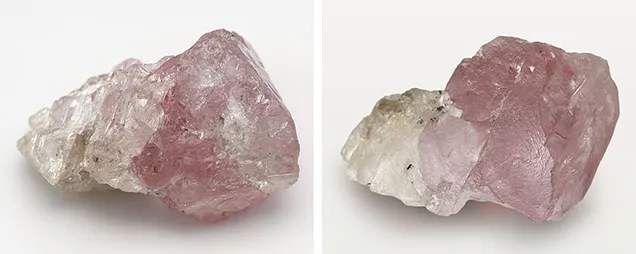
A newly discovered Botswana pink diamond from the Karowe Mine has reignited global interest in the southern African nation’s gem industry. The extraordinary 37.41-carat diamond, analyzed by the Gemological Institute of America (GIA), measures 24.3 by 16 by 14.5 millimeters and displays two distinct color zones — one pink and one colorless.
Experts describe the Botswana pink diamond as an “astounding” find, both for its weight and structural complexity. According to the GIA, the pink half likely formed first, transforming from colorless to pink through plastic deformation caused by intense geological pressure. The colorless half, formed later, remained untouched by deformation — making this one of the most visually and scientifically unique diamonds ever recovered.
The Geological Science Behind the Botswana Pink Diamond
Pink diamonds are among the world’s rarest natural gems, and the discovery of the Botswana pink diamond provides fresh insight into how such stones form deep within the Earth’s mantle. While most diamond colors result from chemical impurities, the pink hue stems from structural distortion — the bending or compression of the carbon lattice during tectonic events.
Sally Eaton-Magaña, Senior Manager of Diamond Identification at GIA, explained: “The pink section likely was initially colorless and then plastically deformed, perhaps by a mountain-forming event millions of years ago, resulting in its pink color, with the colorless section forming at a later time.”
More Read

This phenomenon highlights the delicate balance between temperature and pressure. “It’s like Goldilocks,” said Curtin University geologist Luc Doucet. “Too much deformation, and the diamond turns brown; too little, and it remains colorless. The Botswana pink diamond represents that perfect balance.”

Karowe Mine’s Legacy of Exceptional Diamond Discoveries
The Botswana pink diamond continues a remarkable legacy for Lucara Diamond Corp.’s Karowe Mine, one of the world’s richest sources of large and high-value stones. Karowe has previously yielded the 2,488-carat “Motswedi” diamond, the 1,109-carat “Lesedi La Rona,” and the 62-carat “Boitumelo” pink diamond — each setting new records for size and quality.
Located in Botswana’s Orapa kimberlite field, Karowe’s unique geology has enabled it to be a consistent producer of both Type IIa colorless diamonds and vibrant, fancy-colored stones. The mine’s success demonstrates how advanced recovery techniques and precise geological mapping can uncover hidden gem potential in established zones.
More Read

For Botswana, which derives approximately 80% of its export earnings from diamonds, the new discovery of a Botswana pink diamond strengthens its global leadership in the gemstone trade and reinforces confidence in its mining and beneficiation strategy.
Market Context: The Rising Value of Pink Diamonds
The global supply of pink diamonds has sharply declined since the closure of Rio Tinto’s Argyle Mine in 2020, which once accounted for approximately 90% of the world’s pink gems. This scarcity has driven prices up by more than 30% over the past three years, according to the Knight Frank Luxury Investment Index.
As a result, the Botswana pink diamond could command a premium valuation on the market, especially given its exceptional size and dual coloration. GIA experts note that previously examined two-toned diamonds rarely exceeded 2 carats — making this 37.4-carat specimen not only rare but also geologically unparalleled.
For collectors, investors, and luxury houses, the Botswana pink diamond represents both a scientific curiosity and a symbol of post-Argyle scarcity.
Skillings Analysis
Editorial Insight:
- The Botswana pink diamond confirms that Karowe remains a premier source for rare, structurally complex gemstones.
- As global pink diamond supply tightens, Botswana’s dominance in the segment may shift market gravity away from Australia toward southern Africa.
- The find also offers crucial geological data for researchers studying lattice deformation and diamond genesis in kimberlitic environments.
Looking Ahead: Botswana’s Evolving Gemstone Economy
The Botswana pink diamond discovery reinforces the country’s ambitions to move further up the value chain — cutting, polishing, and marketing diamonds domestically. As Botswana pursues deeper beneficiation, it may position itself as the next global hub for high-end pink diamond production and research.
With continued exploration and technological investment, Karowe’s kimberlite pipes are likely to yield further surprises. For geologists, it’s a window into Earth’s ancient processes; for miners and investors, it’s a reaffirmation that Botswana remains the beating heart of the global diamond economy.