By Penny Langford
The lithium market in May 2026 has entered a period of structural realignment that few analysts predicted eighteen months ago. Throughout 2024 and much of 2025, the prevailing market sentiment was defined by a persistent oversupply narrative. High inventories, coupled with a perceived cooling of the electric vehicle (EV) sector, kept prices suppressed and forced a series of high-profile capex freezes across the globe.
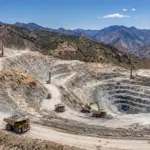
However, as we move through the second quarter of 2026, that narrative is fracturing. The surplus that once weighed on the market has evaporated, replaced by a tightening physical reality. From the brine flats of the Salar de Atacama to the spodumene mines of Western Australia, the industry is witnessing the consequences of delayed investment meeting a relentless surge in demand from both the transport and energy sectors.
The Great Stockpile Depletion: The Hidden Deficit
For nearly two years, the lithium market was insulated by a massive "buffer" of inventory. Midstream converters in China and North American battery manufacturers had aggressively stockpiled material during the 2022 price spikes. When prices softened in 2024, these players stopped purchasing spot material, opting instead to burn through their existing reserves.
By the start of 2026, data from major market intelligence firms indicates that these hidden stockpiles have reached critical lows. The "invisible deficit": a period where consumption outpaced new production but was masked by inventory drawdown: is now visible. Converters who remained on the sidelines for 18 months are returning to the spot market simultaneously, creating a demand squeeze that current production levels are struggling to satisfy.

Global lithium demand is projected to reach approximately 2 million tonnes of Lithium Carbonate Equivalent (LCE) this year. With supply growth lagging behind initial 2023 forecasts, the market is shifting from a narrow surplus of 141,000 tonnes in 2025 to a projected deficit of between 45,000 and 80,000 tonnes by the end of 2026.
The 2024 Capex Hangover: Why Projects are Stalling
The primary reason for the current supply squeeze is not a lack of geological resources, but a lack of operational timing. The price crash of late 2024 led to a significant "capital strike" across the junior and mid-tier mining sectors. Major producers, including Albemarle and SQM, slowed expansion plans, while dozens of greenfield projects in Canada and Africa were placed on care and maintenance or had their final investment decisions (FIDs) delayed.
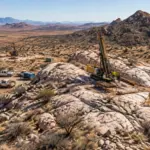

In the mining industry, a one-year delay in funding often equates to a two- or three-year delay in commissioning. The projects that were supposed to come online in late 2025 and early 2026 to meet this year’s demand surge are still in the construction or permitting phases. This lag is particularly evident in the United States and Europe, where regulatory hurdles and local opposition have further extended timelines despite the incentives provided by the Inflation Reduction Act (IRA) and similar China critical minerals strategies.
Furthermore, the lithium refining strategy in Australia has faced technical commissioning hurdles that have kept high-purity battery-grade material from hitting the market at the expected volumes. The transition from exporting raw spodumene concentrate to producing value-added chemicals on-site has proven more complex and capital-intensive than many operators initially projected.
The Grid-Scale Storage Surge: The Unseen Demand Driver
While electric vehicles remain the primary consumer of lithium: accounting for roughly 70% of total demand: the fastest-growing segment in 2026 is stationary energy storage systems (BESS). The global push to decarbonize electrical grids and the massive power requirements of AI-focused data centers have fundamentally changed the demand floor for lithium.
In 2025, lithium demand for storage applications jumped 71%. In 2026, even as some regions face temporary installation plateaus, the overall consumption of lithium for BESS is expected to grow by another 55%. Utilities are no longer viewing battery storage as a luxury but as a core infrastructure requirement for grid stability. This "second front" of demand is competing directly with automakers for the same high-quality lithium carbonate and hydroxide, further reducing the availability of spot material.

Technical Friction and the DLE Delay
One of the key tenets of the 2024 oversupply thesis was the rapid emergence of Direct Lithium Extraction (DLE) technology. Proponents argued that DLE would unlock massive brine resources in North America and South America, bringing material to market faster and more sustainably than traditional evaporation ponds.
As of mid-2026, DLE has indeed made progress, but it has not been the "silver bullet" many expected. Commercial-scale implementation has faced significant operational challenges, including high water consumption and the need for site-specific chemical sorbents. While DLE will undoubtedly play a major role in the 2028-2030 supply picture, its contribution to the 2026 balance has been marginal. The market remains heavily reliant on traditional, slow-moving brine operations and hard-rock spodumene mining.
2026 Lithium Price Forecast: Base, Bull, and Bear Cases
Given the current supply-demand tightening, the pricing environment for the remainder of 2026 is expected to be volatile but trend upward.
| Metric | Bear Case | Base Case | Bull Case |
|---|---|---|---|
| LCE Spot Price ($/t) | $18,000 | $26,500 | $34,000 |
| Global Demand (LCE) | 1.85M tonnes | 2.05M tonnes | 2.25M tonnes |
| Market Balance | Slight Surplus | Narrow Deficit | Significant Deficit |
| Primary Risk | Global Recession | Supply Chain Lag | BESS Demand Surge |
Note: Estimates are based on current May 2026 market data and industry reporting.
The Base Case assumes that EV adoption continues at a steady double-digit growth rate and that at least 40% of the currently delayed projects reach commercial production by Q4. The Bull Case considers a scenario where BESS demand exceeds utility forecasts and further project delays occur in South America due to political or environmental challenges. The Bear Case rests on a significant global economic slowdown that would dampen consumer demand for high-cost EVs.
Summary of Market Dynamics
The "oversupply" narrative that dominated industry headlines for the past two years was a product of temporary inventory gluts and the cyclical nature of mining capital expenditure. In May 2026, the structural reality of the energy transition has reasserted itself.
The market is now facing a convergence of factors: depleted stockpiles, the physical impact of 2024's underinvestment, and a diversifying demand base that now includes the massive power needs of the global computing and utility sectors. For operators and investors, the focus has shifted from "if" the demand will manifest to "how" the supply chain can possibly catch up. This is a similar trend we have observed in other sectors, such as the copper deficit of 2026, where the gap between ambition and extraction continues to widen.

The lithium market of 2026 is no longer a story of abundance. It is a story of a narrow, high-stakes race to bring new capacity online before the projected deficits of 2027 and 2028 become insurmountable.
LinkedIn/X Snippet:
The 'oversupply' narrative that defined the lithium market in 2024-25 is officially breaking down. As of May 2026, a combination of depleted midstream stockpiles, 2024's capex freezes, and a massive surge in grid-scale storage demand has pushed the market back into a deficit. With global LCE demand hitting 2M tonnes, the 'invisible deficit' is now visible. Is the supply chain ready for the second half of 2026? #Lithium #MiningNews #EnergyTransition #EVs #GridStorage #SkillingsMining